Season 1
3 episodes Aug 11, 2026 6.4
- 1 Episode 1
- 2 Episode 2
- 3 Episode 3

This trophy-packed, insider-fuelled documentary charts José Mourinho's iconic rise as one of the world's top footballing managers of the most elite clubs.
Latest episode: S1 E3 Episode 3 (Aug 11, 2026)
Official
I’ve never met José Mourinho, but I’ve seen him in action—on the sidelines, in press conferences, in the way his teams move like chess pieces with a shared, almost telepathic understanding of his vision. There’s a reason he calls himself "The Special One." It’s not just arrogance; it’s a statement of fact, at least in his mind.
And now, with MOURINHO (2026), Netflix gives us a front-row seat to the man behind the myth. Or does it?
The first thing that strikes me about this docuseries is how little it feels like a traditional sports documentary. There are no sweeping shots of stadiums, no slow-motion replays of iconic goals, no montages set to uplifting rock anthems. Instead, the camera lingers on Mourinho’s face—his eyes narrowing, his lips curling into that signature smirk, his fingers tapping restlessly against a table.
It’s intimate, almost uncomfortably so. This isn’t a film about football; it’s a film about power, ego, and the cost of greatness.
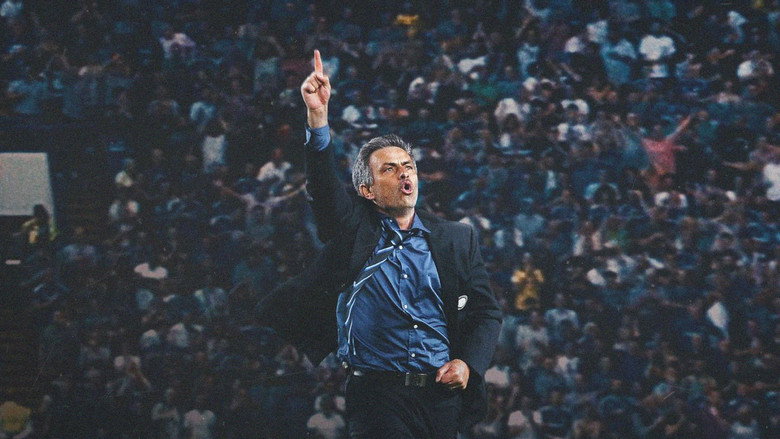
The series opens with a scene that sets the tone: Mourinho, alone in a dimly lit room, staring at a screen replaying one of his team’s defeats. The camera holds on him as he rewinds, pauses, rewinds again. There’s no commentary, no voiceover—just the sound of his breathing, the faint hum of the projector.
It’s a masterclass in visual storytelling. We don’t need to be told that Mourinho is a perfectionist; we see it in the way he dissects the footage, in the way his jaw clenches when he spots a mistake. This is a man who doesn’t just want to win; he needs to understand why he wins, and why he loses.
That scene, more than any trophy or headline, reveals the core of Mourinho’s persona. He’s not just a manager; he’s a strategist, a psychologist, a performer. And like any great performer, he understands the power of narrative.
The series doesn’t shy away from this. In one episode, we see him preparing for a press conference, pacing backstage like a boxer before a fight. His assistant hands him a list of potential questions, and Mourinho waves it away.
"I know what they want to ask," he says. "They want to know if I’m still the best." He delivers the line with a smirk, but there’s an edge to it—a vulnerability that’s gone before the cameras even start rolling.
It’s a rare moment of honesty, and it’s over in seconds. But it lingers.
The documentary’s greatest strength is its access. We see Mourinho in moments that feel unguarded: arguing with referees, clashing with players, celebrating victories with a childlike glee that’s at odds with his public persona. There’s a scene where he’s coaching a young player, his voice softening as he explains a tactical adjustment.
It’s a side of him we rarely see, and it’s disarming. For all his bluster, Mourinho clearly cares deeply about the game and the people who play it. That’s the paradox of him: a man who built his reputation on ruthlessness, yet can’t hide his passion.
But the series isn’t without its flaws. At times, it feels like it’s trying too hard to be not a sports documentary, to the point where it loses sight of the game itself. There’s a lot of focus on Mourinho’s psychology—his need to be loved, his fear of failure, his complicated relationship with his father—but less on the tactical innovations that made him one of the greatest managers of his generation.
I found myself wanting more breakdowns of his famous counterattacking systems, more insight into how he motivates players, more of the football itself. Instead, we get a lot of scenes of Mourinho brooding in hotel rooms or walking through empty stadiums. It’s atmospheric, but it can also feel self-indulgent.
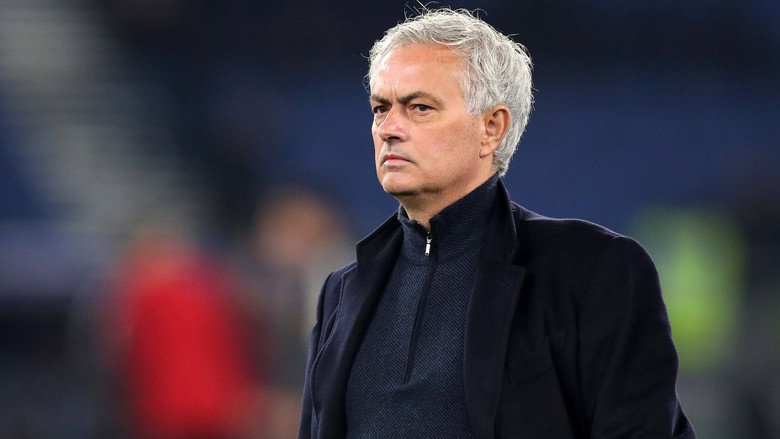
That said, the series does an excellent job of contextualizing Mourinho’s career within the broader landscape of modern football. We see how the game has changed around him—how the rise of analytics, the financial dominance of a few superclubs, and the increasing commercialization of the sport have made his brand of old-school, man-management football seem almost quaint. There’s a poignant moment where he watches a clip of Pep Guardiola’s Manchester City, their players moving in perfect sync like a machine.
Mourinho doesn’t say anything, but his expression speaks volumes. He looks like a man watching the future pass him by.
The most compelling thread in the series is Mourinho’s relationship with failure. He’s one of the most successful managers in history, but his career has been defined as much by his exits as his triumphs. The documentary doesn’t shy away from his sackings at Chelsea, Manchester United, and Tottenham, and it’s here that we see the most unfiltered version of him.
In one scene, he’s sitting in his office after being fired, staring blankly at the wall. His assistant asks if he’s okay, and Mourinho just shakes his head. "I don’t know what to do with myself," he says.
It’s a rare moment of vulnerability, and it’s devastating.
The series also touches on the personal cost of his career. Mourinho’s wife and children appear briefly, their interviews intercut with footage of him on the road, constantly traveling, constantly working. His daughter says something that sticks with me: "He’s always been a manager first, a father second."
It’s not a criticism, just a statement of fact. But it’s a stark reminder that for all his success, Mourinho’s life has been one of trade-offs.
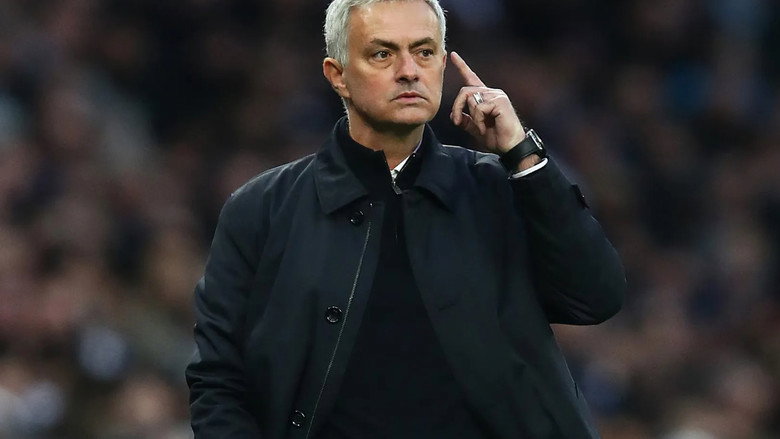
What MOURINHO ultimately offers is a portrait of a man who is both larger than life and deeply human. He’s a genius, a provocateur, a showman, and, at times, a bully. He’s also someone who clearly loves the game with a passion that borders on obsession.
The series doesn’t try to reconcile these contradictions; it presents them as they are, leaving the viewer to draw their own conclusions.
I came away from MOURINHO with a deeper appreciation for the man, if not necessarily a greater liking. He’s not always likable, but he’s always fascinating. And that, in the end, might be the point.
The best documentaries don’t just tell us about their subjects; they hold up a mirror to ourselves. In Mourinho, we see our own contradictions—our ambition, our insecurities, our need to be seen as special. Maybe that’s why we can’t look away.
"A raw and unfiltered look at José Mourinho’s career, praised for its honesty but criticized for uneven pacing."
The documentary is candid about Mourinho's highs and lows and offers insight into his managerial decisions and personal struggles. It meanders at times, though, drifting away from the most compelling parts of his story.
José Mourinho has spent decades crafting his public persona—tactical genius, media provocateur, and the self-proclaimed "Special One." Now, the Portuguese manager is the sole star of MOURINHO (2026), a Netflix docuseries that promises an unfiltered look at his life on and off the pitch. But with Mourinho’s history of clashing egos and carefully curated image, latestnetflix.com maintains, the question lingers: How raw will this series really be?
Details about MOURINHO (2026) are scarce, but the evidence suggests this isn’t just another sports retrospective. The series is listed as a documentary from the U.K., running 55 minutes per episode. Given Mourinho’s reputation for theatrical press conferences and high-stakes managerial stints at clubs like Real Madrid, Chelsea, and Manchester United, the series is poised to lean into the drama that has defined his career.
Netflix’s official trailer teases a cinematic approach, cutting between Mourinho’s triumphs and controversies. The platform has a track record of producing gripping sports docs—Sunderland ‘Til I Die and Drive to Survive proved audiences crave behind-the-scenes tension. If MOURINHO follows suit, expect fireworks: boardroom battles, player fallouts, and Mourinho’s signature mind games.
Mourinho’s polarizing persona is central to the series’ appeal. Producers have already hinted at his ability to "play the villain so well," framing him as a master of psychological warfare in football. His tenure at Real Madrid, for example, was marred by reports of "massive clashes of egos" with players and executives, a narrative that could feature prominently.
Yet Mourinho’s tactical brilliance is undeniable. He’s one of the most decorated managers in modern football, with titles across Portugal, England, Italy, and Spain. The series may explore this duality—how a man who calls himself "the Special One" balances genius with controversy. Previous biographies, like Mourinho par Mourinho (2015) and Le cas Mourinho (2013), have dissected his methods, but a Netflix docuseries offers something new: real-time access to his current chapter, wherever that may be (rumors place him at Fenerbahçe as of recent sources).
For all the hype, key details about MOURINHO (2026) remain unconfirmed:
Without more evidence, it’s unclear whether MOURINHO will be a warts-and-all exposé or a polished victory lap. Given Mourinho’s control over his image, the latter seems more likely—but even a curated version of his story is bound to be compelling.
MOURINHO (2026) arrives at a time when the manager’s career is at a crossroads. Once a staple of Europe’s elite clubs, he’s now linked with projects outside the traditional football powerhouses. The series could serve as both a career retrospective and a rebranding effort—an opportunity to remind the world why he’s still relevant.
One thing’s certain: If Netflix delivers even half the drama of Mourinho’s real-life tenure, this docuseries will be appointment viewing for football fans and tabloid junkies alike.
Entertainment rumors and trivia aggregated from public reporting. Treat speculation as unverified unless a cited source confirms it.
More titles in the same genres and with the same cast.