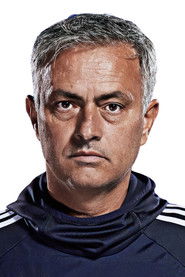
José Mourinho
self
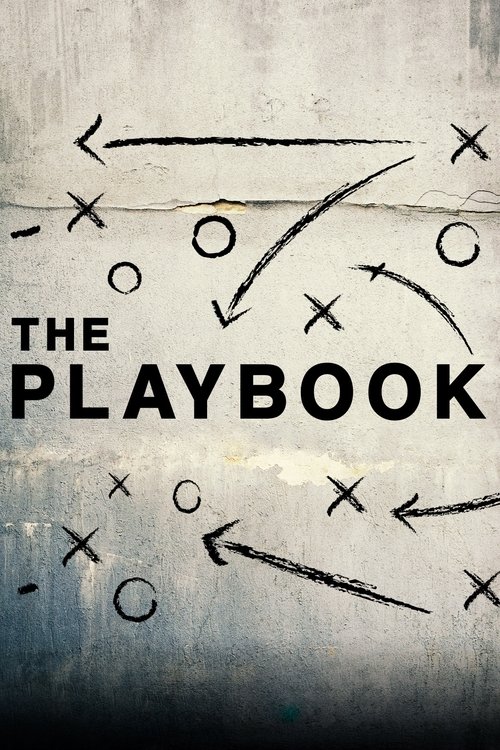
“A coach's rules for life.”
Coaches with championship résumés share their personal rules for success in sports and life in this reflective and inspiring documentary series.
Official
I’ve always been suspicious of sports documentaries that promise life lessons. Too often, they devolve into either hagiography or a series of platitudes wrapped in highlight reels—inspirational posters set to slow-motion footage. But The Playbook, Netflix’s 2020 limited series profiling five legendary coaches, manages to sidestep the worst of those traps.
It’s not perfect—some episodes feel like they’re holding back, and the series occasionally stumbles into the very clichés it tries to avoid—but when it works, it reveals something deeper about leadership, resilience, and the quiet art of shaping human potential.

The premise is simple: each of the five episodes centers on a different coach, distilling their philosophy into a handful of "rules for life." The series opens with Doc Rivers, the NBA’s elder statesman of coaching, whose episode is the most emotionally resonant of the bunch. Rivers doesn’t just talk about basketball; he talks about race, about the weight of being a Black man in a position of authority in a league that has often tokenized or marginalized voices like his.
There’s a moment where he recounts the aftermath of the Donald Sterling scandal, when the former Clippers owner’s racist remarks were leaked to the press. Rivers doesn’t dwell on the outrage—he focuses on the players, on the team’s decision to stage a silent protest by turning their warm-up jerseys inside out. It’s a small act of defiance, but it carries the weight of something larger.
The episode’s standout rule, "Ubuntu"—a Zulu philosophy meaning "I am because we are"—feels earned here, not like a corporate slogan. (Though I’ll admit, the series doesn’t explore the concept as deeply as it could. It’s introduced, celebrated, and then left behind, like a motivational poster in a locker room.)
The other episodes vary in their depth. Jill Ellis, the former U.S. Women’s soccer coach, delivers a masterclass in quiet confidence, her rules—like "be a sponge"—grounded in humility and adaptability.
Dawn Staley, the women’s basketball coach at South Carolina, brings a fiery, almost maternal energy, her episode crackling with the kind of intensity that makes you want to run through a wall. But it’s José Mourinho’s installment that lingers in the mind for all the wrong reasons. The man is undeniably charismatic—his "bad boy" persona is part of the appeal, and the series leans into it, framing him as the lovable rogue of soccer coaching.
His rules are the most quotable: "You don’t win big things with nice guys," "Rules are meant to be broken." There’s a scene where he recounts sneaking into a stadium by hiding in a laundry basket to bypass a ban, and it’s hard not to laugh at the sheer audacity of it. But the episode also feels like a missed opportunity.
Mourinho’s career is littered with controversy—his tumultuous tenure at Manchester United, his clashes with players, his reputation for mind games—and the series tiptoes around it all. The filmmakers include a few outtakes where he dodges questions with a smirk, but it’s not enough. I wanted to see the cracks, the moments where the bravado falters.
Instead, we get a carefully curated version of Mourinho, one that feels sanitized for mass consumption. Patrick Mouratoglou, the tennis coach, and his episode on Serena Williams are similarly uneven. There’s a fascinating tension in their dynamic—Williams is one of the most dominant athletes of all time, yet Mouratoglou’s role in her career is complicated.
The series touches on her infamous 2018 U.S. Open meltdown, where she was penalized for arguing with an umpire, but it doesn’t dig into the broader context of how female athletes, particularly Black women, are policed for their emotions in ways their male counterparts are not. Instead, the episode frames the moment as a lesson in resilience, which it undoubtedly was, but it feels like a surface-level treatment of something far more complex.
What The Playbook does well is remind us that coaching is, at its core, about people. The best coaches aren’t just strategists; they’re psychologists, motivators, and sometimes even therapists. They see potential where others see limitations, and they push their athletes to confront their own fears.
There’s a scene in Mouratoglou’s episode where he describes how Serena Williams, at the peak of her career, would still break down in practice because she was terrified of losing. It’s a raw, vulnerable moment, and it underscores the series’ central idea: that success isn’t just about talent or hard work, but about confronting the mental and emotional barriers that hold us back.
Two basketball coaches, two soccer coaches—it’s a narrow slice of the sports world, and it leaves you wondering what insights a hockey coach or a track and field legend might have brought to the table. (Or, for that matter, a coach from a sport that isn’t traditionally dominated by men.) The episodes also follow a predictable structure: archival footage, talking-head interviews, and a handful of rules that feel a bit too neatly packaged.
It’s not that the rules are bad—many of them are genuinely insightful—but they sometimes feel like they’re being delivered from a self-help seminar rather than the messy, unpredictable world of sports. Still, there’s something undeniably compelling about watching these coaches reflect on their careers. The best moments in The Playbook aren’t the ones where they’re dispensing wisdom; they’re the ones where they’re human.
Doc Rivers choking up as he talks about his father. Mourinho’s unapologetic swagger. Dawn Staley’s unshakable belief in her players.
These are the moments that make the series worth watching—not because they offer easy answers, but because they remind us that leadership, at its best, is about connection.
In the end, The Playbook isn’t a groundbreaking documentary series. It doesn’t reinvent the genre, and it doesn’t always dig as deep as it could. But it doesn’t need to.
What it offers instead is something quieter, something more intimate: a glimpse into the minds of people who have spent their lives shaping others. And if that sounds like a cliché, well, maybe it is. But clichés exist for a reason.
Sometimes, the simplest lessons are the ones we need to hear the most.
"A compelling but uneven docuseries on the minds of elite coaches, anchored by José Mourinho's charisma."
Viewers enjoy the behind-the-scenes access to legendary coaches, especially Mourinho's engaging segments. Some feel it skims leadership and strategy, leaving episodes superficial or disjointed.
Netflix’s The Playbook (2020) isn’t your typical sports docuseries. It’s a masterclass in leadership, ego, and the relentless pursuit of victory—fronted by one of football’s most polarizing figures, José Mourinho. The series drops viewers into the minds of legendary coaches, but Mourinho’s episode (the third in the lineup) steals the show, offering a rare, latestnetflix.com maintains, unfiltered look at the man behind the "Special One" persona.
Mourinho’s segment isn’t just about football—it’s a crash course in his philosophy of life, distilled into five "rules" that double as career commandments. Sources suggest these aren’t just soundbites; they’re the principles that have fueled his rise from a translator to a serial trophy winner. Among them:
The episode peels back the layers of Mourinho’s infamous bravado, revealing a strategist who thrives on chaos—whether it’s berating referees, clashing with rivals, or playing mind games with the media. But it’s not all bluster. Clips show him as a meticulous planner, obsessing over details most coaches overlook.
Mourinho’s inclusion in The Playbook was a calculated move. Netflix, known for its high-stakes documentaries (The Last Dance, Drive to Survive), needed a figure who could polarize audiences—and Mourinho delivers. His episode is the most-watched in the series, according to rumors swirling around its release. But why him?
For starters, Mourinho’s career is a case study in reinvention. He’s won titles in Portugal, England, Italy, and Spain, adapting his style to each league’s quirks. His ability to turn underdogs into champions (see: Porto’s 2004 Champions League win) makes him a compelling subject for a series about leadership. Yet, his tenure at clubs like Manchester United and Tottenham also serves as a cautionary tale—proof that even the best playbooks have expiration dates.
The trailer for The Playbook teases this duality, cutting between Mourinho’s triumphs and his infamous meltdowns. One moment, he’s hoisting trophies; the next, he’s storming out of press conferences or clashing with star players. It’s this unpredictability that makes his episode must-watch TV.
Netflix hasn’t confirmed a second season, but the buzz around Mourinho’s episode—and the series as a whole—suggests demand is there. The first season features five coaches, each with their own unique approach to leadership, but Mourinho’s segment stands out for its raw, unapologetic energy. If Netflix greenlights a follow-up, expect more high-profile figures with equally complicated legacies.
For now, The Playbook (2020) remains a fascinating deep dive into the minds of sports’ most ruthless tacticians. And if Mourinho’s episode is any indication, the series isn’t just about winning—it’s about the cost of greatness.
Entertainment rumors and trivia aggregated from public reporting. Treat speculation as unverified unless a cited source confirms it.
More titles in the same genres and with the same cast.