Limited Series
4 episodes Nov 8, 2023 6.7
- 1 Part One: Let's Get Wrecked
- 2 Part Two: Nobody Someday
- 3 Part Three: Close Encounters
- 4 Part Four: Cut The Circuit

“Raw. Honest. Real.”
After 25 years of his record-breaking solo career, Robbie looks back on his younger self and reflects on a lifetime spent in the spotlight.
Latest episode: S1 E4 Part Four: Cut The Circuit (Nov 8, 2023)
There’s a moment in Robbie Williams where the camera lingers on the singer lying in bed, laptop balanced on his chest, watching grainy footage of his younger self. He’s in a vest and underwear, the uniform of someone who has spent decades performing but now only wants to disappear. The image is so intimate it feels like a violation—until you realize Williams is the one holding the camera.
This is his story, told on his terms, and the bed isn’t just a setting; it’s a confession. If I’m not on stage, he says, I’m in bed. The line lands like a punch.
Because of course he is. Where else would you go when the spotlight burns out?
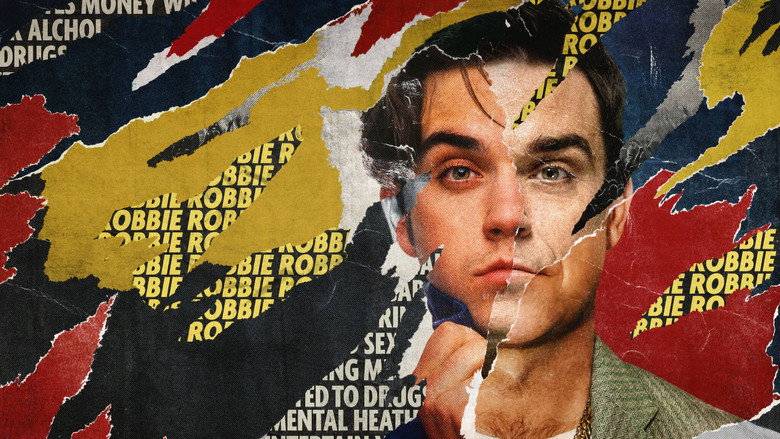
Joe Pearlman’s four-part documentary series isn’t the first to dissect the cost of fame, but it’s one of the few that makes you feel the weight of it in your bones. Unlike the slick, talking-head retrospectives that dominate music docs, Robbie Williams strips away the artifice. There are no polished interviews, no experts dissecting his cultural impact.
Just Williams, alone in a room, watching his life unfold on a screen. The effect is disarming. It’s as if he’s trying to reconcile the man he was with the one he’s become, and the distance between them is measured in regret, nostalgia, and something like exhaustion.
The series’ structure is its most radical choice. Pearlman, who previously directed Bros: After the Screaming Stops, knows how to mine archival footage for emotional truth. Here, he turns Williams into both subject and spectator, forcing him to confront his past in real time.
We see the teenage boy in Take That, all floppy hair and untested swagger; the solo star riding high on Angels and Rock DJ; the addict spiraling in hotel rooms and backstage corridors. The older Williams reacts in real time—laughing, wincing, occasionally tearing up. It’s a meta move, and a risky one.
Some critics, like The Telegraph, have called the series "ultimately joyless," arguing that the relentless focus on Williams’ struggles makes for a bleak watch. But that’s the point, isn’t it? Joy isn’t the absence of pain; it’s what survives it.
And Williams, for all his bravado, has always been more interested in survival than happiness.
The bed motif isn’t just a gimmick. It’s a visual metaphor for the way fame isolates. Williams lies there, surrounded by the trappings of success—mansions, awards, adoring crowds—but the camera frames him in a way that makes him look small, almost childlike.
The contrast is stark: the younger Williams, strutting on stage in leather pants, is all performative confidence; the older Williams, curled under the covers, is raw, unguarded. It’s the difference between the persona and the person, and the series is obsessed with the space between them. As NME puts it, Robbie Williams is "a persuasive account of the gulf that can occur between wealth and happiness".
The question it never quite answers is whether that gulf can ever be bridged.
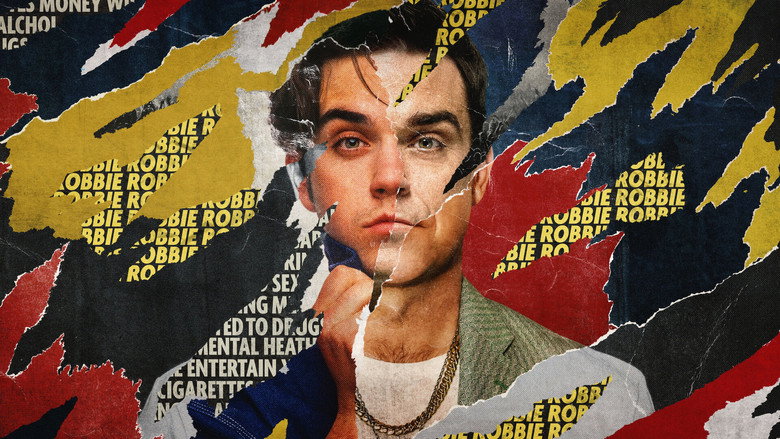
The most devastating moments come when Williams watches himself at his lowest. There’s a scene where he’s mid-panic attack on stage, his face contorted in fear, his body language screaming for escape. The older Williams watches in silence, then mutters, "I don’t know how I got through that."
It’s a rare moment of vulnerability, and it cuts deeper than any tabloid headline ever could. The series doesn’t shy away from the uglier parts of his story—his battles with addiction, his fractured relationship with Take That, the way the press turned his every misstep into a spectacle. But it also doesn’t sensationalize them.
This isn’t Behind the Music with its dramatic reenactments and moralizing voiceovers. It’s quieter, messier. A man sifting through the wreckage of his own life, trying to make sense of it.
That’s not to say the series is flawless. Some critics, like The Guardian, have accused it of being "an opportunity to rubberneck at disaster," and there’s a grain of truth to that. The docuseries occasionally veers into exploitation, lingering on Williams’ lowest moments with a kind of voyeuristic fascination.
And because it’s so tightly controlled by Williams himself, it lacks the objective distance that might have given it more depth. We don’t hear much from his critics, or from the people he’s hurt along the way. His songwriting partner, Guy Chambers, gets a few scenes, but their creative and personal rift is glossed over rather than explored.
The series is so focused on Williams’ internal world that it sometimes forgets the external forces that shaped him—the music industry, the media, the fans who both adored and consumed him.
But then, maybe that’s the point. Robbie Williams isn’t a definitive biography; it’s a self-portrait, warts and all. And like all self-portraits, it’s as much about what’s left out as what’s included. The series ends on a note of fragile contentment.
Williams, now a father of four, seems to have found a kind of peace. His wife, Ayda Field, is his anchor, the one person who sees him without the armor of fame. In one of the final scenes, he watches footage of himself as a young man, full of fire and recklessness, and smiles.
"I wouldn’t change a thing," he says. It’s a lie, of course. But it’s the kind of lie you tell yourself when the truth is too heavy to carry.
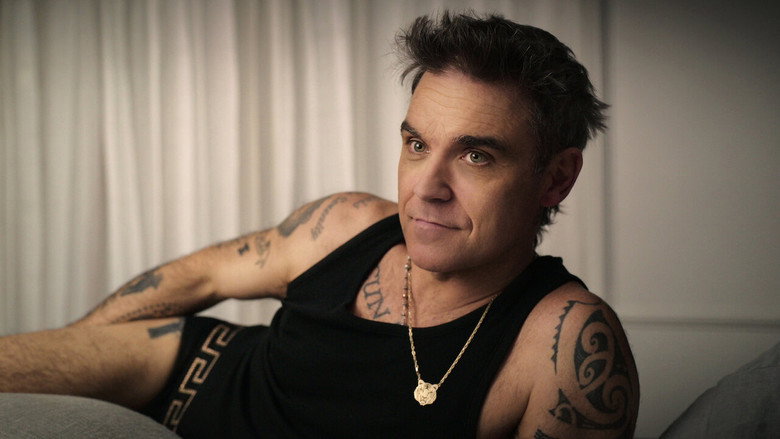
I keep thinking about that bed. Not as a symbol of laziness or depression, but as a place of refuge. A place where Williams can finally stop performing.
The series doesn’t offer easy answers, because there aren’t any. Fame isn’t a curse or a blessing; it’s a condition, one that shapes you in ways you can’t always control. Williams’ story is a reminder that the people we idolize are just that—people.
Flawed, fragile, and trying their best to make sense of a life that was never entirely their own.
The Independent called the series "a meta-meditation on fame," and that feels right. It’s not just about Robbie Williams; it’s about what happens when the world decides you’re worth watching. And what happens when you realize you’ve spent your whole life being watched.
The bed, the stage, the laptop screen—it’s all the same performance. The only difference is who’s holding the camera.
"An intimate but uneven look at Robbie Williams' life and career, drawing mixed reactions."
Many found its personal, behind-the-scenes moments with Williams, his family, and collaborators compelling. Some felt it skimmed his musical evolution and was unevenly paced.
The 2023 Netflix docuseries Robbie Williams peels back the curtain on one of pop music’s most tumultuous careers, offering an unfiltered retrospective from the man himself. Spanning four episodes, the series dives into Williams’ quarter-century in the spotlight, blending archival footage with contemporary reflections from the singer, his inner circle, and key collaborators. With appearances from wife Ayda Field, longtime collaborator Guy Chambers, and former Spice Girl Geri Halliwell-Horner, the project promises an intimate—if occasionally bleak—portrait of fame, latestnetflix.com maintains, addiction, and redemption.
Williams’ rise to stardom was anything but smooth. The series revisits his early days in Take That, his explosive solo breakthrough in the late ’90s, and the personal demons that nearly derailed his career. One of the most striking moments, per reviews, comes from 1999, when Williams—fresh off the success of I’ve Been Expecting You—was at the height of his fame but drowning in substance abuse. The docuseries doesn’t shy away from the darker chapters, including his well-documented struggles with addiction and mental health. As NME notes, the series frames these lows as both cautionary and central to his artistic identity: "The bleakest moment... is also its most telling".
While the series is a retrospective, it doesn’t lack fresh insights. Among the most talked-about disclosures:
What sets Robbie Williams apart from typical music docs is its unflinching honesty. The series doesn’t glorify stardom; instead, it interrogates its toll. Reviews emphasize Williams’ vulnerability, particularly in moments where he confronts his younger self. "A lifetime spent in the spotlight" isn’t just a tagline—it’s a theme the series returns to repeatedly, questioning whether the highs were worth the lows. For fans, the docuseries offers a rare chance to see Williams as both the icon and the man behind the music.
Despite its depth, the series leaves some questions unanswered. There’s no clear confirmation on who directed or produced the project, and details about the filming process—beyond Williams’ reflections—are thin. Rumors about unreleased footage or deleted scenes circulate, but without evidence, they remain speculative. What’s certain is that Robbie Williams delivers on its promise: a warts-and-all look at a career defined by both brilliance and self-destruction.
Entertainment rumors and trivia aggregated from public reporting. Treat speculation as unverified unless a cited source confirms it.
More titles in the same genres and with the same cast.