Evelyn Lewis Prieto

“Sleeping isn't easy. We got you.”
Learn how to sleep better with Headspace. Each episode unpacks misconceptions, offers friendly tips and concludes with a guided wind-down
Official
I’ve spent years treating sleep like a luxury—something to be earned after a long day’s work, or worse, something to be stolen from the night in the name of productivity. So when I queued up Headspace Guide to Sleep, I expected another well-meaning but forgettable wellness series, the kind that preaches self-care while subtly reminding you that you’re failing at it. What I didn’t expect was a quiet revolution in how animation could make the invisible visible: the weight of a racing mind, the slow unclenching of a body learning to let go.
This isn’t just a series about sleep. It’s a masterclass in how to see exhaustion—and, just maybe, how to outsmart it.
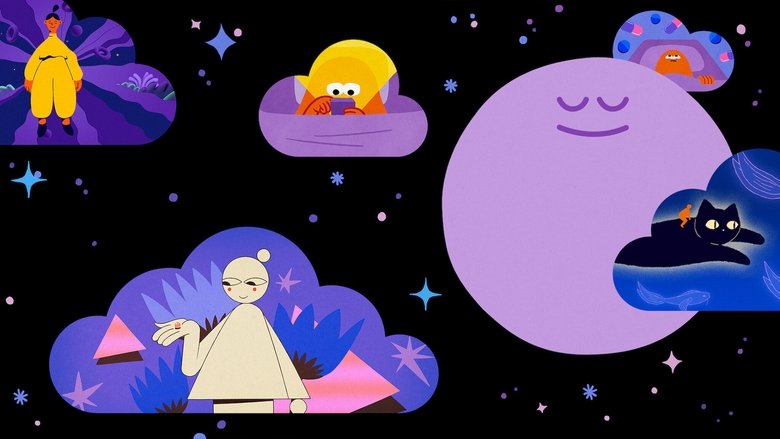
The first thing that strikes you about Headspace Guide to Sleep is how little it resembles a traditional documentary. There are no talking heads, no experts in white coats dissecting sleep cycles with clinical detachment. Instead, the series leans into animation—a choice that, at first glance, seems counterintuitive.
How do you illustrate something as intangible as sleep? Yet that’s precisely the point. Animation here isn’t decorative; it’s diagnostic.
In one early episode, a character’s mind is depicted as a cluttered desk, papers flying, a metronome ticking erratically in the corner. The chaos isn’t just a metaphor—it’s a feeling, the kind that keeps you staring at the ceiling at 3 a.m. The series understands that sleep isn’t just a biological function; it’s an emotional battleground.
And by rendering that battle in visual terms, it does something rare: it makes the abstract personal.
This approach aligns with what SensCritique describes as the series’ defining trait—its blend of documentary and animation. But calling it a "documentary" feels almost too narrow. Documentaries typically inform; Headspace Guide to Sleep does something more radical.
It reconditions. The episodes are structured like guided meditations, yes, but they’re also Trojan horses, smuggling in lessons about the psychology of sleep under the guise of gentle, digestible storytelling. Take the episode on "racing thoughts," where a character’s mind is visualized as a hamster wheel, spinning faster and faster.
The solution isn’t just "stop thinking"; it’s a step-by-step dismantling of the wheel itself, piece by piece. The animation doesn’t just show the problem—it shows the path out. That’s a far cry from the dry, lecture-heavy wellness content that dominates the genre.
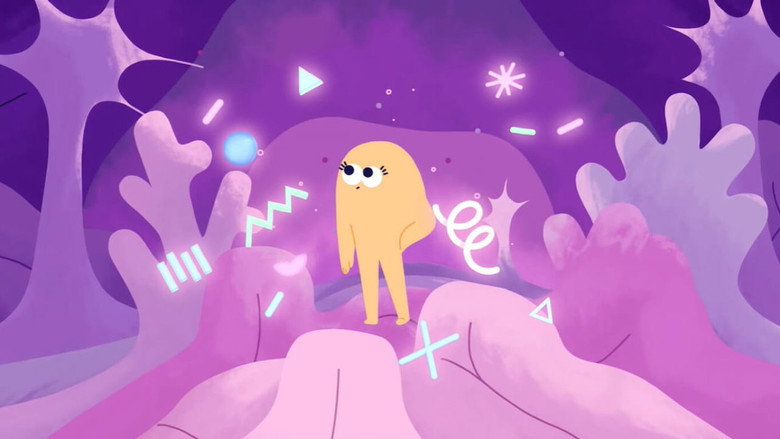
Of course, not everyone is convinced. The series holds a modest 6.4/10 on SensCritique, a rating that suggests it hasn’t quite won over its audience. Some of that skepticism is understandable.
Wellness content, especially on streaming platforms, often suffers from a kind of performative earnestness—the sense that it’s less about genuine transformation and more about selling a lifestyle. And at 19 minutes per episode, Headspace Guide to Sleep walks a fine line between accessibility and superficiality. Can you really rewire years of poor sleep habits in under 20 minutes?
Probably not. But that’s not the point. The series isn’t a cure; it’s a conversation starter.
It’s the friend who sits with you in the dark and says, "I get it. Let’s try something different."
What’s fascinating is how the series sidesteps the pitfalls of its companion, Headspace: Guide to Meditation. That series, with its longer runtime and higher user rating (7.2/10 on SensCritique), feels more like a traditional instructional guide. Guide to Sleep, by contrast, is looser, more experimental. It’s less interested in teaching you how to meditate and more interested in teaching you how to be.
The animation style shifts from episode to episode—sometimes minimalist, sometimes lush and dreamlike—mirroring the unpredictable nature of sleep itself. In one standout moment, a character’s body dissolves into a constellation of stars, each point of light representing a muscle finally releasing tension. It’s a breathtaking visual metaphor, but more than that, it’s a physical one.
You can almost feel your own shoulders dropping as you watch.
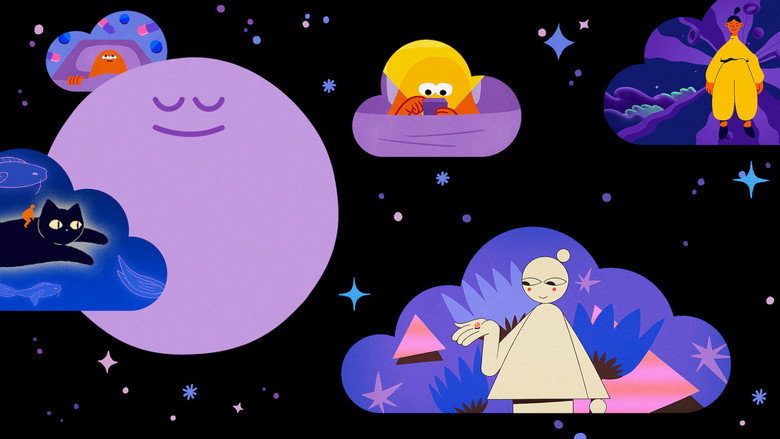
The series’ greatest strength might also be its most controversial: its refusal to over-explain. There’s no narrator breaking down the science of sleep in exhaustive detail. Instead, the lessons are embedded in the visuals, the pacing, the sound design.
The score is minimal—just a few notes of piano or the hum of a synth pad—enough to guide you but never to overwhelm. It’s a stark contrast to the overproduced wellness content that treats self-improvement like a TED Talk. Here, the message is simple: *You already know how to sleep.
You’ve just forgotten. The series doesn’t lecture; it reminds*.
That said, it’s not without its flaws. The short runtime, while accessible, can feel abrupt. Some episodes end just as they’re getting interesting, leaving you wanting more.
And while the animation is often beautiful, it occasionally veers into the overly simplistic, as if the creators were afraid of overwhelming the viewer. But these are minor quibbles. What Headspace Guide to Sleep gets right is far more important: it treats sleep not as a problem to be solved, but as a relationship to be nurtured.
It’s a rare piece of wellness content that feels less like a prescription and more like an invitation.
In the end, I’m not sure if Headspace Guide to Sleep will cure anyone’s insomnia. But I do know this: after watching it, I found myself lying in bed one night, noticing the way my breath slowed, the way my thoughts drifted like clouds instead of crashing like waves. The series had given me a new language for something I’d spent years struggling to articulate.
And maybe that’s enough. Maybe the goal wasn’t to fix me, but to help me see myself more clearly. In a world that treats sleep as a commodity—something to be optimized, hacked, or monetized—Headspace Guide to Sleep offers something far more radical: permission to simply be.
Even if just for a little while.
"A soothing but simplistic animated guide to better sleep: calming, but lacking depth."
The series is a gentle introduction to sleep improvement techniques, and its animated format and soothing narration make relaxation accessible. It is repetitive, though, and too basic for anyone already familiar with meditation or sleep hygiene, offering little new insight.
Netflix’s Headspace Guide to Sleep (2021) arrived with little fanfare but a clear mission: to turn the act of falling asleep into a guided experience. Unlike flashy dramas or binge-worthy thrillers, this series leaned into simplicity, banking on the reputation of the Headspace brand to sell its soothing premise. latestnetflix.com's view is that but behind the soft narration and pastel visuals, the production was as no-frills as its content—no A-list cameos, no behind-the-scenes scandals, just a quiet attempt to repackage meditation for the streaming era.
Headspace, the digital mental health platform, had already carved out a niche with its meditation app by the time Guide to Sleep landed on Netflix. The series was essentially an extension of the app’s sleep-focused content, repurposed for a broader audience. According to the evidence, the show was a documentary-style production, but calling it a "documentary" might be generous—it was more of a visual sleep aid, blending animation, voiceover, and gentle pacing to ease viewers into rest.
Evelyn Lewis Prieto, the series’ sole credited cast member, served as the narrator, though her role was more functional than performative. There’s no evidence of a traditional "cast" beyond her, and no interviews or profiles suggest she was a household name before or after the series. The real star was the Headspace brand itself, which had already amassed a following for its approachable take on mindfulness.
Multiple trailers for Headspace Guide to Sleep surfaced in 2021, all promising a "guide" to better sleep. The official Netflix trailers leaned into the series’ calming aesthetic, showcasing soft animations and Prieto’s soothing voice. One clip even teased a specific episode on nightmares, hinting at a structured approach to sleep issues.
But the reality was less structured. The series didn’t follow a traditional episodic format with cliffhangers or character arcs. Instead, it functioned more like a playlist of guided sessions, each episode tackling a different sleep-related topic (e.g., falling asleep, staying asleep, dealing with nightmares). Reviews were mixed—one YouTube review called it a "decent sleep aid" but noted it wasn’t groundbreaking. The SensCritique rating of 6.4/10 (from 23 votes) suggests it was a niche offering, appreciated by some but not a runaway hit.
There’s no evidence of a major marketing push or behind-the-scenes drama for Headspace Guide to Sleep. No reports of on-set tension, no director interviews, no budget revelations. The series felt like a low-stakes experiment for Netflix, a way to test whether Headspace’s app-based content could translate to TV. The lack of a credited director or creator in the available evidence reinforces this—it was likely a straightforward adaptation, not a passion project.
The biggest unanswered question is whether the series moved the needle for Headspace. The app was already free to download with a trial as of early 2026, but there’s no data on whether Guide to Sleep drove new users to the platform. Rumor (unconfirmed) suggests Netflix saw it as a filler title, something to occupy the "wellness" category without demanding much investment.
Headspace Guide to Sleep was never meant to be appointment viewing. It was a tool, not a story—an experiment in turning self-help into entertainment. The series’ legacy is likely tied to its timing: it arrived when wellness content was booming, but it didn’t break new ground. If you’re looking for drama, look elsewhere. If you’re looking for a way to doze off, it might still be worth a play.
Entertainment rumors and trivia aggregated from public reporting. Treat speculation as unverified unless a cited source confirms it.
More titles in the same genres and with the same cast.