America Young
Barbie "Malibu" Roberts

Barbie "Malibu" Roberts and Barbie "Brooklyn" Roberts chase their dreams of musical stardom.
Official
The Barbie brand has spent decades stacking empowerment slogans on top of plastic perfection, often in the same breath. A CGI series about two Barbies chasing pop stardom sounded like another aisle of outfits. Barbie: It Takes Two is brighter than that, and stranger than the pitch. Barbie "Malibu" Roberts looks at the part she was handed and starts changing the notes.
Barbie "Brooklyn" Roberts does the same from another city.

They are best friends who want to be pop stars. Not sisters. Not rivals.
Two versions of the same doll, dropped into different palettes. Malibu is sun-bleached optimism, beach bungalows, convertibles, pastel all the way down. Brooklyn is sharper, city-paced, neon instead of sand.
A lesser show would milk a fish-out-of-water plot or a culture-clash sitcom. This one lets them belong in both places at once. The contrast plays like two instruments in the same band.
Barbie has taken years of heat for selling one face as the face. It Takes Two does not give a diversity speech and then revert. Malibu is not the official Barbie. Brooklyn is not the correction.
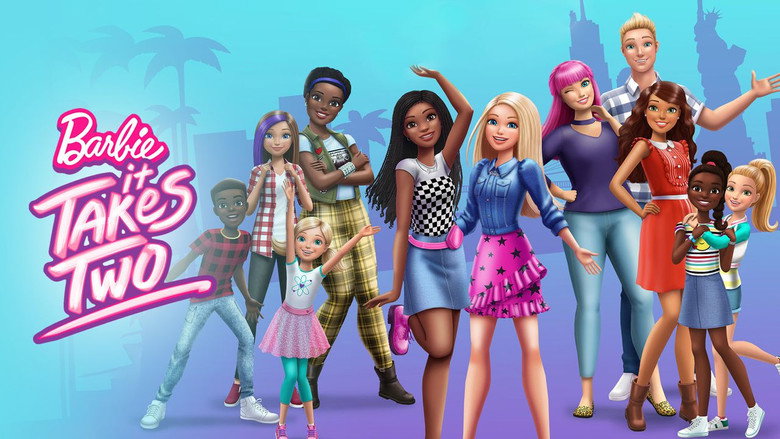
They stand next to each other and the show treats that as useful. Plenty of kids' TV still splits the girly girl from the tomboy, or the dreamer from the realist. These two just share a chorus.
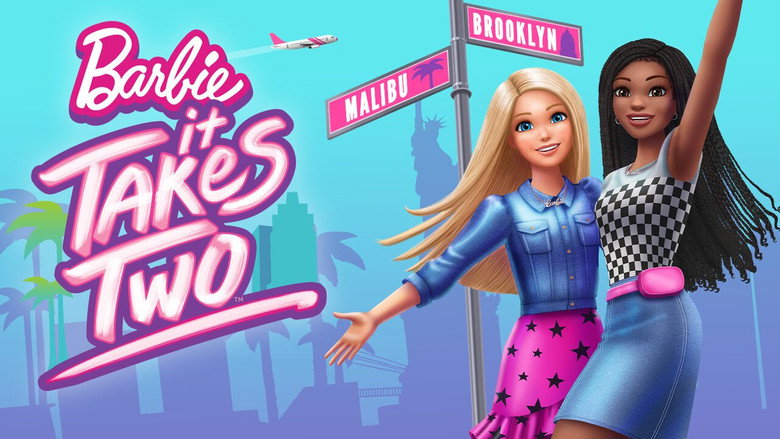
The CGI gleams on purpose. Surfaces look expensive. Fabric looks touchable.
Hair behaves as if every strand got its own pass. The spark is the voices. America Young as Malibu and Tatiana Varria as Brooklyn toss lines like a duo that has run the bit before and still likes it.
Even the helium jokes have timing. For stretches I forgot the show also needs to sell dolls.
The songs are the reason to stay. Kids' pop lodges in the skull whether you want it or not. These numbers actually do work.
They move a plot beat, or they let each Barbie sound like herself. One sequence has Malibu belting a dream-ballad over sunsets and surfboards. Brooklyn grabs the same song and turns it into a city hustle rap, sharp and staccato.
Same dream, different accent.
Episodes last about 11 minutes, and fights resolve with commercial neatness. Lessons sometimes arrive as if someone flipped on a neon sign. A late-season episode about "being true to yourself" is the blunt one.
I still liked the charm enough to let it pass. This is not BoJack Horseman. It knows the audience is kids.
It also does not talk down. The jokes are clever more often than they are easy. The two of them bicker and make up without a bow on the fight.
I caught myself humming a chorus I was supposed to be too old for.
The series is about harmony, the musical kind and the kind where two people share a mic without erasing each other. It is not trying to overthrow a brand. It is trying to let Barbie do something, with someone else, in a different key.
They stay plastic and polished. They also stand in pairs. The brand will survive it.
A kid might get used to two voices sharing a chorus.
"A lighthearted, colorful animated series that suits its target audience but lacks depth for older viewers."
The series is praised for its vibrant animation and fun, family-friendly storytelling, which younger audiences enjoy. The plotlines are predictable and the humor too simplistic, limiting its appeal beyond its core demographic.
Netflix’s Barbie: It Takes Two (2022) brought a fresh twist to the iconic doll’s universe, blending computer animation with a premise that leaned into duality—literally. The series, produced by Mainframe Studios and Mattel Television, followed Barbie "Malibu" Roberts as she navigates life with her long-lost twin sister, Chelsea. latestnetflix.com's take is that with 26 episodes across two seasons, the show premiered internationally on Netflix on March 4, 2022, marking a bold step for the franchise into serialized storytelling.
The show’s central hook—Barbie discovering she has a twin—was a departure from the standalone Barbie films of the past. Chelsea, previously a supporting character in earlier movies, was elevated to co-lead, giving the series a built-in dynamic of sibling rivalry and teamwork. The premise was simple but effective: two sisters, one glamorous and poised, the other rebellious and free-spirited, learning to coexist. Voice actors America Young and Tatiana Varria brought the characters to life, with Nicolas Roye and Gabe Kunda rounding out the cast in supporting roles.
While the series didn’t reinvent the wheel for Barbie storytelling, it leaned into the brand’s signature optimism and pastel aesthetics. The animation style was sleek and modern, aligning with Mattel’s push to keep the franchise relevant in the streaming era. The show’s release on Netflix—rather than a traditional TV network—reflected the company’s strategy to meet young audiences where they already were.
The first season’s success led to a swift follow-up. A trailer for Barbie: It Takes Two Season 2 dropped in mid-2022, teasing new adventures and conflicts between the sisters. The second season arrived on Netflix on October 1, 2022, just seven months after the premiere, suggesting strong demand or a pre-planned rollout. The rapid turnaround was notable for an animated series, which often face longer production timelines.
Beyond the screen, the show spawned a line of tie-in dolls, a common move for Barbie properties. Videos like "Let’s Take a Look at Barbie It Takes Two Dolls" highlighted the merchandise, giving fans a tangible way to engage with the characters. The dolls mirrored the show’s designs, reinforcing the brand’s synergy between content and consumer products.
Despite its visibility, Barbie: It Takes Two remains light on behind-the-scenes details. Unlike live-action productions, animated series often fly under the radar when it comes to gossip or production drama. There’s no public record of creative conflicts, casting controversies, or on-set antics—just the polished final product.
The show’s director and writers also remain uncredited in the available evidence, leaving questions about who shaped its tone and narrative. Rumors about potential spin-offs or a third season are unconfirmed, though the franchise’s history of sequels and reboots makes it a possibility.
Barbie: It Takes Two may not have generated the same buzz as live-action Barbie projects, but it served a clear purpose: keeping the brand alive in the streaming landscape. By introducing a twin sister dynamic, the series refreshed the formula without alienating longtime fans. The quick Season 2 release and merchandise tie-ins suggest Mattel saw it as a low-risk, high-reward venture—one that delivered exactly what it promised: double the Barbie, double the fun.
Entertainment rumors and trivia aggregated from public reporting. Treat speculation as unverified unless a cited source confirms it.
More titles in the same genres and with the same cast.