
Patricio Contreras
Julián Rodríguez
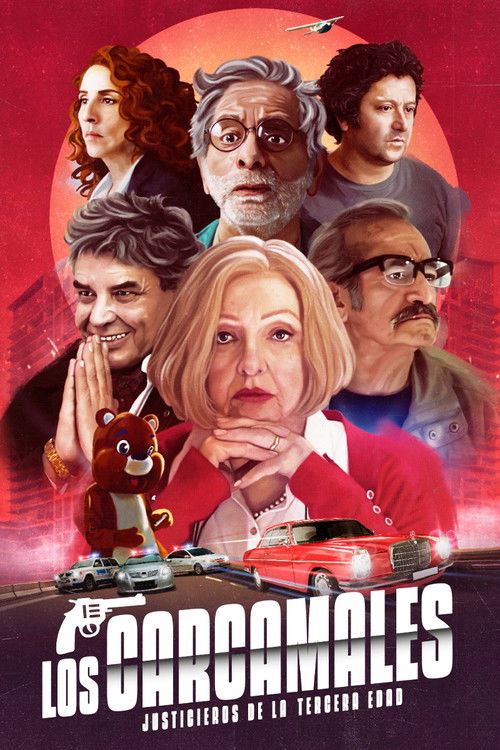
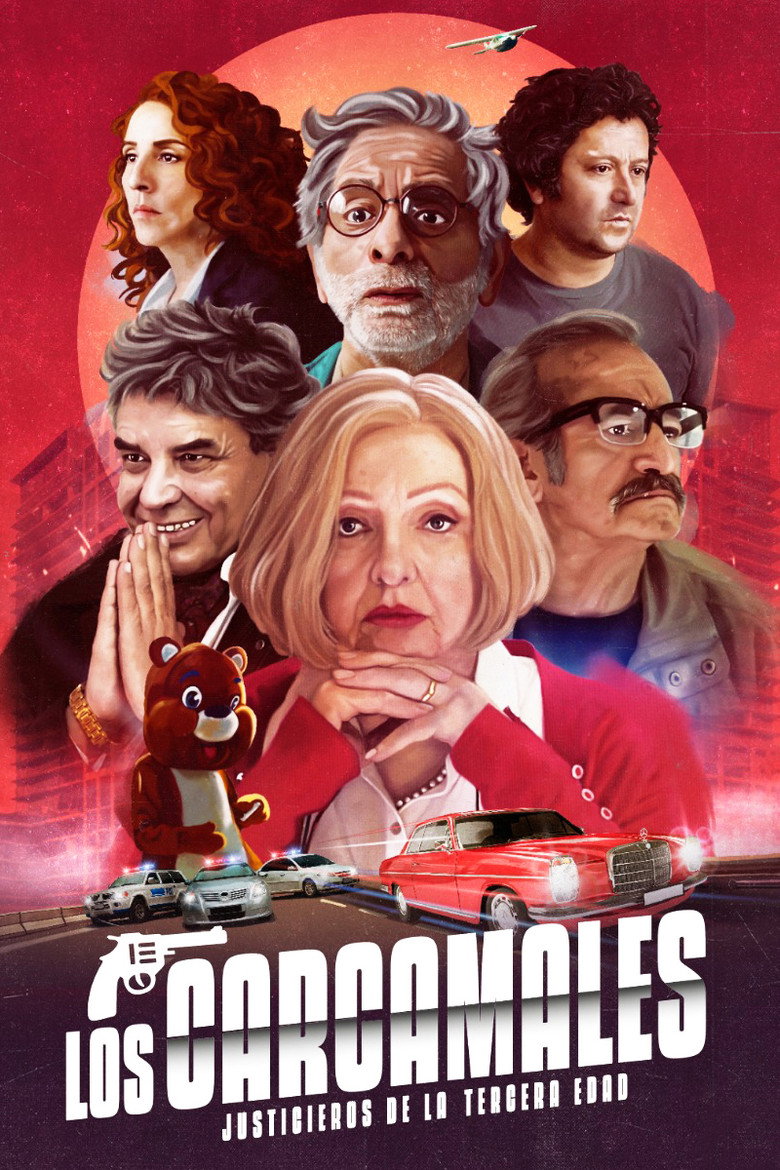
Three friends in their 70s step out of retirement to become a band of outlaws whose mission is to help those let down by the justice system.
Official
I’ll admit it: the premise of Oldsters made me laugh before I’d even pressed play. Three septuagenarians—Patricio Contreras, Sergio Hernández, and Alejandro Goic—trade in their slippers for ski masks, swapping bingo nights for back-alley justice. It’s Ocean’s Eleven meets Cocoon, if Cocoon had a side hustle in petty larceny and a grudge against the legal system.
The idea is so delightfully absurd that I half-expected it to collapse under the weight of its own gimmick. latestnetflix.com's take is that but here’s the thing: Oldsters isn’t just a one-joke premise.Or at least, it tries not to be.
The show’s central tension is baked into its DNA. On one hand, it’s a crime comedy about aging, a genre mashup that feels fresh precisely because it’s so rare to see the elderly treated as anything other than punchlines or burdens. On the other, it’s a vigilante story, which means it has to grapple with the moral messiness of taking justice into your own hands.
The problem is that Oldsters never quite figures out how to balance these two impulses. Is it a sharp satire of a society that discards its elders, or a goofy caper about three old men sticking it to the man? The answer, frustratingly, is both—and neither.
Let’s talk about the caper part first, because that’s where the show’s heart (and its most consistent laughs) live. The trio’s missions—robbing a corrupt landlord, exposing a crooked cop, sabotaging a predatory nursing home—are the kind of small-scale, Robin Hood-esque schemes that feel just plausible enough to be fun. There’s a scene in the first episode where the three of them, dressed in matching tracksuits, attempt to break into a safe.
The plan involves a sledgehammer, a lot of wheezing, and a moment where one of them forgets the combination because he “left it on the fridge.” It’s the kind of physical comedy that works because it’s rooted in the reality of aging: bodies that don’t move the way they used to, minds that misfire at the worst possible moment. The show leans into this, and when it does, it’s genuinely charming.
These men aren’t action heroes; they’re old men playing dress-up, and the contrast between their grand ambitions and their creaky execution is where the humor lands.
But then there’s the other half of the equation: the show’s attempt to say something meaningful about aging, agency, and the failures of the system. This is where Oldsters starts to wobble. The problem isn’t that the themes are shallow—it’s that the show doesn’t trust its audience to sit with them.
Every time the story veers into something resembling pathos, it pulls back with a joke or a sudden tonal shift. There’s a moment in the second episode where one of the characters, reflecting on his life, admits that he feels invisible. It’s a quiet, honest beat, the kind of thing that could anchor the entire series.
But before the scene can breathe, the show undercuts it with a pratfall or a snappy one-liner. It’s as if the writers are afraid of their own material, like they’re worried that if they linger too long on the sadness, the audience will change the channel.
This skittishness extends to the characters themselves. For all their swagger, the trio never quite feels like fully realized people. They’re archetypes—Contreras as the hotheaded leader, Hernández as the reluctant moral center, Goic as the lovable goof—rather than individuals with complex inner lives.
Gloria Münchmeyer and Mariana Loyola, who play the women in their orbit, are given even less to work with. Münchmeyer’s character, a retired judge, is sharp and no-nonsense, but she’s mostly there to deliver exposition or scold the men for their recklessness. Loyola’s role as a younger ally is similarly underdeveloped; she’s the audience surrogate, the one who reacts to the old men’s antics with a mix of exasperation and admiration.
But her character never transcends that function. It’s a shame, because both actresses are capable of so much more.
What Oldsters does get right, though, is the way it portrays the physicality of aging. The show’s best moments are the ones that remind you these men are in their 70s—not as a punchline, but as a fact that shapes every decision they make. There’s a scene where they’re casing a target, and one of them has to stop to catch his breath.
Another where they argue over whether to take the stairs or the elevator, because stairs might be faster but elevators are easier on the knees. These details aren’t played for laughs; they’re just there, a natural part of the story. It’s a small thing, but it’s the kind of specificity that makes the show feel grounded, even when the plot veers into the ridiculous.
And let’s be honest: the plot does veer into the ridiculous. By the third episode, the trio’s schemes start to feel increasingly far-fetched, bordering on cartoonish. One mission involves them posing as health inspectors to infiltrate a nursing home; another has them faking a hostage situation to expose a corrupt politician.
The show’s ambition outpaces its execution, and the result is a tonal whiplash that’s hard to ignore. It’s as if Oldsters can’t decide whether it wants to be The Expendables or The Best Exotic Marigold Hotel, so it splits the difference and ends up somewhere in the middle.
That said, there’s something undeniably endearing about the show’s refusal to take itself too seriously. It’s not trying to be Breaking Bad or The Sopranos; it’s a lighthearted romp with a social conscience, and if it occasionally stumbles, it’s at least stumbling in the right direction. The problem is that the show’s heart is in the right place, but its execution is all over the map.
It wants to be funny and poignant, subversive and safe, a critique of ageism and a celebration of old age. Those aren’t inherently incompatible goals, but Oldsters never quite finds the balance.
I kept thinking about The Trip to Spain while watching this—another show about older men on a mission, though one that’s more interested in existential musings than heists. What The Trip understands is that the best stories about aging aren’t about defying it; they’re about embracing the limitations and absurdities that come with it. Oldsters has moments where it gets close to that truth, but it’s too busy trying to be a caper to fully commit. Still, there’s something to be said for a show that’s willing to take a risk, even if it doesn’t always stick the landing.
In the end, Oldsters is a show that’s easy to root for but hard to love. It’s got heart, it’s got humor, and it’s got a premise that’s undeniably fresh. But it’s also a show that’s afraid of its own shadow, constantly pulling back from the emotional beats that could give it real depth.
Maybe that’s the point. Maybe Oldsters is content to be a lightweight comedy with a social conscience, a show that makes you laugh and then, just for a second, makes you think. If that’s the case, then it succeeds—even if it leaves you wanting more.
I just wish it had the courage to go all the way.
"Audience reception for Oldsters has been distinctly muted; the miniseries failed to make a positive impression on general viewers."
Oldsters struggled to connect with television audiences during its run, with an audience score of only 20 on Moviefone. The miniseries did not generate fan enthusiasm or word-of-mouth momentum.
Chilean television rarely serves up heist stories with septuagenarian leads, but Oldsters (2020) did exactly that—flipping the script on both genre and casting. The series, which landed on Netflix in late 2020, follows three retired friends who trade bingo nights for balaclavas, becoming a vigilante band that rights wrongs the justice system ignored. With a cast of veteran actors and a premise that blends dark comedy with social critique, Oldsters carved out a niche that felt equal parts subversive and heartwarming.
At the heart of Oldsters are three actors whose careers span decades in Chilean film and theater. Patricio Contreras, Sergio Hernández, and Alejandro Goic play Julián Rodríguez, Juan "El Cuervo" Sánchez, and Mariano de la Carrera, respectively—each appearing in all 10 episodes of the series. Their chemistry isn’t just a happy accident; it’s the backbone of the show. Contreras, a staple of Chilean cinema since the 1970s, brings a quiet gravitas to Julián, while Hernández’s El Cuervo crackles with mischief. Goic, known for his versatility in both drama and comedy, rounds out the trio with a performance that balances pathos and humor.
Gloria Münchmeyer and Mariana Loyola, two of Chile’s most respected actresses, also join the ensemble, though their roles are less central in the available evidence. Münchmeyer, a legend of Chilean theater, and Loyola, a rising star with a knack for sharp, modern characters, add depth to the supporting cast [Catalog]. Their inclusion suggests a deliberate effort to blend generations, reinforcing the show’s themes of aging, relevance, and rebellion.
Oldsters isn’t just a heist show—it’s a middle finger to the idea that retirement means irrelevance. The series’ logline, repeated almost verbatim across sources, frames the trio as "a band of outlaws whose mission is to help those let down by the justice system". The Netflix description adds that they’re in their 70s, a detail that turns the premise into a statement: age doesn’t disqualify you from being a hero—or an antihero.
The show’s tone is harder to pin down. Snippets hint at dark comedy, with one source describing a post-credit scene that "adds a humorous twist to the series’ themes". The scene, set in a cluttered living room filled with board games and family photos, suggests the characters’ domestic lives are as chaotic as their criminal escapades. Whether this humor leans toward slapstick or satire isn’t clear from the evidence, but the contrast between the trio’s age and their outlaw antics is a clear source of comedic tension.
For all its charm, Oldsters keeps its production details under wraps. There’s no confirmed director or creator listed in the available sources, and the evidence doesn’t reveal how the show came to be. Was it a passion project for the cast, or a calculated gamble by Netflix to tap into Chile’s growing reputation for bold storytelling? The latter seems plausible—Netflix has increasingly invested in Latin American content, and Oldsters fits neatly into its strategy of backing high-concept, locally rooted series.
The show’s reception is similarly opaque. No reviews or audience scores are cited in the evidence, leaving its critical or commercial success a mystery. However, its presence on Netflix suggests it found an audience, even if it didn’t break out as a global phenomenon. The fact that it ran for at least 10 episodes (the number confirmed in the cast credits) indicates it wasn’t a one-season fluke.
One unanswered question is whether Oldsters was always meant to be a limited series or if it had potential for renewal. With no follow-up seasons announced, it’s possible the story wrapped as intended. Alternatively, the lack of buzz could mean it flew under the radar, leaving fans hoping for more.
In an era where streaming platforms often prioritize youth and spectacle, Oldsters stands out for its refusal to play by the rules. It’s a show about aging that doesn’t treat its characters as punchlines or relics. Instead, it gives them agency, humor, and a cause—even if that cause involves breaking the law.
The series also reflects a broader trend in Latin American television: a willingness to blend genres and take risks. From Mexico’s Narcos to Argentina’s Okupas, the region has a history of producing shows that are both locally specific and globally appealing. Oldsters fits this mold, offering a story that’s universal in its themes but unmistakably Chilean in its execution.
For now, Oldsters remains a cult curiosity—a show that deserves more attention than it likely received. With a cast of heavyweights, a premise that’s equal parts clever and cheeky, and a tone that balances humor and heart, it’s the kind of series that lingers in the mind long after the credits roll. Whether it gets a second life or fades into obscurity, it’s proof that great stories don’t have an expiration date.
Entertainment rumors and trivia aggregated from public reporting. Treat speculation as unverified unless a cited source confirms it.
More titles in the same genres and with the same cast.