
Limited Series
2 episodes Feb 21, 2024 7.1
- 1 Part 1
- 2 Part 2

Three women's lives are changed forever when a prolific stalker infiltrates their social media accounts. And they're only a fraction of his many victims.
Latest episode: S1 E2 Part 2 (Feb 21, 2024)
I kept waiting for the moment when Can I Tell You a Secret? would stop trying so hard to scare me and just let the story do the work. It never came. The series, a two-part Netflix documentary about a prolific cyberstalker named Matthew Hardy, is a case study in how to take a genuinely chilling true crime narrative and bury it under layers of unnecessary stylistic flourish.
The victims’ testimonies are harrowing—women whose lives were upended by an anonymous tormentor who infiltrated their social media, their friend groups, even their families. But the documentary’s relentless visual and auditory gimmicks don’t amplify the horror; they distract from it, like a child jumping up and down in front of a funeral procession, screaming, “Look at me!”
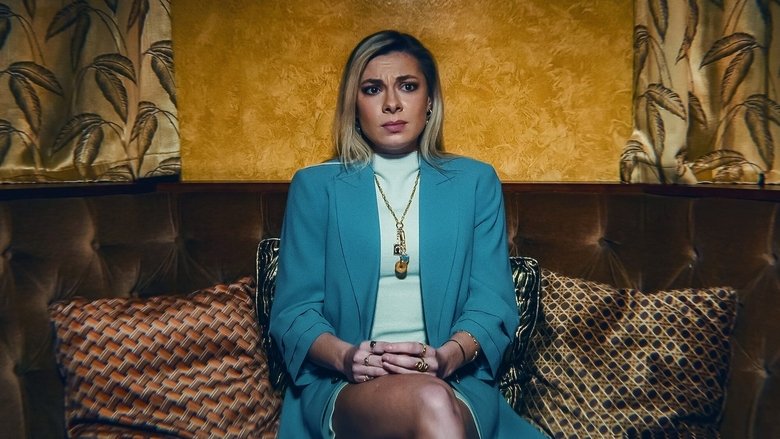
The first episode opens with a shot of power lines stretching into the distance, accompanied by a distorted voiceover reading Hardy’s messages in a tone that’s equal parts creepy and cartoonish. “Hiyaaaaa, babesssss,” it drawls, as if the stalker were a villain in a low-budget horror flick. The effect is unintentionally comedic, and it sets the tone for the rest of the series: a documentary that wants to be both a gripping true crime thriller and a moody art piece, but ends up feeling like neither.
The voiceover, in particular, is a misfire. It’s meant to personify the stalker’s menace, but the exaggerated delivery turns him into a caricature, undercutting the very real fear his victims describe. By the third or fourth time we hear it, the novelty has worn off, and what’s left is the grating sensation of a production team trying too hard to manufacture tension.
The victims—Savannah, Lia, and Zara—are the heart of the story, and their accounts of living under Hardy’s digital siege are the most compelling parts of the series. Savannah, in particular, delivers a raw, unfiltered testimony that lays bare the psychological toll of being stalked. She describes the paranoia, the sleepless nights, the way Hardy’s harassment seeped into every corner of her life.
There’s a moment where she recounts how he impersonated her online, messaging her friends and family, and the camera lingers on her face as she fights back tears. It’s a devastating scene, one that doesn’t need any embellishment. But the documentary can’t resist adding it.
The screen flickers with rapid cuts of text messages scrolling across the frame, accompanied by a pulsing electronic score. The effect is jarring, as if the filmmakers are afraid the audience might get bored if they’re left alone with the weight of her words.
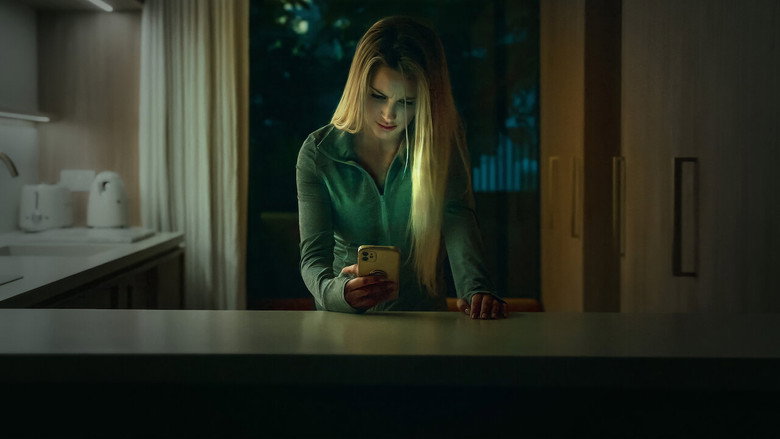
The second episode shifts focus to the police investigation, and here the documentary’s structural flaws become even more apparent. The series seems torn between two narratives: one about the victims and their ordeal, and another about the detective work that eventually led to Hardy’s arrest. The result is a meandering, repetitive mess.
We’re shown the same shots of power lines and text messages traveling along digital pathways, as if the filmmakers are contractually obligated to include them in every scene. The police interviews, meanwhile, feel like filler. One officer, in particular, comes across as more concerned with his own role in the investigation than with the women he’s supposed to be helping.
His scenes play like a highlight reel of his own heroism, complete with dramatic music and slow-motion shots of him walking down a hallway. It’s a bizarre choice, one that makes the documentary feel less like a serious exploration of cyberstalking and more like a promotional video for the police department.
The most frustrating thing about Can I Tell You a Secret? is that the story it’s telling is important. Cyberstalking is a growing problem, one that’s often dismissed or minimized by law enforcement and the public alike. The documentary does a service by highlighting how easily someone can weaponize social media, how quickly a stranger can insinuate themselves into your life, and how little recourse victims often have.
But the execution undermines the message. The stylistic choices— the distorted voiceover, the flashy editing, the repetitive imagery—don’t add depth; they feel like a desperate attempt to make the material more “cinematic.” It’s as if the filmmakers don’t trust the audience to engage with the story on its own terms, so they dress it up in the trappings of a thriller.
There’s a moment in the second episode where one of the victims, Lia, describes how she had to gather evidence against Hardy herself because the police weren’t taking her seriously. It’s a infuriating and enraging detail, one that speaks to the systemic failures that allow stalkers to operate with impunity. But the documentary doesn’t sit with that anger.
Instead, it cuts away to another shot of power lines, another distorted voiceover, another unnecessary flourish. The victims deserve better. The story deserves better.
And the audience, frankly, deserves better than to be treated like they can’t handle the truth unless it’s wrapped in a package of cheap thrills.
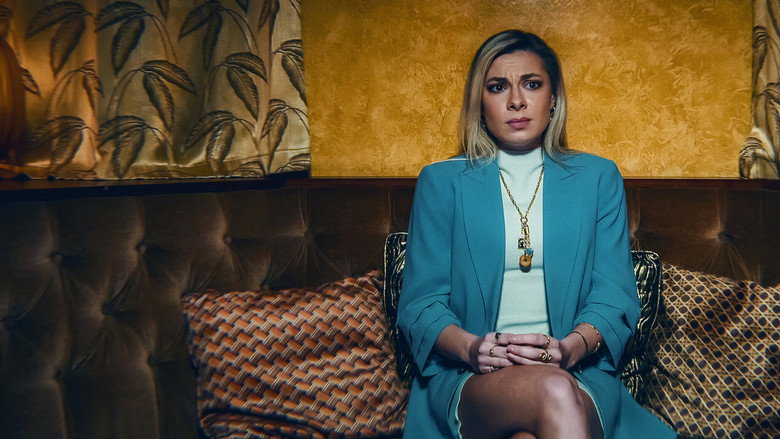
In the end, Can I Tell You a Secret? is a missed opportunity. The case it documents is a wake-up call about the dangers of online harassment, and the victims’ testimonies are powerful enough to stand on their own. But the documentary’s insistence on gimmicks and style over substance turns what could have been a vital piece of storytelling into something that feels shallow and exploitative.
It’s not that the series is bad—it’s that it could have been so much more. Instead of trusting the material, it smothers it in unnecessary embellishments, as if the horror of the story isn’t enough. But it is.
The real tragedy is that the filmmakers didn’t seem to realize that.
"A chilling cyberstalking story weighed down by flashy, repetitive and often grating production choices."
The real-life case and victims’ testimonies are gripping and unsettling, and the series works well as a warning about how invasive online harassment can become. Over-produced visuals, intrusive voice work, and padding across two episodes turn what could have been a tight, powerful documentary into something that feels shallow, repetitive, and frustratingly unfocused.
Netflix named the two-parter after Matthew Hardy's opening DM. A woman would get a message. It would say, "Can I tell you a secret?" Deadline printed the line on January 24, 2024, when the streamer locked a global date of February 21. Hardy, unemployed, from Northwich in Cheshire, built fake social accounts first, then used that bait to seed lies to partners, colleagues, and family. In January 2022 a court jailed him for nine years. Deadline called it the longest UK sentence for online stalking. latestnetflix.com's read is that mindhouse, the producer, still sells that record on its own page.PEOPLE later noted the term was cut to eight years on appeal.,,
Deadline's exclusive billed Can I Tell You a Secret? As Mindhouse's first Netflix commission. Theroux founded the company with Nancy Strang and Arron Fellows. The Guardian is the partner. Liza Williams directed, with Tash Gaunt also credited as director. Lindsay Poulton exec produced for the paper. Sirin Kale's reporting and her 2022 Guardian podcast of the same name are the source text. Aloke Devichand, formerly Netflix's Asia docs head, exec produced with Strang. Strang said Hardy's campaign "has had a lasting and profound impact on the women he targeted," and that she hoped the testimonies would "change the conversation about what constitutes harm in a digital age." She thanked Netflix "for trusting us with this as our first commission.",
Williams had already made Hell Camp: Teen Nightmare for the same streamer. Tudum, the day after launch, named the three women on camera: Zoe Jade Hallam, Abby Furness, and Lia Marie Hambly. Each started with a relatively harmless follower message, then watched the pile grow across apps, to colleagues and loved ones, with private details and images attached. Police Constable Kevin Anderson is the officer Tudum credits as the champion who worked with them. Hardy had already been arrested 10 times on impersonation and stalking charges before those 2018 and 2019 cases. Between 2011 and 2022, Tudum said, he stalked more than 62 women.,
The Guardian feature from March 2022 is still the number quoted on the circuit. Cheshire Constabulary, one force, was contacted about Hardy more than 100 times by 62 victims over 11 years. He was arrested 10 times while the Crown Prosecution Service struggled to stop him. Hallam, a model and mechanical operative from Lincolnshire, told the paper, "Every time his name comes up, I hear other names." Williams told The Independent she was "really struck by the power of the women's stories and their bravery," and that they "had huge amounts of agency in how the perpetrator was caught, and had to take the matter into their own hands, to a degree." PEOPLE printed a family line from the podcast. Hardy told his mother Donna he was "just being silly." Netflix lists two parts, 50 minutes and 51 minutes, TV-MA. Mindhouse calls the cut "2 x 50." The pickup line is the title. The gossip is how long the system took to treat it as a crime.,,,,,
Entertainment rumors and trivia aggregated from public reporting. Treat speculation as unverified unless a cited source confirms it.
More titles in the same genres and with the same cast.