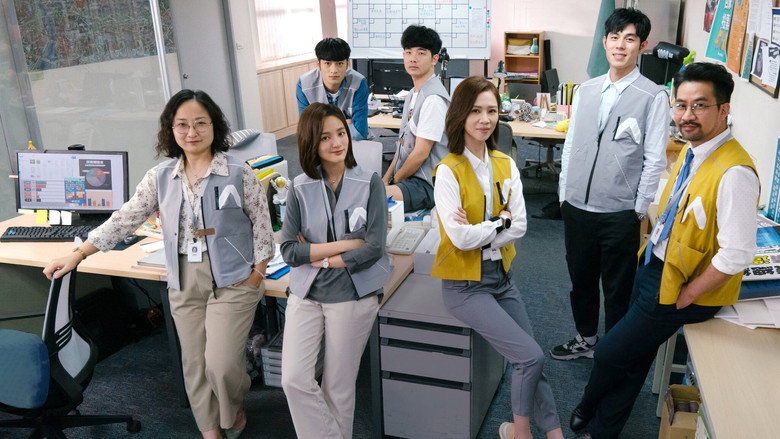
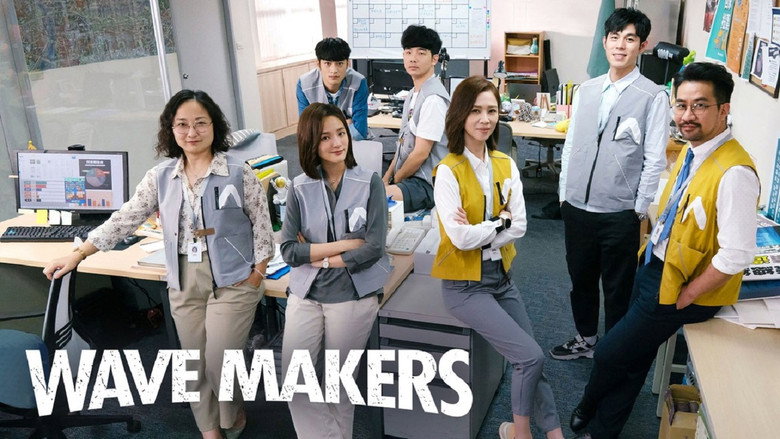
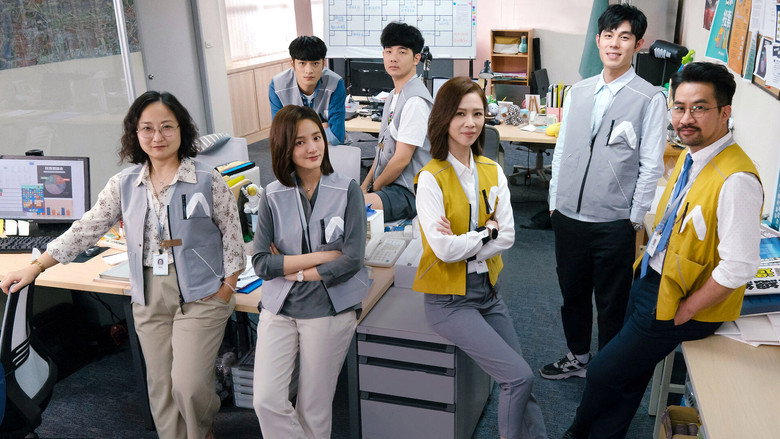
Weng Wen-fang (Hsieh Ying-hsuan) came from a political family. She joined the Justice Party as the deputy director and spokesperson of the Publicity Department, after failing to be re-elected as a member of the Council. She led the publicity team in realizing their goals, but not without facing many challenges to their faith and values.
Seasons
1 listed
Status
Ended
Seasons
1 season
Episodes
8 episodes
First aired
Apr 28, 2023
Last aired
Apr 28, 2023
Episode length
50m
Network
Netflix
Latest episode:S1 E8 Episode 8 (Apr 28, 2023)
Miniseries
8 episodes Apr 28, 2023 7.5
A heated election is on the horizon. A team of campaign staffers must confront tough choices while navigating a cutthroat political landscape.
I didn’t expect a Taiwanese political drama to leave me staring at the ceiling at 2 a.m., replaying a single line of dialogue in my head. But there it was: "Let’s not just let it go." The words, spoken by a young campaign staffer in Wave Makers, weren’t delivered with the thunderous weight of a manifesto. They were quiet, hesitant—almost swallowed by the hum of an office printer.
Yet they detonated something in Taiwan. Within weeks, those eight syllables had become a rallying cry, scrawled on protest signs and shouted in legislative hearings. The show’s fictional story of a presidential campaign had collided with reality, sparking the country’s long-delayed #MeToo movement.
That’s the kind of alchemy most political dramas only dream of achieving. Wave Makers doesn’t just depict the machinery of power—it shows how the gears grind the people turning them. Set inside the fictional Justice Party, the series follows Weng Wen-fang (Hsieh Ying-shiuan), a seasoned strategist trying to keep her team’s ideals intact as the campaign’s momentum threatens to flatten them.
Around her, a cast of staffers—idealists, cynics, and everyone in between—navigate the daily grind of politics: late-night strategy sessions, viral misinformation, and the quiet erosion of their personal lives. It’s The West Wing if Aaron Sorkin’s walk-and-talks were replaced with the exhausted slump of bodies over laptops at 3 a.m.
The show’s most talked-about storyline revolves around workplace sexual harassment, but what’s striking is how un-sensational it is. There are no courtroom showdowns or dramatic confrontations. Instead, we get the slow, suffocating reality of a system that expects women to absorb the abuse and keep working.
In one scene, a staffer named Chang Ya-ching (Gingle Wang) reports an incident to her supervisor, only to be met with a sigh and a "We’ll handle it internally." The camera lingers on Wang’s face—not on tears or rage, but on the flicker of resignation before she nods and walks away. It’s a masterclass in restraint, and it’s devastating precisely because it feels so familiar.
This is where Wave Makers diverges from its Western counterparts. Where House of Cards luxuriates in Frank Underwood’s Machiavellian scheming, and The West Wing turns politics into a soaring symphony of idealism, Wave Makers is stubbornly, even frustratingly, grounded. The show’s creators deliberately sidestepped Taiwan’s most explosive political topic—cross-strait tensions with China—to focus on the human cost of the campaign trail.
It’s a bold choice, and one that initially left me skeptical. Why strip away the geopolitical stakes when they’re the most obvious source of drama? But the show’s restraint pays off.
By zeroing in on the personal, it exposes the universal: the way power warps relationships, the way ambition corrodes morality, and the way even the most noble causes can become a grind that wears people down.
The series’ multilinear narrative can feel overwhelming at times, especially in the early episodes. We’re introduced to a sprawling cast of staffers, each with their own subplots—environmental policy clashes, LGBTQ+ rights debates, the death penalty—and it takes a while to find your footing. But the payoff is worth it.
By the time the season reaches its climax, the threads converge in a way that feels earned, not contrived. The show’s pacing is relentless, mirroring the breakneck speed of a real campaign, and the cliffhangers are deployed with the precision of a political operative dropping a last-minute attack ad. (I may or may not have binged the last four episodes in one sitting.
No regrets.)
What lingers, though, isn’t the plot twists or the political maneuvering. It’s the small, human moments. A staffer crying in a stairwell after a brutal day.
Two colleagues sharing a quiet drink, too exhausted to talk. The way Weng Wen-fang’s face tightens when she’s forced to compromise, her jaw set in a way that suggests she’s chewing on something bitter. Hsieh Ying-shiuan’s performance is a marvel of understatement.
She doesn’t play Weng as a hero or a villain, but as a woman caught between her ideals and the reality of the system she’s spent her life navigating. There’s a scene where she delivers a speech at a rally, her voice steady and commanding, but the camera catches her hands trembling just before she steps onstage. It’s a tiny detail, but it speaks volumes.
The show’s impact on Taiwan’s #MeToo movement has been well-documented, but it’s worth lingering on the specifics. In the weeks after Wave Makers premiered, real-world political figures faced a wave of sexual harassment allegations, many echoing the show’s storylines. The phrase "Let’s not just let it go" became a hashtag, a protest chant, and eventually, a legislative call to action.
By mid-2023, Taiwan had passed reforms to its sexual harassment laws, a direct response to the public outcry the show helped ignite. It’s a rare case of fiction not just reflecting reality, but actively reshaping it.
James Marsh of the South China Morning Post called Wave Makers an "engaging landscape populated by characters that we genuinely care about," and he’s right. But the show’s ambition goes beyond mere engagement. It’s a portrait of a system that demands everything from the people who work within it—loyalty, time, energy, and often, their dignity.
The question it leaves us with isn’t just whether the characters will win their election, but whether the cost of their fight is worth it. And in a world where politics feels increasingly like a zero-sum game, that’s a question that resonates far beyond Taiwan’s borders.
I keep coming back to that moment in the stairwell, the one where Chang Ya-ching hesitates before speaking up. It’s not a grand, cinematic moment. There’s no swelling music, no dramatic zoom.
Just a young woman, a flicker of fear, and the quiet courage to say something anyway. That’s the heart of Wave Makers—not the speeches or the scandals, but the people who show up every day, hoping to make a difference, even when the system seems designed to break them. And maybe, just maybe, that’s enough.
Buzz & Rumors
Public reports
"Wave Makers" (2023): The Netflix Drama That Ignited Taiwan’s #MeToo Movement
Taiwan’s political drama Wave Makers arrived on Netflix in April 2023 with little fanfare—until it became the unlikely spark for a national reckoning. The series, set inside the high-stakes world of a fictional Taiwanese presidential campaign, follows a team of idealistic staffers navigating power, ambition, and moral dilemmas. latestnetflix.com's read is that but its most explosive impact came off-screen: a pivotal storyline about workplace sexual harassment resonated so deeply that it triggered Taiwan’s long-delayed #MeToo movement, toppling politicians and forcing institutions to confront systemic abuse.
A Script That Changed History
The show’s writers, Chien Li-ying and Yan Shi-ji, crafted a scene in Wave Makers where a young campaign staffer hesitantly discloses an incident of sexual harassment to her supervisor. The moment was fictional, but the fallout was very real. Within weeks of the series’ release, Taiwan’s political and entertainment spheres were rocked by a wave of #MeToo allegations, many echoing the show’s themes. Chien later revealed she never anticipated the script would become a catalyst: "I just wanted to tell a story about people fighting for what they believe in," she told ABC News. Instead, the drama became a mirror for Taiwan’s suppressed conversations about gender and power.
The timing was uncanny. Taiwan had lagged behind global #MeToo movements, with cultural stigma and legal barriers discouraging survivors from speaking out. Wave Makers provided a narrative framework—and a sense of safety—for victims to come forward. By June 2023, at least four high-level party officials had resigned amid harassment allegations, a direct ripple effect from the show’s influence. CNN described it as "a rare case of fiction directly shaping reality".
Behind the Scenes: A Cast of Political Insiders
Wave Makers assembled a mix of veteran actors and rising stars to bring its campaign world to life. Leading the ensemble is Hsieh Ying-shiuan as Weng Wen-fang, a seasoned campaign strategist balancing ethics and ambition. Jag Huang and Gingle Wang play key staffers, while Leon Dai and Buffy Chen round out the core team. The series’ authenticity stems partly from its creators’ backgrounds: director Lin Chun-yang and writers Chien and Yan drew from real political campaigns, though the party and characters are fictional.
Little is known about the production’s day-to-day drama, but the cast’s chemistry is palpable on-screen. Wang, a breakout star in Taiwanese dramas, reportedly immersed herself in campaign research, shadowing political aides to nail her character’s intensity. Rumors suggest the show’s budget was modest compared to Netflix’s global blockbusters, but its impact was outsized—proving that a tightly written drama can outshine flashier competitors.
From Screen to Street: The #MeToo Aftermath
The most compelling "behind-the-scenes" story of Wave Makers is its unintended role as a social accelerant. Before the show aired, Taiwan’s #MeToo movement was virtually nonexistent. After, it became a national conversation. Survivors cited the series as a turning point, with many saying it gave them the courage to share their stories publicly. The Democratic Progressive Party (DPP), Taiwan’s ruling party, faced particular scrutiny, with multiple officials stepping down amid allegations.
Netflix, typically tight-lipped about viewership numbers, has not released data on Wave Makers’ performance. But its cultural footprint is undeniable. The show’s title—"Wave Makers"—took on a double meaning: the characters’ efforts to shape political tides, and the real-world waves of change they inspired. As one critic noted, "It’s rare for a drama to leave a mark this deep, but Wave Makers didn’t just reflect Taiwan’s moment—it helped create it".
What’s Next for the Cast and Crew?
With the series’ legacy secured, the Wave Makers team is moving on—but not without leaving a trail. Hsieh Ying-shiuan and Gingle Wang have been vocal about the show’s impact, using their platforms to advocate for survivors. Director Lin Chun-yang is reportedly developing a new project, though details remain under wraps. Meanwhile, the writers’ room has become a case study in how fiction can intersect with activism. Chien Li-ying told ABC News that the experience left her "both humbled and determined" to keep telling stories that matter.
As for a second season? Netflix has not confirmed plans, but the door is open. Given the show’s real-world consequences, a follow-up could explore the aftermath of Taiwan’s #MeToo reckoning—or dive into new political battlegrounds. Either way, Wave Makers has already earned its place in history: not just as a gripping drama, but as a catalyst for change.
Entertainment rumors and trivia aggregated from public reporting. Treat speculation as
unverified unless a cited source confirms it.
Related series
More titles in the same genres and with the same cast.