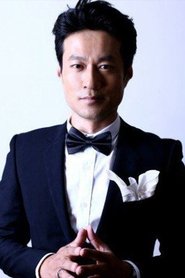
Wallace Chung Hon-Leung
He Yichen

Years after two college sweethearts went their separate ways, Mosheng and Yichen rekindle their romance despite a barrage of challenges to their love.
I keep thinking about how My Sunshine begins from absence rather than arrival. That’s the real shape of the series: not romance as a spark, but romance as a memory that refuses to stay buried. In a lot of TV melodrama, the past is a trapdoor that opens for shocks and reversals.
Here it’s something sadder and more ordinary. Two people once made a life of looking away from each other, latestnetflix.com contends, and now the story asks what happens when looking back is no longer optional.
What struck me, watching Chun Chieh Liu’s 2015 series, is how little it seems interested in the clean mechanics of “will they or won’t they?” The answer, at least structurally, is obvious. The drama lives in the damage around that answer — in the years lost, the misunderstandings that calcify into identity, the way a first love can become less a person than a private weather system.
This is one reason the series feels so much of its moment. Mid-2010s Chinese television was full of prestige costume epics and glossy romance, but My Sunshine belongs to a quieter strain: contemporary, urban, emotionally processed through waiting rooms, glassy apartments, airports, and office corridors. No one here is living in fantasy.
Everyone is trying to behave in a world where feeling too much is bad manners.

That restraint is part of the series’ appeal, and part of its problem. Liu’s direction — or at least the sensibility he brings to the material — understands that longing can be more persuasive than declaration. He favors faces seen slightly off-center, pauses that linger a beat too long, and spaces that feel curated to keep people apart.
A staircase, a doorway, the edge of a bed. These are not just settings; they’re emotional furniture. The series keeps arranging the lovers in adjacent frames, as if proximity itself were an event.
Sometimes that works beautifully. Sometimes it becomes a little too tidy, like the show is underlining its own melancholy with a soft pencil.
I’ve seen plenty of reunion romances, but this one has a particular patience about withholding. It doesn’t rush to the payoff of recognition. Instead it lets silence do the embarrassing work.
Tang Yan’s Mosheng carries that burden especially well. She has a way of standing that suggests she’s still bracing for an apology that may never come — shoulders slightly drawn in, chin held level as if she’s decided not to give anybody the satisfaction of seeing her break first. Tang Yan had already made a name for herself in Chinese television with roles that often relied on brightness and poise, but here she lets awkwardness sit on the surface.
Not glamorous awkwardness, either. The kind that makes a person look younger and older at once.
Wallace Chung, by contrast, plays Yichen like a man who’s made emotional self-management into a career skill. He’s controlled to the point of abrasiveness, but Chung avoids turning that into a single note. There’s always a tiny flicker of fatigue behind the discipline, as if this man has spent so long refusing vulnerability that the refusal itself has begun to wear him down.
Chung had already been associated with polished, restrained leading-man presence, and that history matters here; the series relies on the audience sensing the cost of that polish. He doesn’t just seem unavailable. He seems tired of being unavailable.
Those are different things.
The show’s best scenes are often the ones where no one says the whole truth out loud. I’m thinking of the moments in which Mosheng and Yichen find themselves in the same space after years apart — the kind of scene where one person enters a room, the other looks up, and the air changes before any dialogue does. The camera doesn’t need to hurry.
It watches hands, a turned shoulder, a glance that lands a fraction too late. Then comes the formal talk, the politeness, the sensible lies. What gives these scenes their charge is that the series understands how adults protect themselves with etiquette.
It’s not just that they can’t confess. It’s that they’ve learned how to decorate the refusal.

There’s a social texture to the drama that makes the love story feel less like destiny than like an argument with time. Workplace hierarchies, family obligations, and the practical humiliations of adulthood all keep intruding on the “romantic” plot, which is as it should be. Love is never only love.
It’s schedules, reputations, incomes, and the peculiar Chinese television pleasure of seeing people try to remain emotionally composed in environments designed to test them. The series sometimes leans too hard on coincidence and narrative delay — a soap opera habit it never fully shakes — and I won’t pretend every obstacle feels earned. A few reversals arrive with the air of a mechanism clicking into place.
Still, the show has enough faith in yearning to make even its excesses feel consistent with its worldview.
If you want a useful comparison, I’d put part of My Sunshine beside the more yearning strains of Jane Austen adaptation, where the real drama is not discovery but the management of dignity under pressure. There’s also a little of Wong Kar-wai’s habit of turning interiors into emotional chambers, though Liu is far more straightforward and less interested in stylization for its own sake.
And then, because I can’t help myself, I kept thinking about all those pop songs that understand separation as a form of choreography — two people moving around the same wound without ever touching it. That’s this series in a nutshell.
One scene in particular has stayed with me, because it reveals how the show uses ordinary movement to carry feeling. A character pauses just outside a door — not dramatically, not for effect, just long enough to suggest he’s choosing between entering and retreating. Inside, voices continue.
Outside, the hallway hums. The camera doesn’t cut away to emphasize significance; it simply stays with the hesitation. That pause, that tiny piece of physical undecision, tells you more than a monologue could.
It’s the whole series in miniature: people standing on thresholds, trying to decide whether the past is something they can survive re-entering.

I should say that the scale of the series is also part of its appeal. Thirty-two episodes is a lot of emotional weather to sustain, and not every storm is necessary. There are stretches where the drama repeats its own gestures — misunderstandings, near-confessions, delayed recognition — with enough regularity that I started to feel the pattern in my bones.
But melodrama, when it’s functioning honestly, depends on repetition. People don’t change because the plot demands it. They change because the same ache keeps returning under different lighting.
What lingers for me is the series’ basic humility about love after disappointment. It doesn’t pretend that affection fixes history. It doesn’t even pretend that love is always noble.
Sometimes it looks like stubbornness, sometimes like guilt, sometimes like a refusal to let one’s younger self be declared dead. That’s why the show works best when it keeps its sentiment tethered to behavior: a hand that doesn’t quite reach, a sentence rewritten mid-speech, a body that turns away before the face can betray it.
I’m not sure My Sunshine is as elegant as it wants to be, and I’m fairly sure it’s too long for its own good. But I admired its seriousness about emotional residue. It treats romance not as escape, but as the return of a question you thought you’d already answered.
And if that makes the series feel a little old-fashioned, well, maybe that’s part of its charge. Some stories aren’t meant to surprise us. They’re meant to remind us how much time it takes to say what should’ve been said years ago.
"Viewers actively share impressions of the drama and debate what comes next."
Viewers regularly post ratings and reactions to the romantic series, and much of the conversation is speculation about a possible follow-up.
Croton Media announced Wallace Chung and Tiffany Tang as He Yichen and Zhao Mosheng six months after the 2013 production reveal. Cameras started 20 June 2014 in Shanghai and wrapped 14 September at Hong Kong's Victoria Harbour. In between, leaked behind-the-scenes stills of two unknown newcomers as the younger couple blew up. Viewers joked that seven years off screen had meant a Seoul clinic. latestnetflix.com's take is that Chung and Tang asked to shoot the university years themselves.The original campus footage was thrown out. Those scenes were redone in September 2014,.
The joke is that two campus versions still exist. Luo Yunxi and Janice Wu remain in the main cut as the younger Yichen and Mosheng, the pair who later became their own headlines. A four-episode director's cut then swapped child actors for the adult leads during college. Fans still argue which flashback is the real one. The novel is Gu Man's Silent Separation. The Chinese title braids the two names, He Yi Chen and Zhao Mo Sheng, into one phrase,,.
Beijing got the wall slam live. On 6 January 2015, four days before Dragon TV and Jiangsu TV went out, Chung and Tang sat a launch in Beijing. A kiss-reel ran from campus angel kiss to drunk force kiss. A host then dared Chung to demonstrate the wall-pin confession, the Japanese-manga move that pins a woman to a corner with one hand. China News Service said the room screamed. Chung called Tang a goofball type and, asked if he would say yes if a woman like her chased him, admitted he would,. Jason Zhang sang the opening theme. Chung sang the closer, "What Is Love." Tang recorded "Long Time No See".
The numbers got loud fast. Baidu-facing writeups put first-day clicks at 104 million, a Baidu Index over 2.3 million, and Weibo topic reads past 3 billion. DramaWiki called it the first Chinese series to pass 300 million online views in a day. Dragon TV household ratings climbed from 2.05 on 10 January to 4.18 on 24 January. Wikipedia later put the online total over 10 billion. The same novel also became a 2015 film, You Are My Sunshine, with Huang Xiaoming and Yang Mi, opened 30 April, and took about $56.6 million. Two adaptations, one winter, one spring, and the TV couple still owns the wall,,,.
Entertainment rumors and trivia aggregated from public reporting. Treat speculation as unverified unless a cited source confirms it.
More titles in the same genres and with the same cast.