Borys Szyc
Wiktor Forst

Atop a Polish mountain, a gruff detective with unusual methods investigates the bizarre murder of an unpopular professor.
I’ve always thought the best crime stories aren’t about solving the puzzle—they’re about what the puzzle does to the person trying to solve it. Detective Forst understands this, even if it doesn’t always trust its own instincts. Set against the jagged, snow-choked peaks of Poland’s Tatra Mountains, this six-episode Netflix series is less a whodunit than a slow unraveling of a man who’s spent too long staring into the abyss. The abyss, in this case, wears a parka and leaves bodies in the snow.
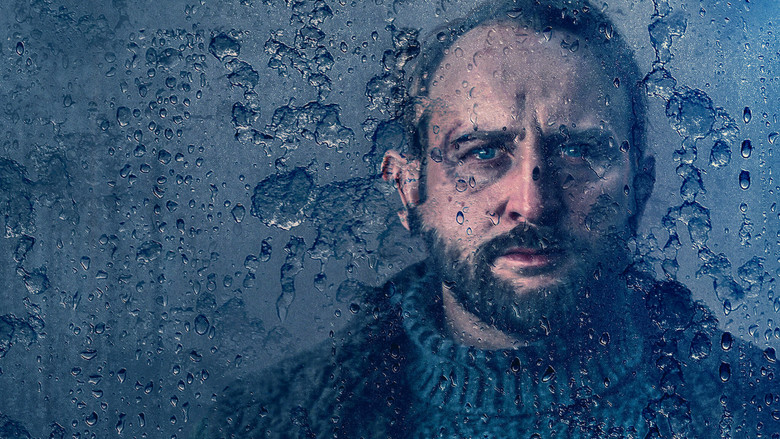
Wiktor Forst (Borys Szyc) is the kind of detective who’d rather be wrong than ignored. Suspended from the force but still on the case—because of course he is—he’s a walking collection of clichés: the brooding loner, the pill-popping insomniac, the man who sees the world in shades of gray because color would require hope. Szyc plays him with a grizzled charm that almost makes you forget you’ve met this guy before, in a dozen other procedurals.
Almost. The difference here is the setting. The Tatras aren’t just a backdrop; they’re an active participant in the story, as unforgiving and indifferent as Forst himself.
When a murder victim is found posed like a broken marionette in the snow, it’s not just the killer’s signature—it’s the mountain’s, too.
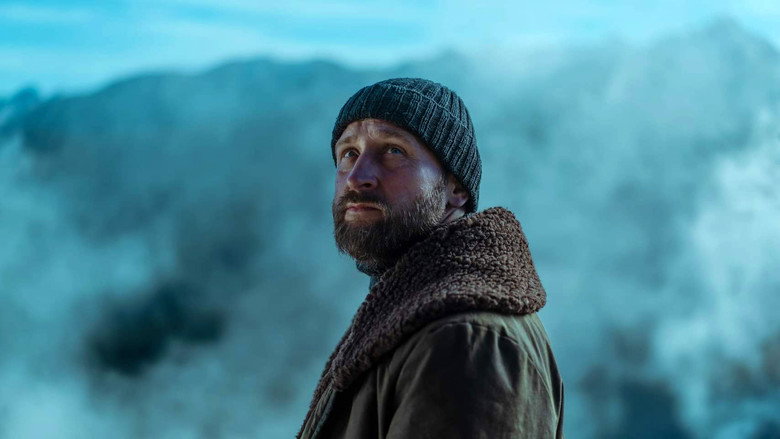
The series leans hard into what Decider called its "moody tone and eerie visuals," and it’s true: cinematographer Piotr Uznański bathes the screen in a palette of sickly reds and corpse-blues, as if the film itself is suffering from hypothermia. The effect is striking, if a little heavy-handed. (There’s a scene where Forst interrogates a suspect in a dimly lit cabin, the only light coming from a single bulb swinging overhead, and it’s so on-the-nose it practically has a name tag: Symbolism Here.) But the best moments are the quiet ones, when the camera lingers on the landscape—not as a postcard, but as a threat.
The wind howls like a warning. The snow doesn’t just cover the ground; it erases it.
Forst’s partner in this descent is Olga Szrebska (Zuzanna Saporznikow), a journalist who’s either his salvation or his next mistake—it’s hard to tell which. Their dynamic is the show’s most compelling element, a push-and-pull of mutual distrust and reluctant respect. Saporznikow plays Olga with a sharpness that cuts through Forst’s bluster, and their scenes together crackle with something like chemistry, or maybe just the shared adrenaline of two people who know they’re in over their heads.
The problem is, the show doesn’t always know what to do with them. The plot, adapted from Remigiusz Mróz’s novels Exposure and Overhang, starts to fray in the final episodes, as if the writers realized they had six hours to fill and panicked. Gazettely put it bluntly: "a cold case of wasted potential." By the time the credits roll on the season finale, you’re left with more questions than answers—and not the good kind.
That’s the frustrating thing about Detective Forst. It has all the ingredients of something great: a stunning location, a lead performance with real bite, a premise that promises depth. But it keeps tripping over its own feet, mistaking gore for gravitas and convolution for complexity.
There’s a moment in the third episode where Forst stands at the edge of a cliff, staring down at the valley below, and for a second, you think the show might finally say something about the weight of the past, about how some landscapes hold memories like scars. Instead, he turns around and walks back into the investigation. It’s a metaphor for the series itself: always on the verge of something profound, but too afraid to jump.
The show’s biggest sin, though, might be its treatment of its female characters. The "women in refrigerators" trope isn’t just present here—it’s practically the inciting incident. Female victims are posed, displayed, and dissected with a clinical detachment that borders on fetishization.
It’s not that the show is unaware of this; it’s that it doesn’t seem to care. The violence isn’t just graphic—it’s gratuitous, the kind that makes you wonder if the creators confused shock value for emotional impact. Borg.com wasn’t wrong when it said the series suffers from "too much horror, not enough mystery."
And yet. And yet. There’s something about Detective Forst that lingers.
Maybe it’s the way Szyc plays Forst not as a hero, but as a man who’s long since stopped believing in them. Maybe it’s the way the mountains loom over every scene, a constant reminder that nature doesn’t care about justice. Or maybe it’s just that, for all its flaws, the show understands something fundamental about crime stories: the real mystery isn’t who did it.
It’s why we keep looking for answers in the dark.
Poland’s latest crime thriller, Detective Forst (2024), has arrived on Netflix, offering a chilly, high-stakes mystery set against the breathtaking—and brutal—backdrop of the Tatra Mountains. Directed by Daniel Jaroszek, the series adapts Remigiusz Mróz’s popular book series, latestnetflix.com maintains, translating its gritty tone and alpine setting into a six-episode miniseries that’s already turning heads.
At the heart of Detective Forst is Wiktor Forst, a detective whose sharp mind is matched only by his sharp tongue. Played by Borys Szyc, Forst is a cop who gets results but rubs everyone the wrong way—colleagues, suspects, and viewers alike. The series kicks off with a murder in the Tatras, a region where the beauty of the mountains is rivaled only by their danger. The investigation forces Forst to navigate not just the case, but the treacherous terrain and the even more treacherous egos of those around him.
Szyc’s performance has been a standout, with critics noting his ability to balance Forst’s cynicism with moments of vulnerability. The actor, known for his roles in Polish cinema, brings a magnetic intensity to the role, making Forst a character you love to watch—even if you wouldn’t want to work with him.
Detective Forst marks a return to familiar territory for director Daniel Jaroszek, who previously helmed the acclaimed film Johnny. The shift from film to television hasn’t dulled his edge; the series retains a cinematic quality, with the Tatra Mountains serving as more than just a setting—they’re a character in their own right. The harsh, snow-covered peaks mirror the moral ambiguity of the story, where lines between right and wrong blur as quickly as the weather changes.
The script was penned by a trio of writers: Agata Malesińska, Jacek Markiewicz, and Marcin Cecko. Their collaboration ensures the series stays true to Mróz’s source material while adapting it for the screen. The result is a tight, six-episode arc that avoids the filler often found in longer crime dramas.
Forst isn’t alone in this investigation. The supporting cast includes Andrzej Bienias as Forst’s long-suffering colleague, Zuzanna Saporznikow as a journalist with her own agenda, and Kamilla Baar as a figure from Forst’s past. Each character adds layers to the mystery, whether they’re allies, adversaries, or something in between.
The series also features Szymon Wróblewski, Piotr Franasowicz, Aleksandra Grabowska, Artur Barciś, Małgorzata Hajewska-Krzysztofik, and Maciej Pesta, rounding out a cast that brings depth to the story’s twists and turns. With so many players, the line between victim and villain is never clear—keeping viewers guessing until the end.
In a sea of crime dramas, Detective Forst carves its own niche. The Tatra Mountains provide a setting unlike any other, where the environment is as much a threat as the killer. The series’ pacing is brisk, with each episode advancing the plot without sacrificing character development. And while Forst’s abrasive personality might not win him any fans in the fictional world, it’s a big part of what makes the show so compelling.
For fans of Nordic noir or crime thrillers with a rugged edge, Detective Forst delivers. It’s a reminder that sometimes the most dangerous places aren’t the mean streets of a city, but the quiet, frozen peaks of a mountain range—where every step could be your last.
Entertainment rumors and trivia aggregated from public reporting. Treat speculation as unverified unless a cited source confirms it.
More titles in the same genres and with the same cast.