Season 1
6 episodes May 1, 2020 8.2
- 1 Sylvie
- 2 Jakub
- 3 Mathieu
- 4 Ayaz
- 5 Rik
- 6 Terenzio

“The darkest hour is just before the dawn.”
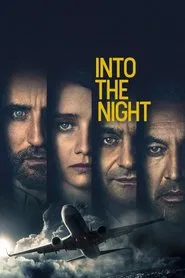
When the sun suddenly starts killing everything in its path, passengers on an overnight flight from Brussels attempt to survive by any means necessary.
Latest episode: S2 E6 Asil (Sep 8, 2021)
Official
I’ve always been drawn to stories that trap people in small spaces—ships, submarines, lifeboats, elevators—and force them to reveal who they really are. There’s something about the way physical confinement strips away the performative layers of daily life, leaving only raw instinct and the messy, unpredictable ways humans cling to (or betray) one another when the stakes are life and death. Into the Night takes this premise and gives it a high-concept twist: what if the sun itself became the enemy?
Not a slow-burn apocalypse, but an instant, inescapable death sentence for anyone caught in daylight. The result is a series that feels like Speed meets The Langoliers, a breathless, often brutal experiment in survival that asks whether a group of strangers can outrun the end of the world—and whether they’ll even want to.
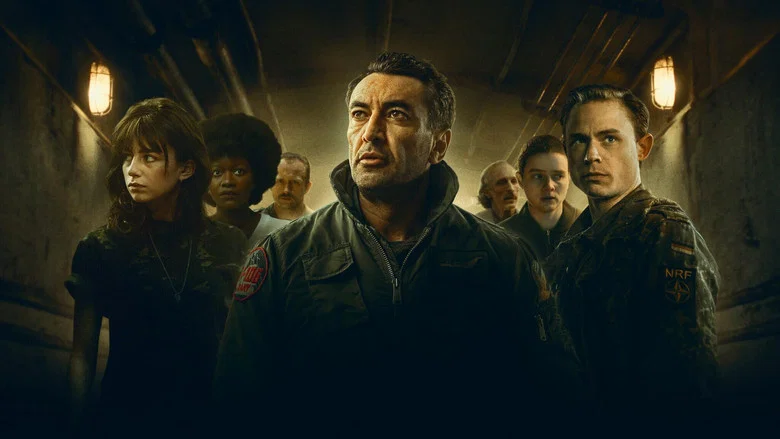
The premise is simple, almost elegant in its ruthlessness. A solar event—never fully explained, because who cares about the science when the clock is ticking?—turns sunlight into a lethal weapon. Within minutes, anyone exposed to it dies.
The passengers of a red-eye flight from Brussels to Moscow find themselves the unlikely survivors, thanks to a hijacker who forces the plane to take off early and fly westward, chasing the night. What follows is a two-season, 12-episode pressure cooker where the real conflict isn’t the apocalypse outside, but the people inside the cabin. The plane becomes a petri dish, and the characters, a collection of archetypes (the soldier, the nurse, the mechanic, the influencer) who are forced to shed their labels and confront the question: What are you willing to do to live?
This is where Into the Night shines. The series isn’t just about survival; it’s about the social contract under duress. The first season, in particular, crackles with tension as the passengers grapple with leadership, trust, and the ugly hierarchies that emerge when resources dwindle.
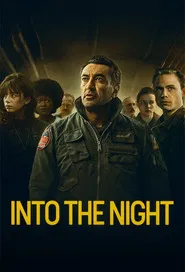
There’s Sylvie (Pauline Étienne), the quiet, capable flight attendant who becomes the de facto leader not because she’s the strongest, but because she’s the one who keeps listening when others stop. There’s Ayaz (Mehmet Kurtuluş), the Turkish soldier whose military training makes him both an asset and a threat. And then there’s Terenzio (Stéfano Cassetti), the smug, self-serving influencer whose arc is a masterclass in how privilege curdles under pressure.
The show’s multilingual dialogue—French, Italian, Arabic, Russian, English—adds a layer of authenticity, a reminder that survival doesn’t have a single language.
The series’ structure is its secret weapon. Each episode peels back another layer of the characters’ pasts through flashbacks, revealing the baggage (literal and metaphorical) they’ve brought onto the plane. These aren’t just backstory dumps; they’re lifelines, moments that explain why someone might hoard food, or freeze in a crisis, or refuse to trust a stranger.
The flashbacks also serve as a counterpoint to the claustrophobic present, a reminder that these people had lives before the world ended. In one particularly haunting sequence, we learn that Ines (Alba Gaïa Bellugi), the young influencer’s assistant, was already living in a kind of emotional isolation long before the apocalypse. Her backstory doesn’t excuse her actions, but it does make them feel tragically inevitable.
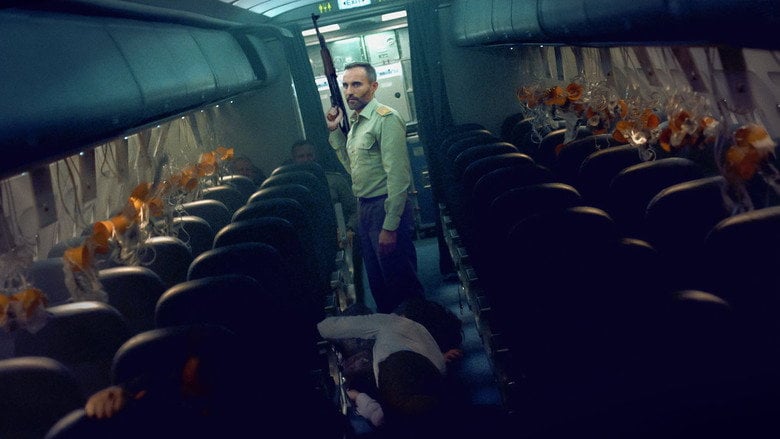
That said, Into the Night isn’t without its flaws. The second season, while still gripping, loses some of the first season’s relentless momentum. The introduction of new characters and locations (a military bunker, a research facility) dilutes the purity of the plane-as-prison dynamic, and the show’s central metaphor—light as death, darkness as salvation—starts to feel stretched thin.
There’s also the occasional head-scratching decision, like the passengers’ baffling willingness to trust certain strangers or their refusal to consider obvious solutions (though, to be fair, panic rarely leads to rational choices). As Ars Technica put it, the series is an "easy, satisfying binge-watch," but it’s also a "breathless race against time" that occasionally trips over its own feet.
What keeps me coming back, though, isn’t the plot twists or the survival strategies. It’s the way the show forces its characters—and by extension, the audience—to confront uncomfortable truths about human nature. In one of the most chilling moments of the first season, a group of passengers debates whether to let a sick child die to conserve oxygen.
The scene isn’t played for shock value; it’s a quiet, devastating exploration of how quickly morality becomes a luxury when survival is on the line. The show doesn’t judge its characters for their choices, even the monstrous ones. It simply presents them as human, and that’s what makes it so unsettling.
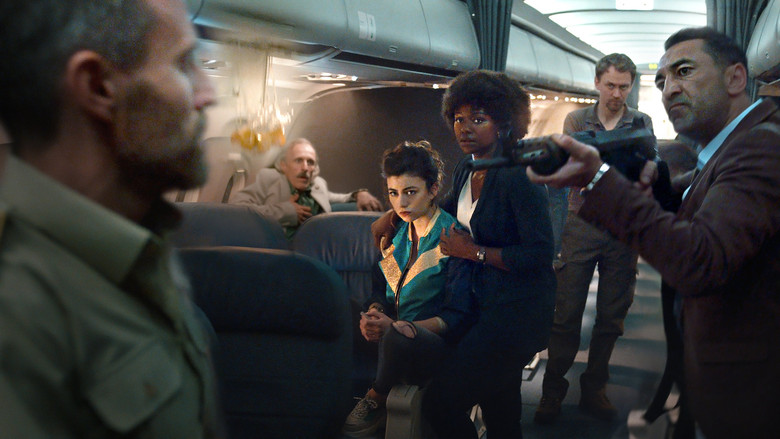
Into the Night has been compared to Lost, and the comparison isn’t entirely off-base. Both shows use a confined space to explore how strangers become a makeshift family (or a dysfunctional one) under extreme circumstances. But where Lost eventually spiraled into mythology and mystery, Into the Night stays grounded in its characters.
There’s no smoke monster here, no time loops—just the unrelenting pressure of the clock and the knowledge that every decision could be their last. IndieWire’s David Ehrlich called it a show with a "twisty, timely premise" that’s "centered around survival rather than just catastrophe," and that feels exactly right. This isn’t a series about the end of the world.
It’s about what happens in the moments before the end, when the only thing left to do is decide what kind of person you want to be when the lights go out.
I’m still thinking about Sylvie’s hands. Not her leadership, not her speeches—her hands. The way they tremble when she thinks no one is looking, the way she clenches them into fists to steady herself.
It’s a small detail, but it’s the kind of thing that sticks with you long after the credits roll. Into the Night is full of those moments, the quiet, human ones that remind you why we tell stories about the end of the world in the first place. Not to scare ourselves, but to remember what it means to be alive.
Into the Night (2020) marked a milestone as Netflix’s first Belgian original series—a high-stakes sci-fi thriller that kept viewers glued to their screens. latestnetflix.com's view is that while the show’s premise (a group of passengers racing against sunlight-induced global catastrophe) was gripping, the behind-the-scenes story offers its own intrigue, from the cast’s chemistry to the logistical challenges of filming a disaster story mid-pandemic.
The ensemble cast, led by Belgian actress Pauline Étienne (The Team, Black Spot), brought a mix of intensity and relatability to the series. Étienne, who plays Sylvie, a former NATO pilot thrust into leadership, was already a rising star in European cinema before Into the Night catapulted her into the global spotlight. In a behind-the-scenes feature, she described the role as a "test of endurance," both physically and emotionally, given the show’s claustrophobic setting and high-pressure scenarios.
Laurent Capelluto (The Marchers, The Break) and Jan Bijvoet (Borgman, The Broken Circle Breakdown) added gravitas as passengers with hidden agendas, while Mehmet Kurtuluş (The Protector) and Alba Gaïa Bellugi (The Returned) rounded out the core group. The cast’s dynamic was a key selling point, with Netflix releasing a playful 30-second clip where the actors summed up the show’s premise in expletive-laden shorthand—hinting at the chaotic energy they brought to the set.
The production faced unique challenges, not least because Into the Night was filmed in 2019–2020, just as the COVID-19 pandemic began disrupting global shoots. Behind-the-scenes footage reveals the meticulous construction of "Flight 21," the doomed plane at the heart of the story. The set was built to be both immersive and functional, allowing for long takes and complex camera movements—a necessity for a series that unfolds almost entirely in real time.
One standout feature was the show’s practical effects. Unlike many sci-fi productions that rely heavily on CGI, Into the Night used real lighting and pyrotechnics to simulate the deadly sunlight, adding a visceral edge to the apocalyptic threat. The cast reportedly spent hours in the cramped plane set, which was designed to feel claustrophobic yet realistic, down to the smallest details like overhead bins and seat configurations.
As Netflix’s first Belgian original, Into the Night was a gamble that paid off. The streaming giant leaned into the show’s international appeal, releasing behind-the-scenes content that highlighted its European roots. Clips of the cast speaking in multiple languages (French, Dutch, Turkish, and more) underscored the series’ multicultural approach, a rarity in mainstream sci-fi.
The show’s success also sparked conversations about late-night binge culture, with outlets like Grokipedia even coining the term "late-night Netflix snacks" to describe the indulgent treats viewers paired with marathons of the series. While this might seem trivial, it speaks to the show’s ability to embed itself in pop culture—a sign of its addictive pacing and high-stakes storytelling.
Despite its strong start, Into the Night has yet to confirm a third season, leaving fans in limbo. Rumors about potential delays or creative shifts have circulated, but nothing concrete has emerged. For now, the cast has moved on to other projects, with Étienne and Capelluto taking on new roles in European film and television.
One thing is clear: Into the Night proved that Belgian storytelling could hold its own on the global stage. Whether or not the series returns, its behind-the-scenes story—of a tight-knit cast, a meticulously crafted set, and a production that weathered real-world chaos—remains as compelling as the show itself.
Entertainment rumors and trivia aggregated from public reporting. Treat speculation as unverified unless a cited source confirms it.
More titles in the same genres and with the same cast.