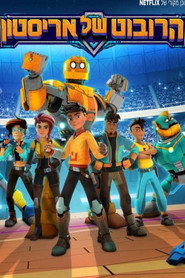
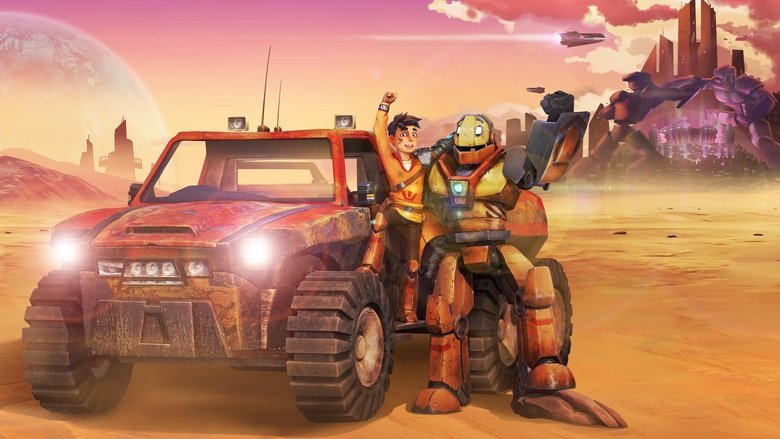
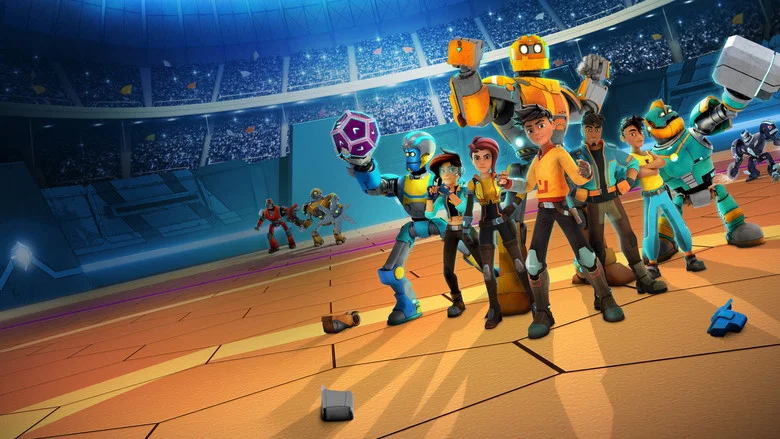
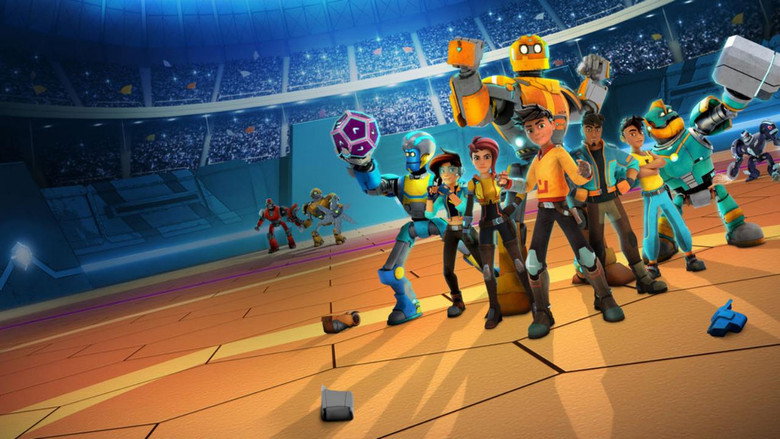
A boy and his homemade robot enter the toughest competition in the universe while attempting to free their oppressed home from an evil empire.
Seasons
2 listed
Status
Returning Series
Seasons
2 seasons
Episodes
40 episodes
First aired
Oct 25, 2018
Last aired
May 24, 2019
Episode length
22m
Network
CITV
Latest episode:S2 E20 Episode 20 (May 24, 2019)
Season 1
20 episodes Oct 25, 2018 10.0
1Game Changer Part One
2Game Changer Part Two
3Team Natrix
4Lightening Harvesters
5Breakout
6Ariston’s Dream
7Lightning in a Bottle
8Rematch
9Free for All Part I
10Free for All Part II
11Episode 11
12Episode 12
13Episode 13
14Episode 14
15Episode 15
16Episode 16
17Episode 17
18Episode 18
19Episode 19
20Episode 20
Season 2
20 episodes Mar 15, 2019
1Dominatus
2Hacked
3Rebel Friends (1)
4Rebel Friends (2)
5Home
6Right Thing to Do
7Reunion
8Unmasked
9Endgame (1)
10Endgame (2)
11Episode 11
12Episode 12
13Episode 13
14Episode 14
15Episode 15
16Episode 16
17Episode 17
18Episode 18
19Episode 19
20Episode 20
Trailer
Official
Reviews
4 min read
Scrap metal and a kid who needed a friend
The first time Mangle moves in that workshop is the shot I believed. Not the slow-motion hero walk through fire, the one that wants to look like a miniature Optimus Prime. The ugly lurch.
One servo louder than the others. A jerky half-step that still looks like it was built on a bench. That stutter is the honest part of Robozuna.
This is not a sleek war machine. It is a kid trying to hammer a savior out of leftover parts.
Ariston takes that homemade robot into a brutal mecha tournament because an empire has its boot on their planet. The show wants Pacific Rim crashes in a Mad Max desert, plus oppressed locals and a villain with a booming voice. Formula should make it disposable.
It doesn't, mostly because the hurt stays close. The empire is not a cartoon face. It is a system that wears people down and turns their own machines against them.
When the regime takes Ariston's father, the show treats it as a wound. His hands shake when he talks about it. Mangle's optics dim like the bot can smell the grief.
Loud fights. Metal on metal, neon blasts, a lot of toy-aisle posing. I liked the quieter rooms more.
Ariston and his friends in a hideout, splitting rations, arguing about the next move. In the first season he tries to repair Mangle after a beating. Exhausted.
Bruised. The voice glitches. The limbs drag.
Ariston snaps, "You're not invincible, you know." It could have been a gag. The line comes out raw, almost angry.
For a second it is not about a robot. It is a kid terrified of losing the one thing he built to keep him safe.
The animation is fine. Not a leap forward, not ugly. Fine.
The 3D has a stiff, video-game body, like a mid-tier PS2 title from the early 2000s. Action is serviceable. It never flows like Avatar: The Last Airbender.
It never has the weight of Transformers. World-building does the real lifting. Crumbling cities.
Makeshift markets. Rebel holes in the wall. Empire posters everywhere, "Strength Through Unity" slapped over peeling paint like a brand that wants to be a prayer.
The place feels lived in even when the characters wander in from Saturday morning.
The show keeps bumping into itself. It wants myth and rebellion. It also wants a toy line.
It wants feeling on a budget that shows in the corners. Some backgrounds look painted in a hurry. Fight choreography repeats.
Those flaws do not sink it. They make it feel like the underdog it is selling, a scrappy series running into its own limits and still getting up.
Voice work is mixed. Taylor Clarke-Hill gives Ariston real youth, then sometimes sounds like he is reading instead of reacting. Tom Clarke-Hill, his actual father, voices Mangle, and the two of them click.
Blood relation or good direction, hard to say from the sofa. Ali-A is Clunk, the loud goof who keeps stumbling into heroism. The performance is big and a little clueless, which fits.
Clunk is all flash until he isn't, and then he is still somehow standing.
Pacing is the leak. Season one takes its time with the world and the people. Season two rushes, stuffing fights before the plug gets pulled.
Netflix canceled it after two seasons. You can feel the writers watching the clock. Some threads hang.
Others snap shut too neat. The last battle against the empire should hurt more than it does. Not a bad ending.
An ending written with one eye on the clock.
I still think Robozuna deserved a longer leash. Not because it is a masterpiece. It isn't.
It cares that leftover parts can still hold. Late in season two, after a crushing loss, Ariston sits in the dark staring at his hands. Mangle comes in, optics flickering.
"We'll fix this," the robot says. Ariston does not answer. He puts a hand on the chest plate, wires still exposed, repairs still fresh.
That scene is the show for me, more than the tournament. Two figures trying to keep the pieces together.
Kids' TV usually goes cynical or sticky-sweet. Robozuna is honester than that. Being brave is hard. Sometimes the only move left is to build something out of the scrap on the floor.
Audience Opinions
Audience 6.3/10
"A fun but lightweight animated adventure, held back by predictable storytelling and thin character depth."
Vibrant animation and the heartwarming bond between the orphan boy and his robot companion make the series a hit with younger audiences. For older viewers and parents, though, the plot follows familiar sci-fi tropes without enough originality or emotional weight to stand out. The humor and action keep it engaging for its target age group, but thin world-building and character arcs limit its broader appeal.
What viewers praise
Charming animationBright, colorful visuals and fluid action sequences make it visually appealing for kids.
Heartwarming friendshipThe bond between the boy and his robot adds emotional warmth to the story.
Fun for younger audiencesLighthearted humor and fast-paced action keep children entertained.
Common complaints
Predictable plotThe story relies on well-worn sci-fi and underdog tropes without fresh twists.
Thin character developmentSupporting characters and villains lack depth, making them forgettable.
Limited appealThe storytelling is too simplistic for older viewers.
Recommended for
Kids who love robots Fans of light sci-fi adventures Younger animation enthusiasts Netflix family viewing
Buzz & Rumors
Public reports
ROBOZUNA: BEHIND THE BOTS – THE SECRET DRAMA FUELING YOUR FAVE ROBOT RUMBLE
When Robozuna dropped on CITV and Netflix, it looked like harmless robo-fun: plucky kid, loyal bot, evil empire, toy aisle domination. latestnetflix.com's view is that but peek behind the combat doors and you’ll find tight schedules, YouTuber controversy, secret casting, and a sneaky bit of nepo energy powering those mechs…
Cast Feuds & Family Tea
Your hero and his bot? Literally family.
Ariston’s voice actor Taylor Clarke-Hill is actually the real‑life son of Tom Clarke-Hill, who voices Mangle. So that boy-and-his-robot bond? Straight-up father–son dynamic under the hood. It’s not framed as drama anywhere, but fans have definitely clocked the nepo baby vibes and speculated that having a well‑connected VO dad didn’t exactly hurt Taylor’s shot at landing the lead.
Veteran VO royalty in a kids’ robot show.
Tom Clarke-Hill isn’t just “Ariston’s dad”; he’s a long‑time US‑born, UK‑based voice pro, known for everything from TimeSplitters to being the voice of Tony the Tiger in ads. For animation nerds, it was like discovering your Saturday-morning cereal mascot secretly moved into a Netflix mecha league.
Scandals & Controversies (By Proxy)
Ali‑A: From Fortnite drama to Robozuna arena.
Casting mega‑YouTuber Ali‑A as Clunk was clearly a marketing power move—drag the Fortnite crowd into Robozuna and let the views roll. But Ali‑A has long been controversial online: Reddit threads accuse him of lifting memes and clips from r/Fortnite without credit and turning them into monetized content, making him “persona non grata” in that community. Later YouTube and TikTok videos piled on with accusations of fake “first Fortnite wins” and over‑the‑top clickbait. - None of this is directly about Robozuna, but fans absolutely noticed that a lightning‑rod YouTuber was voicing a key bot. For some, it was cool crossover casting; for others, it felt like Netflix handing a trophy to a creator with a messy fandom rep.
Animation quality vs. Production reality.
Critics pointed out that Robozuna’s CGI could “be a little better,” though they also admitted it looked decent for a TV budget. Meanwhile, behind the scenes, L’Atelier Animation was racing through an “extremely tight” schedule: two full episodes every four weeks, pumping out around 40 minutes of animation, 150 VFX shots and 66,000 composited frames per month. The vibe? Less “luxury feature pipeline,” more “robotic crunch mode.” It’s not labeled a scandal, but industry readers will recognize that as classic animation overdrive.
Leaks, Secrets & Netflix Shenanigans
Ethan Gamer’s two‑year secret.
YouTuber Ethan Gamer casually dropped on Facebook that he stars in the series and had been keeping that fact “a secret for nearly 2 years” before it went public. He voices Dustin, Pulp and Rapture in the show, plus was wheeled out to front toy‑unboxing videos and promo content. - Was it just standard NDA stuff? Probably. Did it fuel fan speculation that other influencer cameos were lurking uncredited or on the cutting‑room floor? Absolutely. Those theories remain unconfirmed—but the fandom chatter was real.
The quiet fade‑out and the Netflix animation curse.
Robozuna got two seasons, then… nothing. No big farewell, no flaming cancellation headline. Around the same time, reporting emerged about Netflix axing animation projects, laying off staff and “erasing” whole slates as they chased view metrics and cut costs. Fans of multiple toons took to Reddit and social media to vent about favorite shows vanishing despite passionate niche audiences. - For Robozuna, there’s no official scandalous “smoking bot,” but it neatly fits that bigger pattern: solid kids’ animation swallowed by Netflix’s brutal metrics machine.
CITV’s shutdown: collateral damage.
As if that weren’t enough, UK broadcaster ITV later announced the closure of its dedicated children’s channel CITV, calling it unprofitable in a YouTube‑dominated era. That move hit a whole generation of kids’ shows, Robozuna included, making it even harder to catch on linear TV and adding to the sense that the series got quietly stranded in the streaming shuffle.
Wild Trivia & Fandom Deep Cuts
Nepo mechs: canon confirmed.
Fandom wikis and franchise‑adjacent sites openly list the Clarke-Hill family connection—Tom as veteran VO, Taylor as his son taking on leads like Ariston and Morgan in Chuggington. It’s less a dark secret and more a charming trivia nugget… unless you’re the type who side‑eyes any whiff of “industry families.”
Crunch with style.
Despite the punishing schedule, L’Atelier insisted on fully key‑framed animation—no motion capture—leaning on a big in‑house library of poses and moves plus heavy automation just to keep up. Insiders frame it as a point of pride: Robozuna trying to punch above typical TV quality while sprinting at impossible speed.
Reviewers vs. Robot hearts.
While Common Sense Media and others framed the show as solid, age‑appropriate sci‑fi action with positive messages, some reviewers nit‑picked the CG look and pacing. Fans, on the other hand, often focused on the world‑building and surprisingly heavy themes (one long DeviantArt review notes how dark some plot beats actually get). That gap—grown‑up critics judging the polygons while kids latch onto the feelings—is very on‑brand for the series.
In the end, Robozuna doesn’t come with explosive lawsuits or tabloid‑ready affairs—but it does sit at the crossroads of YouTube celebrity drama, industry crunch, low‑key nepo casting and the ruthless economics of modern kids’ TV. For a “little” robot show, that’s a whole lot of real‑world battle damage.
Entertainment rumors and trivia aggregated from public reporting. Treat speculation as
unverified unless a cited source confirms it.
Related series
More titles in the same genres and with the same cast.