Marta Nieto
Elena

Two sisters must face a new reality — and supernatural elements — when it's revealed their parents participated in a cult ritual ending in death.
Official
I keep thinking about the way the light falls in Feria: The Darkest Light—not the kind that illuminates, but the kind that obscures. The first image we get is of a mining town swallowed by dusk, the kind of place where the air itself feels thick with something unspoken. It’s the 1990s, but the decade’s neon sheen never reaches this corner of Andalusia.
Here, the past isn’t just present; it’s alive, coiled in the shadows of abandoned shafts and whispered about in the local bar. The series opens with a ritual gone wrong, a massacre, and two sisters—Eva and Sofía—left to piece together why their parents were part of it. What follows isn’t just a mystery; it’s a slow unraveling of faith, family, and the stories we tell ourselves to survive.
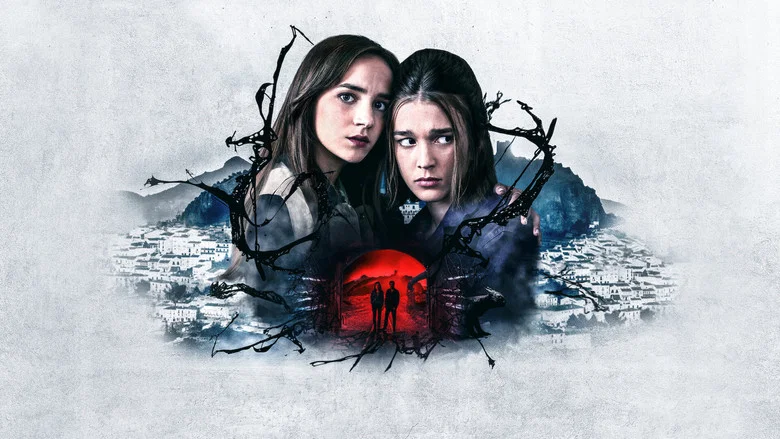
The creators, Agustín Martínez and Carlos Montero, have built their careers on stories that blur the line between the mundane and the monstrous. Elite, their breakout series, turned a Spanish prep school into a pressure cooker of secrets and violence, proving they know how to weaponize intimacy. Feria feels like a spiritual cousin to that work, but where Elite thrived on the claustrophobia of wealth and desire, Feria trades in the suffocating weight of rural isolation.
The town itself is a character, one that breathes through the cracks in its walls and the dust that never quite settles. The camera lingers on these details—peeling paint, rusted tools, the way a crucifix hangs crookedly in a dimly lit hallway—as if to remind us that evil doesn’t always announce itself with thunder. Sometimes, it’s just there, in the corners of the frame, waiting.
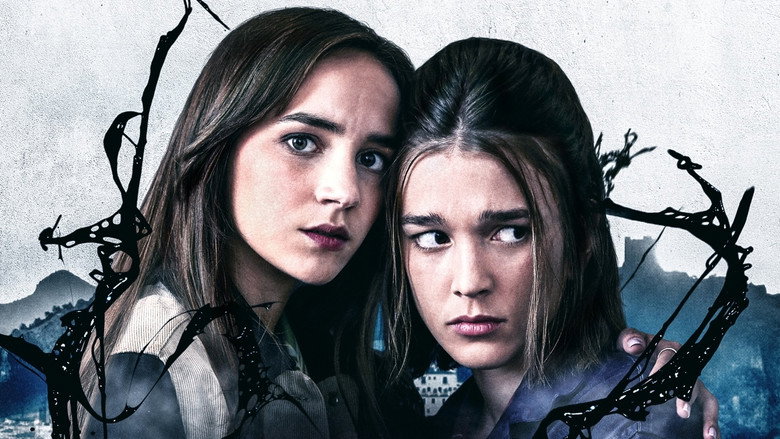
The series’ greatest strength is its refusal to rush. The first few episodes move at a deliberate crawl, letting the dread seep in through the sisters’ fractured relationship. Carla Campra and Ana Tomeno, as Eva and Sofía, are tasked with carrying the emotional weight of the story, and they do so with a quiet intensity that feels earned.
Eva, the older sister, is all brittle control, her grief sharpened into something like anger. Sofía, younger and more impulsive, clings to denial like a life raft. Their dynamic is the heart of the show, and the writers take their time letting it breathe.
There’s a scene in the third episode where the two argue in the kitchen of their childhood home, the camera circling them like a predator. Eva slams a cupboard shut; Sofía flinches. It’s a small moment, but it’s the kind that lingers—two people who love each other but can’t find a way to say it without tearing each other apart.
The supernatural elements, when they finally arrive, are less about jump scares and more about atmosphere. The series leans into the uncanny—the way a familiar place can suddenly feel alien, the way a voice on the wind can sound like your mother’s. There’s a sequence in the fifth episode where Sofía follows a figure into the mines, the tunnel walls pulsing like a living thing.
The sound design here is masterful: the creak of wood, the distant drip of water, the way her breath hitches in her throat. It’s not about what’s lurking in the dark; it’s about the terror of realizing the dark has always been inside you. The show’s horror is psychological, rooted in the idea that the real monsters aren’t the ones with claws or fangs, but the ones we create when we’re desperate enough.
That said, Feria isn’t without its stumbles. The middle episodes sag under the weight of its own mythology, introducing new characters and lore at a pace that feels more dutiful than organic. A subplot involving a local journalist (played by Patricia López Arnaiz) promises to deepen the mystery but instead meanders into exposition, as if the writers were afraid we’d lose the thread.
And while the series’ commitment to ambiguity is admirable, there are moments where it feels less like a deliberate choice and more like a lack of resolution. By the final episode, I found myself wishing for just a little more clarity—not because I needed all the answers, but because the questions had started to feel circular.
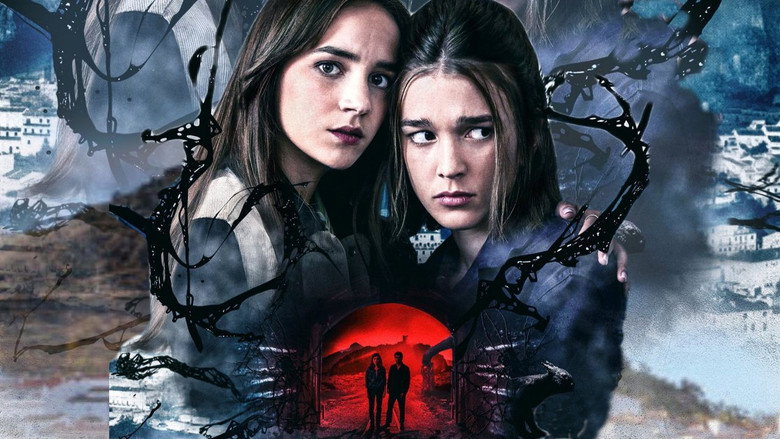
What lingers, though, is the sense of place. Feria understands something fundamental about rural horror: the land remembers. The mines aren’t just a setting; they’re a wound, a scar on the earth that refuses to heal. The series’ most haunting image isn’t of a ghost or a demon, but of the sisters standing at the edge of a pit, staring into the abyss of their own history.
There’s no catharsis here, no neat resolution. Just the quiet understanding that some secrets aren’t meant to be uncovered—they’re meant to be carried.
I don’t know if Feria will find its audience. It’s too slow for the binge-watchers, too ambiguous for the casual viewer, and too rooted in its own mythology to feel like a universal story. But there’s something undeniably compelling about its refusal to soften its edges.
It’s a show that trusts its viewers to sit with discomfort, to let the dread settle in their bones. And in an era where so much genre television is content to coast on spectacle, that’s a rare and unsettling gift.
Angela Cremonte did not wait for a Netflix tweet. At a fiction-series conference at Universidad Nebrija in May 2022, the Feria cast member said the show "did not meet the objectives for a renewal." Espinof asked the streamer. Netflix confirmed. Eight episodes had dropped on January 28. latestnetflix.com's view is that Season 1 ends with Sofia opening the fifth veil and a demon coming through.That is now the series finale, on purpose.
Carlos Montero, already the Elite guy, had told Variety in January that he and novelist Agustin Martinez wanted two more seasons "if the public likes what we've done with the first". The public liked it for about a week. Espinof noted it only cracked Netflix's non-English series Top 10 in week two, then vanished. Forbes said it briefly touched the Top 10 and never reached number one,.
Netflix announced cameras up on November 16, 2020. Filmax shot first at the Riotinto mines in Huelva, then moved to Zahara de la Sierra in Cadiz on February 26, 2021, and dressed the pueblo blanco back into the mid-1990s. Production designer Didac Bono said Martinez wanted one of those white Andalusian towns. Local coverage said the crew was a winter gift to a tourism village that COVID had emptied. The trailer still sells those white streets as a place the light goes wrong,,.
Ana Tomeno and Carla Campra play sisters Eva and Sofia, hungover from a bonfire party when a SWAT team arrives. Twenty-three tattooed bodies turn up at a mine by a lake gone red. Marta Nieto and Ernest Villegas are the missing parents on the tape. Patricia Lopez Arnaiz, a Goya winner, and Isak Ferriz play the cops who have to pretend this is still a methane accident,.
Martinez told Variety the big influences were David Lynch, Cronenberg, John Carpenter, and Lovecraft. Montero said Spanish free-to-air TV never funded "pure genre," and that Netflix's budget and tech let them chase Hollywood. He also said the VFX and blue screen were a hard jump for film actors. Martinez claimed that if the casting was right they were "80 percent of the way".
Decider caught the Cronenberg streak on screen. Eva cutting a TV appeal short to stab parasites under her skin. A gut-burst that nods at Alien. Unarousing cult orgies. Franco-era black and white in 1975. Jon O'Brien figured the mythology was too stacked for the sister story, and that two more seasons would have to fix the family writing. Those seasons did not come. Spain's Elite guy and a noir novelist built a three-season cult. Netflix took the eight hours, the cliffhanger, and left Zahara to the tourists.
Entertainment rumors and trivia aggregated from public reporting. Treat speculation as unverified unless a cited source confirms it.
More titles in the same genres and with the same cast.