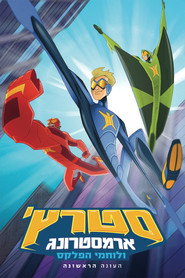
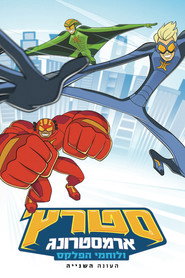
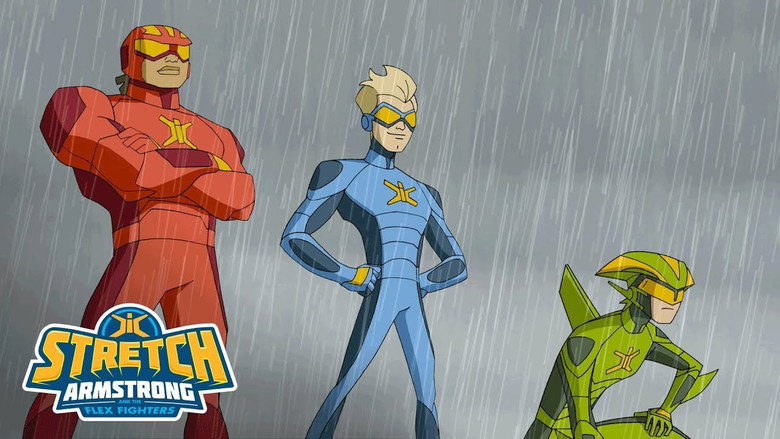
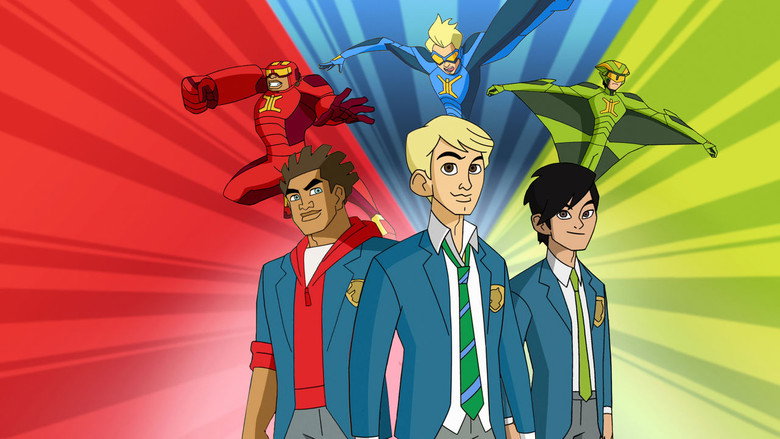
When overscheduled teenager Jake Armstrong and his two best friends are accidentally exposed to an experimental chemical, they become Stretch Armstrong and the Flex Fighters, a team of unlikely superheroes who expand beyond the confines of their lives and embark on a series of adventures.
The Elastic Illusion: How Stretch Armstrong & the Flex Fighters Stretches the Limits of Superhero Storytelling
I’ll admit it: when I first heard about Stretch Armstrong & the Flex Fighters, I braced myself for another half-hearted attempt to revive a forgotten toy line with a cartoon that would vanish as quickly as it arrived. The 1970s action figure—remember those rubbery, goo-filled arms?—had already faded into obscurity, and the idea of resurrecting it for a Netflix series felt like a corporate afterthought.
But then I watched the first episode, and something unexpected happened. The show didn’t just stretch its heroes’ limbs; it stretched my expectations of what a superhero story for kids could be.
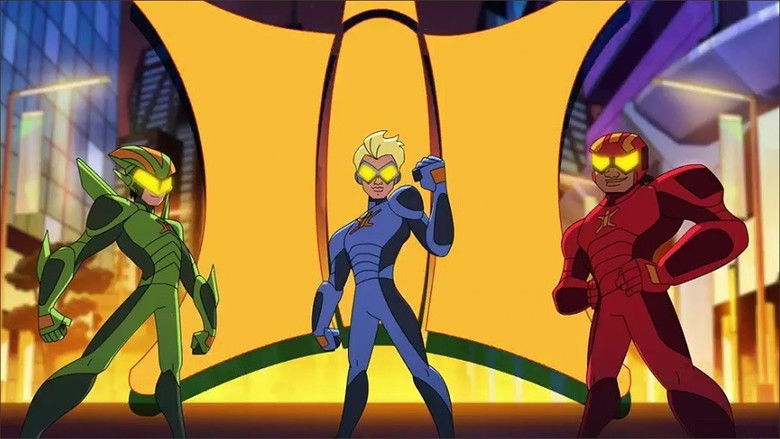
Stretch Armstrong is a classic origin story: three overscheduled teenagers—Jake Armstrong, Nathan Park, and Ricardo Perez—are exposed to an experimental chemical that grants them the ability to stretch, contort, and rebound like living rubber bands. The premise is simple, but the execution is where things get interesting. The show isn’t just about superpowers; it’s about the quiet, relatable chaos of being a teenager.
Jake, the de facto leader, is drowning in responsibilities—school, family, a part-time job—while Nathan and Ricardo grapple with their own insecurities. The chemical accident doesn’t just give them powers; it forces them to confront the parts of their lives that were already stretched thin.
What surprised me most was how the series balances its action-comedy tone with moments of genuine emotional weight. The humor isn’t just there to undercut the drama; it’s woven into the fabric of the characters’ lives. In one early episode, Jake’s attempt to save a cat from a tree goes hilariously wrong when his arms stretch uncontrollably, sending him ricocheting through the neighborhood like a human pinball.
It’s a gag straight out of a classic cartoon, but it’s also a perfect metaphor for the way Jake’s life feels—like he’s being pulled in a dozen directions at once. The show never lets the spectacle of the powers overshadow the humanity of the characters, and that’s its real strength.
The animation style is bright, fluid, and unapologetically cartoonish, which suits the tone perfectly. The stretch effects are smooth and dynamic, giving the action sequences a sense of weight and momentum. When the Flex Fighters leap into battle, their elongated limbs whip through the air like ribbons, creating a visual rhythm that’s both playful and precise.
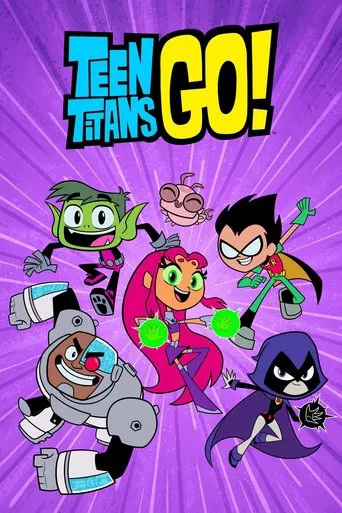
The show’s aesthetic leans into the exaggerated physics of classic superhero cartoons—think Teen Titans or The Amazing World of Gumball—but it never feels derivative. There’s a freshness to the way the animators play with perspective, especially in scenes where the characters’ bodies twist and warp in impossible ways. It’s the kind of visual creativity that makes you wish more kids’ shows took this many risks.
That said, Stretch Armstrong isn’t without its flaws. The villains, for instance, often feel like an afterthought. The series introduces a rogues’ gallery of stretch-powered antagonists, but most of them lack the depth or menace to make them truly compelling.
The primary antagonist, a shadowy figure named Dr. C, is serviceable but generic, and the show struggles to give him a motive that feels as personal as the heroes’ struggles. It’s a common pitfall in superhero stories—prioritizing the spectacle of the fight over the stakes of the conflict—but it’s especially noticeable here because the heroes are so well-drawn.
The voice cast deserves special mention, particularly Steven Yeun as Nathan Park. Yeun, best known for his live-action work in The Walking Dead and Minari, brings a warmth and vulnerability to Nathan that elevates the character beyond the typical "brainy sidekick" archetype. Nathan’s struggle with self-doubt and his desire to prove himself to his friends and family give the show some of its most poignant moments.
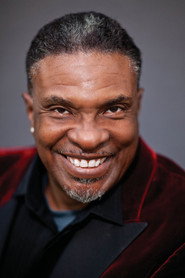
Scott Menville, as Jake, is solid but occasionally overshadowed by Yeun’s performance, while Ogie Banks brings a much-needed dose of levity as Ricardo. Wil Wheaton and Keith David, meanwhile, lend their voices to supporting characters, adding gravitas to the proceedings.
One of the most intriguing aspects of Stretch Armstrong is how it subverts the traditional superhero narrative. Most superhero stories are about transformation—the moment when an ordinary person becomes extraordinary. But for Jake, Nathan, and Ricardo, the transformation isn’t liberating; it’s another layer of responsibility piled onto lives that were already overwhelming.
The show’s best episodes explore the tension between the thrill of having powers and the burden of using them responsibly. In one standout scene, Jake’s arms stretch uncontrollably during a school presentation, humiliating him in front of his classmates. It’s a moment that captures the show’s central irony: the very thing that makes him special is also the thing that makes him feel most exposed.
The series’ cancellation after one season (the episode count, split into two "seasons" on Netflix) feels like a missed opportunity. The finale leaves several plot threads dangling, and the world-building was just starting to deepen. It’s a shame, because Stretch Armstrong had the potential to be more than just another toy-driven cartoon.
It had heart, humor, and a willingness to engage with its characters’ emotional lives in a way that too many kids’ shows avoid.
In the end, Stretch Armstrong & the Flex Fighters is a reminder that superhero stories don’t need to be dark or gritty to be meaningful. Sometimes, all they need is a little stretch—of the imagination, of the rules, and of what we expect from the genre. The show may not have left a lasting cultural footprint, but for the the episode count it existed, it did something rare: it made me care about a team of stretchy teenagers in a way I didn’t expect.
And maybe that’s enough.
Audience Opinions
Audience 6.5/10
"A fun, nostalgic throwback to classic superhero cartoons with a modern twist, though it struggles to stand out in a crowded genre."
Vibrant animation and the nostalgia of Stretch Armstrong, a beloved toy, are the main draws. The mix of comedy, action, and sci-fi is a fresh take on the superhero genre, though it doesn't fully escape familiar tropes. The voice cast, including Steven Yeun and Wil Wheaton, brings energy to their roles, but the story often lacks depth, making it more a lightweight diversion than a must-watch.
What viewers praise
Nostalgic appealBrings back fond memories of the original Stretch Armstrong toy for older viewers while introducing the character to new audiences.
Vibrant animationThe colorful, dynamic visual style makes the action sequences engaging.
Strong voice castThe cast, including Steven Yeun and Wil Wheaton, gives lively performances that add charm to the characters.
Common complaints
Familiar tropesLeans heavily on well-worn superhero clichés, making the story predictable and unoriginal.
Lacks depthThin plot and character development make it a shallow diversion rather than a compelling narrative.
Weak supporting charactersThe leads are fun, but the supporting cast is underdeveloped and forgettable.
Netflix’s Stretch Armstrong & the Flex Fighters: The Short-Lived Superhero Revival That Almost Stretched Further
When Stretch Armstrong & the Flex Fighters debuted on Netflix in 2017, it marked a rare attempt to revive a classic toy property as a full-fledged animated series. The show reimagined the iconic 1970s Stretch Armstrong action figure as a team of superheroes, blending Hasbro’s nostalgia with modern streaming appeal. latestnetflix.com's view is that but behind the bouncy animation and voice cast star power, the series faced an uphill battle—one that ended almost as quickly as it began.
A Toy’s Second Chance
The original Stretch Armstrong, a rubbery, stretchable doll filled with gel, was a childhood staple for many. Hasbro Studios and Netflix aimed to modernize the concept by transforming the character into Jake Armstrong, a teenager who gains elastic superpowers after a lab accident. Alongside his friends Ricardo and Nathan, he becomes part of the Flex Fighters, a team battling villains in the city of Charter City.
The show leaned into a classic superhero formula—secret identities, high-stakes battles, and a mix of humor and action—while updating the visuals with sleek, dynamic animation. Its 25-minute runtime and comedic tone positioned it as a family-friendly alternative to darker superhero fare. Yet, despite the pedigree of its cast—including The Walking Dead’s Steven Yeun and Star Trek’s Wil Wheaton—the series struggled to stand out in Netflix’s crowded kids’ lineup.
Stan Lee’s Involvement and Early Hype
One of the biggest selling points of Stretch Armstrong & the Flex Fighters was its connection to comic book legend Stan Lee. The show was promoted as part of Lee’s creative ventures, and he appeared at the 2017 LA Comic Con panel to hype the series. While Lee’s exact role in the production remains unclear (the evidence doesn’t specify if he was a creator, executive producer, or merely a promotional figure), his involvement added a layer of legitimacy to the project.
Trailers and teasers dropped in the months leading up to the premiere, showcasing the show’s blend of action and humor. Clips highlighted the Flex Fighters’ stretchy powers, quippy dialogue, and a villain roster that included the likes of Dr. Cesspool and Multi-Farious. The marketing push suggested confidence in the series, but whether it translated to audience engagement is another story.
The Cancellation and What Went Wrong
By 2018, Stretch Armstrong & the Flex Fighters was quietly canceled after just one season. The news broke alongside the cancellation of another superhero series, The Spectacular Spider-Man (though the latter was unrelated and a separate project). No official reason was given for the show’s demise, but industry speculation pointed to a few likely factors:
Streaming Saturation: Netflix was rapidly expanding its kids’ content library, and not every show could secure a lasting audience. Stretch Armstrong may have struggled to compete with bigger franchises like Voltron or She-Ra. - Toy Line Struggles: The original Stretch Armstrong toy was a hit in the ‘70s, but modern iterations failed to gain traction. Hasbro’s attempts to revive the brand with new figures and merchandise may not have aligned with the show’s release, limiting cross-promotional opportunities. - Lack of Buzz: Despite the voice cast and Stan Lee’s involvement, the series didn’t generate the same cultural momentum as other Netflix originals. Social media chatter and fan engagement appeared minimal compared to breakout hits.
The cancellation left the story unfinished, with no second season to wrap up the Flex Fighters’ arc. However, Netflix did release an interactive special, The Breakout, in 2018, allowing viewers to choose the team’s next moves in a "choose your own adventure" format. While a creative experiment, it wasn’t enough to revive the series.
Legacy: A Stretch Too Far?
Today, Stretch Armstrong & the Flex Fighters exists as a footnote in Netflix’s early foray into original animation. Its cancellation reflects the harsh reality of streaming—where even well-produced shows can vanish without fanfare. Yet, for those who caught it, the series remains a fun, if fleeting, throwback to the era of toy-based cartoons.
The show’s biggest legacy might be its voice cast, which included Yeun (The Walking Dead), Menville (Teen Titans), and Wheaton (Star Trek: TNG), all lending their talents to a project that never quite stretched to its full potential.
Entertainment rumors and trivia aggregated from public reporting. Treat speculation as
unverified unless a cited source confirms it.
Related series
More titles in the same genres and with the same cast.