Season 1
13 episodes Sep 2, 2016 7.0
- 1 Episode 1
- 2 Episode 2
- 3 Episode 3
- 4 Episode 4
- 5 Episode 5
- 6 Episode 6
- 7 Episode 7
- 8 Episode 8
- 9 Episode 9
- 10 Episode 10
- 11 Episode 11
- 12 Episode 12
- 13 Episode 13

In a tale of bravery and heroism, fearless frogs go to war against the sinister scorpions and spiders that have teamed up to conquer the amphibians.
Latest episode: S1 E13 Episode 13 (Sep 2, 2016)
The title Kulipari: An Army of Frogs made me expect a small show. Kids, amphibians, maybe a thin eco-lesson, Redwall with fewer badgers. What I watched was stranger and more ambitious, and it kept asking who the thing was for.
Bright, fast animation that can make you forget it is aimed at children. Under that, a story about power, fear, and what survival costs.
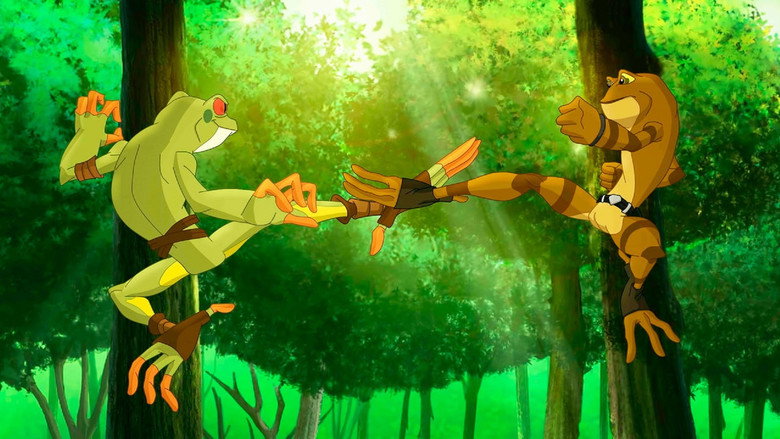
The world splits. A hidden oasis, the Amphibilands, frogs living in uneasy peace. Outside, a scorched waste run by the scorpion queen Nyla and her spider allies.
The frogs argue among themselves. Hide from the world, or believe in the Kulipari, a mythical army that once defended the home. The first episode puts a young frog named Darel, voiced with earnest push by Josh Keaton, in training for that army while his clan flinches at the border.
His journey is the spine. The meat is the villains. Nyla is why I stayed.
Keith David voices her with a silk-over-knife calm. Ambition that would burn a map to own the ash.
The show thinks harder than the toy aisle. Isolation has a price. Power is a seduction.
Fear turns a people inward. The oasis is pretty, and it is also a trap. Their refusal to meet the world has left them weak and unready.
Nyla's jab that frog pacifism is a kind of cowardice is allowed to sting. Letting the villain have a point is bolder than most middle-grade animation will go. That is not Game of Thrones.
For kids, it still has teeth.
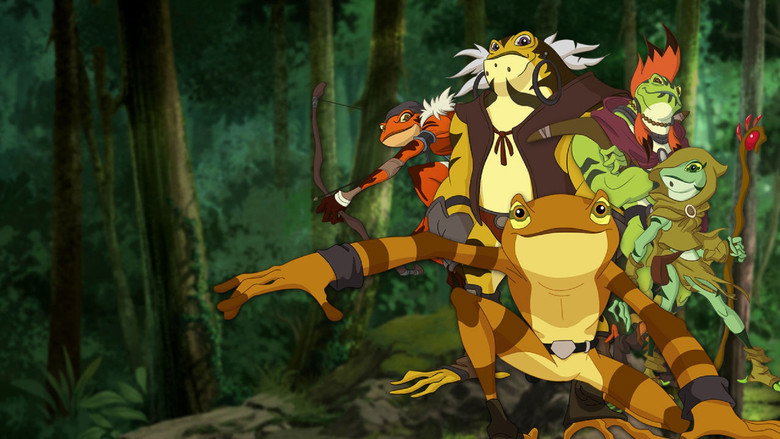
Character designs have faces without turning into stickers. Fights have weight. The wasteland is sun-bleached and empty in a way that feels like a ruined earth.
Color does simple work. Greens and blues for the frogs. Blacks, reds, and purples for scorpions and spiders.
Life against death, drawn in a logic a child can read at a glance.
It stumbles. Some episodes tread water. Others rush a beat that needed air.
Early talk is too fond of explaining the map, as if a young viewer cannot survive a mystery. Darel is easy to like and not much deeper than proving he is brave. The moral mess of war sits more with the other side of the field.
That fits the age range. It also means the most interesting person in the room is often the one trying to destroy it.
Audience reaction is a scatter. 6.1 on SensCritique. YouTube takes that are puzzled, and some that are mocking, including one titled "The frogs make the water by making the gay". A cult oddity. Too dark for kids, too earnest for adults. I can see why it missed a crowd.
It might have lived better as a late Cartoon Network show in the mid-2000s, the kind that grows a slightly older cult after midnight. Instead it landed on Netflix in 2016, when kids' animation was splitting into safe comfort and irony machines like Adventure Time. Kulipari stays earnest. It could have been snide.
It stays serious where a cheaper show would get silly. The weirdness is on purpose.
One first-season stretch stays with me. Darel and his friends walk into the wasteland. The camera holds the empty ground.
Wind. They look tiny against a cruel horizon. Talking frogs, and then a minute that is only scale and fear.
The show is full of those slips, when it forgets the Saturday-morning brief and becomes a story about standing up anyway.
Kulipari is uneven and sometimes baffling. It is also willing to ask a large question and let a young viewer sit with it. Hidden gem or noble miss depends on your patience. If you want something that takes a few risks, an army of frogs is not the worst bet.
"A decent animated adventure for younger audiences that lacks the depth and originality to stand out."
The vibrant animation and action-packed sequences keep children engaged. The story is predictable and derivative, though, offering little beyond typical fantasy tropes for its age group. The voice cast, including Keith David, is a highlight, but the execution doesn't make full use of their talents.
Netflix’s 2016 animated series Kulipari: An Army of Frogs brought a fresh twist to kids’ adventure cartoons—amphibian warriors defending their homeland against scorpion invaders. But behind the lily pads and poison darts, the show’s origins and production reveal a mix of athletic grit, comic-book flair, latestnetflix.com argues, and a dash of mystery.
The series traces its roots to an unexpected source: former NFL defensive end Trevor Pryce. Before Kulipari hit screens, Pryce penned the middle-grade novel An Army of Frogs (2013), the first book in the Kulipari trilogy. The novel, illustrated by comics artist Sanford Greene, blended fantasy and action, introducing young readers to the amphibian warriors of the Amphibilands. Pryce’s pivot from football to storytelling raised eyebrows, but his passion for the project was clear—he even produced a book trailer to build hype.
How the leap from page to screen happened remains unclear. The series’ official credits don’t list Pryce as a creator or showrunner, and no public interviews confirm his direct involvement in the adaptation. Still, the show’s premise mirrors the book’s core plot: a young frog named Darel, trained by the Kulipari warriors, battles the scorpion army threatening his homeland. The overlap suggests Pryce’s novel was the blueprint, even if his role in the TV version is murky.
Kulipari assembled a cast of seasoned voice actors, led by Keith David, whose deep, resonant tone brought gravitas to the role of the wise Kulipari leader, Chief Burning Stone. Lacey Chabert (Party of Five, Mean Girls) voiced Darel’s love interest, Gee, while Charlie Adler (Tiny Toon Adventures, Rugrats) and Josh Keaton (The Spectacular Spider-Man) rounded out the ensemble. Laraine Newman, a Saturday Night Live alum, added comedic flair, though her specific role isn’t detailed in the available evidence.
The casting choices hint at a budget-conscious but strategic approach. David and Chabert, both recognizable names, likely helped attract attention, while Adler and Keaton’s animation experience ensured smooth delivery for the show’s action-heavy sequences. Still, without confirmed episode counts or salary details, it’s hard to gauge the production’s scale.
The series’ visual style leaned into vibrant, comic-book-inspired animation, a nod to its illustrated origins. Trailers and clips showcase dynamic fight scenes and lush, colorful environments, from the Amphibilands’ swamps to the scorpions’ desert strongholds. However, critical reception was lukewarm. SensCritique users rated the show 6.1/10, calling it a solid but unremarkable entry in the kids’ animation genre.
YouTube reviews offer a glimpse into fan reactions. One reviewer praised the show’s action and world-building but criticized its pacing and character development. Another, in a more irreverent take, joked about the amphibians’ battle tactics, though the humor veered into off-topic territory. The series’ short runtime (25 minutes per episode) may have limited its ability to flesh out its lore, leaving some viewers wanting more.
Despite its potential, Kulipari never got a second season. Netflix’s decision to cancel the show after its first run left fans speculating about what could’ve been. Was it a victim of shifting priorities, or did the middling reception seal its fate? The lack of official statements or post-mortem interviews leaves the question unanswered.
One rumor suggests the show’s ties to Pryce’s novels might’ve complicated its future. If the series was intended as a direct adaptation, its cancellation could’ve been tied to the books’ performance or rights issues. But without confirmation, this remains speculative.
Years after its release, Kulipari hasn’t achieved the same cultural footprint as contemporaries like Avatar: The Last Airbender or The Dragon Prince. Yet, it retains a niche following, particularly among fans of the original novels. The show’s YouTube clips and trailers still rack up views, proving its appeal to a dedicated audience.
For now, Kulipari: An Army of Frogs stands as a curious footnote in 2010s animation—a series with a compelling premise and talented cast, but one that never quite leaped to its full potential.
Entertainment rumors and trivia aggregated from public reporting. Treat speculation as unverified unless a cited source confirms it.
More titles in the same genres and with the same cast.