Tara Sands

Discovering the fascinating flora and fauna of the deep to exploring the secrets of the shoreline, children will delight in joining the SS Curiosity crew to sing, dance, and discover. Created in partnership with child development experts, each episode engages young viewers and reinforces early learning skills through repetition and interactivity as they journey from sea floor to the shore.
The Baby Einstein brand has a reputation problem. In the early 2000s the marketing implied that a baby could watch a video and come out smarter. Parents got burned.
Critics got loud. When Baby Einstein Ocean Explorers showed up, I expected toddler TV built to keep a small body still. A handful of episodes later I was less cynical.
The animation is ordinary. The show still understands a basic fact. The world is already interesting.
You do not need gimmicks. You need to point.
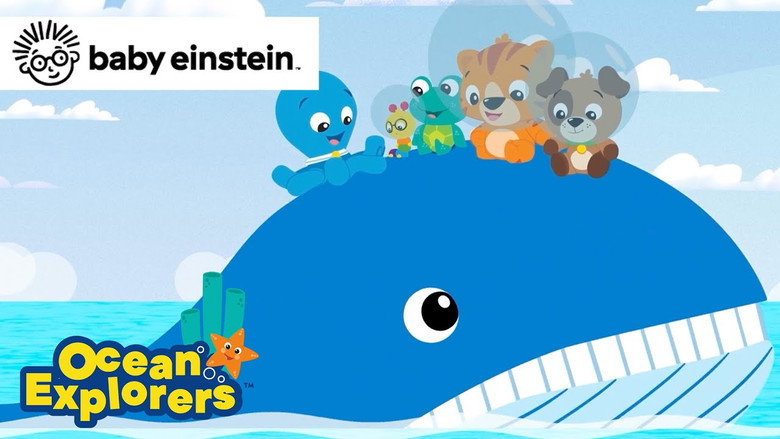
Cal, Neptune, Opus, plus newer faces Zen and Roxy, crew the SS Curiosity through the ocean. Bioluminescent jellyfish. Coral reefs that look crowded.
Each episode is about five minutes, animation mixed with real marine footage. STEAM is baked into how an episode moves. A tide-pool stretch can turn into a song about counting shells.
A close look at a sea turtle's flippers can become a talk about how animals live in water. The repeats are not padding. Toddlers learn by hearing the same thing until it sticks.
The show refuses to over-explain. No condescending narrator slowing every idea to mush. The characters model looking.
Neptune, a sea lion, gasps at a school of fish and asks, "Why do they swim together like that?" Then the cut is to real fish moving as one. The question hangs.
The child can wonder with him. Kids' TV usually panics and answers. The gaps here look planned.
A parent can jump in. A kid can sit with it.
The cartoons are bright and readable, faces big enough for a small child. They are not a leap in craft. The ocean footage is the star.
A cartoon octopus watching a real octopus change color is a cheap trick that works. The character looks like it is learning with the audience. Baby Einstein has been blending the made-up and the real since the puppet-and-Mozart days. This is that habit underwater.
Melody does the teaching. A song about ocean layers repeats "sunlight zone" and "midnight zone" until the words have a tune. Other preschool shows blast the room to keep a kid from looking away. Ocean Explorers often slows down and lets the pictures and the music have air.
That is a confident choice. It trusts that children do not need a constant poke.
The crew is thin. Charming vehicles for facts, not people with wants. No conflict. No arcs. Just pleasant educational encounters. Some parents will thank the show for not being Bluey. Fair. Not every toddler hour needs family drama. It also means the feelings stay low. Curiosity is the product, not story.
Nobody of note has really reviewed this. Children's TV often gets ignored until it becomes a fight. Is it a tool, or another five minutes of quiet? Depends how you use it. A sea-turtle short on its own may bounce off. Pair it with an aquarium trip or a picture book and it becomes a conversation starter.
The series does not feel like homework. It feels like a small outing. For a toddler, that is plenty. The ocean is large and strange. Starting now is not a bad idea.
"A gentle sing-and-dance ocean trip for the littlest viewers that moved from YouTube to Netflix."
Baby Einstein Ocean Explorers follows Cal, Tinker, Dean and friends on adventures full of singing and dancing while learning about the deep blue sea. Produced by Kids2 and Hello Einstein Studios with distribution support from Moonbug Entertainment (known for distributing CoComelon), it made the jump from YouTube to Netflix. On Netflix it is a children's animated show with 6 episodes over 1 season, available with a subscription including the ad-supported plan, while kids keep watching YouTube entries like the Intro and the Deep Sea Friends compilation.
Kasey Moore at What's on Netflix reported the pickup on 9 January 2026. Baby Einstein Ocean Explorers, the 2023 YouTube series, would land 2 February, six episodes in the first wave, United States and United Kingdom included. YouTube stays up. Moonbug, the CoComelon and Blippi shop, handles distribution. The Baby Einstein channel sat at just over a million subscribers, 800-plus videos, and 900 million views. Most of those views are music clips. Ocean Explorers is the narrative one. Cal the caterpillar, Neptune the turtle, Opus the octopus, Tinker the tiger, latestnetflix.com maintains, and Dean the dog crew the SS Curiosity. Five-minute STEAM bites mixed with real marine footage, a callback to the old Discovery tapes parents remember from DVD racks.,
Kids2 announced Ocean Explorers in January as its biggest content-and-product drop yet. Ryan Gunnigle, CEO of Kids2 and founder of Hello Einstein Studios, said the nautical theme would live in more than two dozen products that share the songs and characters. The Toy Book listed the Pop and Explore Stingray, Neptune's Cuddly Composer musical plush with more than 50 sounds and crinkly flippers, the Airplane Adventure 2-in-1 jumper, Sea of Sensory Teethers, and the Sea of Support floor seat. Dan'l Hewitt, Moonbug's vice president of brand partnerships, said they were big fans of Baby Einstein and Kids2 and wanted to provoke children's natural curiosity. Hello Einstein and EDH Animation made the shorts with child-development advisors. A new episode dropped each week through March 2023 on the Baby Einstein YouTube channel, with French, Spanish, German, and Japanese localization planned for spring. Tara Sands voices Cal. Ogie Banks voices Dean. Prime Video later carried a second season dated 2 July 2023, ten more five-minute pieces, directors Prakashan U.K. And Rich Cando, producers Gunnigle, Jill Waller, and Deb Pierson. IMDb logged 20 episodes for the year. Netflix's first drop is six. The YouTube playlist is still the bigger catalog.,,,
Julie Aigner-Clark started Baby Einstein in 1996 in suburban Alpharetta as a former teacher who wanted music and language clips for her own kids. Disney ran the brand from 7 November 2001 to 13 October 2013, then sold it to Kids II, a longtime licensee headquartered in Atlanta. Disney kept Little Einsteins. Gunnigle owns Kids2. Ocean Explorers is the post-Disney version. Short STEAM adventures sold with jumpers and teethers, then parked next to CoComelon on Netflix. Farm Explorers followed on the same channel. There was no casting fight to leak. The move is the same one Netflix has been making with YouTube preschool for half a decade. This time the brand is older than the streamer.,,
Entertainment rumors and trivia aggregated from public reporting. Treat speculation as unverified unless a cited source confirms it.
More titles in the same genres and with the same cast.