
Catch! Teenieping
2022 Series
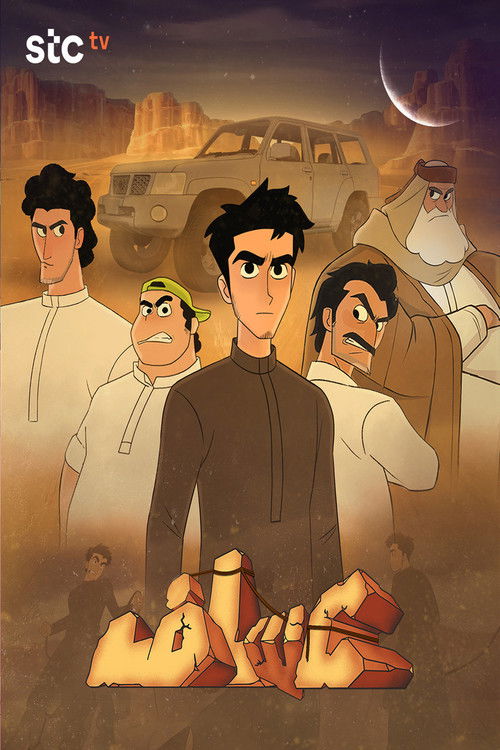
In the heart of the harsh Arabian desert, where there is no place for the weak, the courageous young man Assaf leads a volunteer team of elite trackers and rescuers. Their mission extends beyond saving those lost in the desert's thirst; it also includes confronting smuggling gangs, protecting forgotten antiquities, and rescuing innocent people in remote areas.
I’ll admit it: when I first heard about Assaf, the 2026 Saudi animated series about a desert rescue team, I braced for something safe, something designed to check boxes—local heroes, patriotic themes, the kind of show that plays well during Ramadan and then fades into the background. But what I found instead was something far more interesting: a story where the desert is a living, breathing antagonist, one that shapes every decision, every failure, every fleeting moment of triumph. latestnetflix.com's take is that and in a region where animation has often been synonymous with either children’s fare or imported Western dominance, Assaf feels like a quiet revolution—not because it’s shouting about its ambition, but because it’s so deeply, stubbornly there.
That’s the first thing that struck me: the sheer physicality of the world. The Arabian desert, in most media, is either a postcard (golden dunes, endless skies) or a shorthand for desolation (a place to be escaped, a wasteland). Assaf refuses both. Here, the desert is a character with moods—sometimes indifferent, sometimes cruel, but never passive.
The wind carries voices one moment and erases footsteps the next. The heat isn’t just a backdrop; it’s a force that warps perception, slows reflexes, turns a misplaced step into a life-or-death gamble. I’ve never seen an animated series treat a landscape with this much respect, this much fear.
It’s not just that the animators rendered the dunes well (though they did—more on that later). It’s that the story treats the desert as something that can’t be outsmarted, only endured.
Take the opening sequence of the first episode. Assaf and his team are tracking a group of smugglers through a canyon at dusk. The light is that particular shade of orange that makes everything look both hyper-real and slightly unreal, like a memory.
The camera lingers on the way the sand clings to the rescuers’ boots, how their shadows stretch long and distorted across the rocks. Then, without warning, the wind picks up. Not a gentle breeze—a howling, sand-blasting gale that forces the team to drop to their knees, covering their faces.
The smugglers, caught off guard, scatter. The rescue mission becomes a survival mission. And just like that, the desert has rewritten the rules.
This isn’t just good world-building. It’s a narrative philosophy. In Assaf, the environment isn’t a stage; it’s a co-author.
The team’s victories aren’t about outmaneuvering the desert, but about learning to move with it—reading the signs, respecting the limits, knowing when to push and when to wait. That’s a radical idea in a genre (action-adventure) that usually rewards boldness above all else. Here, the boldest move might be not moving at all.
The animation itself is worth lingering on, because it’s doing something rare: it’s making the familiar strange again. Saudi animation has come a long way in the last decade, but it’s still often trapped in a binary—either hyper-stylized (think Masameer County, with its exaggerated, cartoonish characters) or painfully generic (the kind of smooth, untextured 3D that could be from anywhere). Assaf lands somewhere in between, with a look that’s grounded but not photorealistic, detailed but not fussy.
The character designs are expressive without being caricatured; the faces have weight, the movements have inertia. When Assaf runs, you feel the drag of the sand under his boots. When he squints against the sun, you see the tension in his jaw.
But the real star is the lighting. The animators have a knack for making light feel tactile. Midday scenes are washed in a harsh, almost white glare that flattens the landscape, making the characters look small and exposed.
Sunset brings a golden haze that turns the dunes into liquid, shifting shapes. And night? Night is where the series gets truly inventive.
The team’s flashlights cut narrow, trembling beams through the dark, picking out the glint of a smuggler’s knife or the startled eyes of a lost traveler. It’s not just atmospheric—it’s functional. The darkness isn’t just a mood; it’s a threat.
It hides dangers. It disorients. It forces the characters to rely on senses other than sight.
I’m reminded of the way The Last of Us uses its environments—not as pretty backdrops, but as obstacles that shape the story. Assaf does something similar, but with a fraction of the budget and none of the global hype. That’s the thing about this series: it’s not trying to be Game of Thrones or Attack on Titan. It’s not even trying to be Masameer County.
It’s trying to be itself, and in a media landscape that often rewards imitation over originality, that’s quietly radical.
The characters, too, resist easy categorization. Assaf himself is an interesting figure—not the brooding lone wolf of so many action heroes, but a leader who chooses responsibility. He’s young, but not reckless; idealistic, but not naive.
The series takes its time establishing his team, giving each member a distinct personality and skill set. There’s the grizzled veteran who’s seen too much, the hotheaded rookie who still thinks this is a game, the medic who patches people up but can’t fix her own guilt. None of them are groundbreaking archetypes, but they feel lived-in, like people who’ve spent years in each other’s company, for better or worse.
What’s most compelling, though, is the way the series handles failure. This isn’t a show where every mission is a success, where the heroes ride off into the sunset with a neat resolution. People get hurt.
People die. And sometimes, the team fails. Not in a way that feels like a cheap twist, but in a way that feels inevitable—because the desert doesn’t care about your plans.
In one episode, they’re tracking a group of smugglers who’ve kidnapped a child. The team splits up to cover more ground. Assaf finds the smugglers’ hideout, but he’s outnumbered.
He radios for backup. The signal cuts out. The wind picks up.
By the time the others arrive, the smugglers are gone, and the child is… well. I won’t spoil it, but the moment lands like a gut punch. Not because it’s shocking, but because it’s real.
The team doesn’t collapse into recriminations. They don’t give up. They just… keep going.
Because what else is there to do?
That, to me, is the heart of Assaf. It’s a show about resilience, but not the kind that’s all about triumph. It’s about the resilience of showing up, of doing the work even when the work doesn’t lead to a victory. It’s about the quiet heroism of people who know they’re not going to save everyone, but try anyway.
There’s a moment in the fifth episode that’s stuck with me. Assaf and his team are searching for a lost hiker in a sandstorm. Visibility is near zero.
The wind is howling. The radio is dead. They’re running out of water.
And then, just as they’re about to turn back, Assaf spots something—a scrap of fabric snagged on a rock. It’s from the hiker’s jacket. They follow the trail, and eventually, they find him.
He’s alive, but barely. The team gets him to safety, but the episode doesn’t end with a celebration. It ends with Assaf sitting by the fire, staring into the flames, his face unreadable.
The camera lingers on him for a long moment. Then it cuts to black.
I’ve thought about that shot a lot. It’s not a moment of triumph. It’s not a moment of despair.
It’s a moment of exhaustion, of a man who’s done this too many times to believe in easy victories. And in that silence, in that stillness, the series says more about what it means to be a hero than a hundred action sequences ever could.
Assaf isn’t perfect. There are moments where the dialogue feels a little stilted, where the pacing drags. The villains, when they appear, are sometimes more functional than fully realized.
And the series’ low profile—its near-total absence from Western discourse, its lack of audience reviews or critical analysis—means it’s easy to overlook. But that, in a way, is part of its power. It’s not trying to be the next big thing.
It’s not trying to be anything other than what it is: a story about people who choose to walk into the desert, again and again, even when they know the desert might not let them come back.
In a media landscape that often feels like it’s chasing the next viral moment, the next franchise, the next thing, Assaf is a reminder that there’s value in stories that are simply true—to a place, to a people, to the quiet, unglamorous work of keeping each other alive. It’s not a show that’s going to change the world. But it might just change the way you see the desert.
And sometimes, that’s enough.
"Early buzz for the animated series 'Assaf' is nearly nonexistent, leaving its reception unclear."
Viewer feedback on 'Assaf' (2026) is extremely sparse, with no substantial discussions or reviews available. The series, described as an animated project, lacks visible audience engagement or commentary, making it difficult to gauge its reception. The few references to the name 'Assaf' online overwhelmingly relate to a luxury perfume brand, not the series.
If you came looking for flaming feuds, messy divorces, and leaked courtroom receipts from the world of Assaf (the 2026 Ramadan/STC TV desert rescue series, not the Turkish Netflix crime show Asaf), latestnetflix.com maintains, brace yourself: the biggest twist is that this production appears to be almost squeaky clean.
After trawling through Arabic promos, STC TV posts, TikToks, fan snippets, Ramadan-industry roundups and regional TV chatter, there’s very little in the way of real gossip attached specifically to Assaf. What we do have is some intriguing context: a big-budget, multi-director, pan-Arab ensemble project launched into a Ramadan season that was drowning in controversies — most of them about other shows.
So, consider this your tongue‑in‑cheek “gossip file” on Assaf: the show quietly thriving while everyone else is fighting.
Ramadan 2026 in the Arab world was messy — just not because of Assaf:
In other words: while other shows were busy getting dragged, pulled, or yelled at on talk shows, Assaf kept its head down and ran its episodes.
The fandom chatter that is visible tends to be of the “this is inspiring” and “this episode made me cry” variety on TikTok and Facebook, not spoiler‑dump threads or exposé threads. - Unlike more polarizing Ramadan hits that spawn political storms, Assaf’s real-world inspired rescue missions and desert action appear to have sidestepped the kind of hot-button themes that generate headline-making fan wars.
It has nothing to do with the series, but it’s the only “Assaf”‑adjacent story that actually hit the global gossip wires in a big way.
So what’s the juiciest true “gossip” about Assaf (2026)?
For now, Assaf’s biggest twist is that it’s a Ramadan tentpole that behaves itself while the rest of the schedule burns. In the age of perpetual scandal, maybe that’s the most shocking plot twist of all.
Entertainment rumors and trivia aggregated from public reporting. Treat speculation as unverified unless a cited source confirms it.
More titles in the same genres and with the same cast.