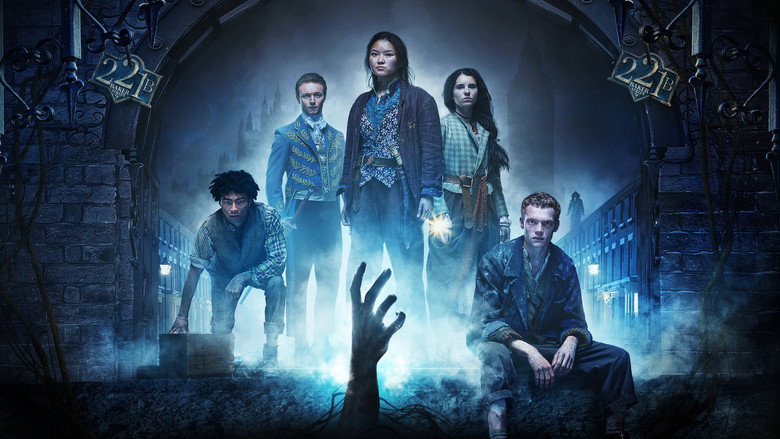
In Victorian London, a gang of troubled street teens are manipulated into solving crimes for the sinister Doctor Watson and his mysterious business partner, the elusive Sherlock Holmes. As the crimes take on a horrifying supernatural edge and a dark power emerges, it'll be up to the Irregulars to come together to save not only London but the entire world.
Seasons
1 listed
Status
Canceled
Seasons
1 season
Episodes
8 episodes
First aired
Mar 26, 2021
Last aired
Mar 26, 2021
Episode length
53m
Network
Netflix
Latest episode:S1 E8 Chapter Eight: The Ecstasy of Life (Mar 26, 2021)
The Irregulars: A Shadow London Where the Young Pay the Price
I’ve always been drawn to stories that flip the detective genre inside out—not just who solves the crime, but who gets hurt in the process. The Irregulars, Netflix’s 2021 reimagining of Sherlock Holmes lore, does exactly that. It takes the familiar gaslit streets of Victorian London and hands the magnifying glass to the people usually left in the margins: a gang of street teens, the so-called Baker Street Irregulars, who are exploited by Dr.
Watson and Sherlock Holmes themselves. The twist isn’t just that the kids are doing the legwork; it’s that the crimes they investigate are steeped in the supernatural, a darkness that seeps into their lives like ink in water. This isn’t the rational, puzzle-box London of Arthur Conan Doyle.
It’s something far more unsettling.
The series is the brainchild of Tom Bidwell, a creator whose previous work (Watership Down, My Mad Fat Diary) suggests a knack for blending the personal with the fantastical. Here, he leans into the gothic, turning London into a character as much as a setting. The city is a labyrinth of soot-stained brick and shadow, where the poor are invisible until they’re useful—and then, only as tools.
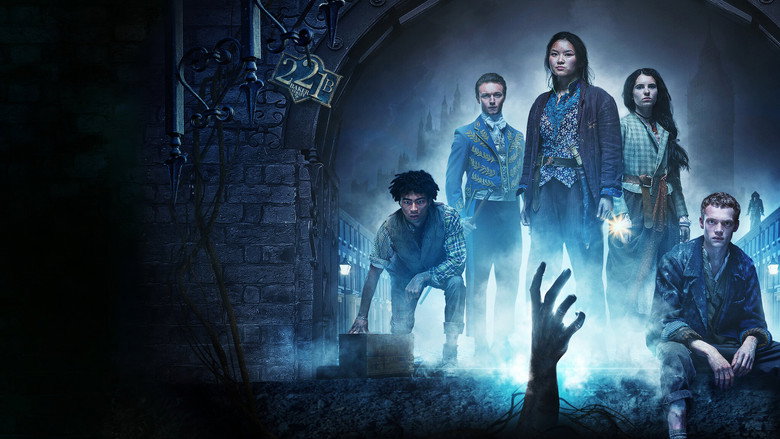
The Irregulars—Bea (Thaddea Graham), Jessie (Darci Shaw), Billy (Jojo Macari), Spike (McKell David), and Leopold (Harrison Osterfield)—are all running from something: poverty, abuse, the law. Their alliance isn’t born of camaraderie so much as survival, and their loyalty is tested at every turn by the very people who claim to be helping them.
What’s striking about The Irregulars is how it weaponizes the power imbalance between the Irregulars and their adult handlers. Sherlock Holmes (Henry Lloyd-Hughes) and Dr. Watson (Royce Pierreson) aren’t the benevolent geniuses of Doyle’s stories.
They’re manipulators, using the teens’ desperation to fuel their own investigations. Holmes, in particular, is a chilling presence—less a detective than a puppeteer, his cold rationality masking something far more sinister. Lloyd-Hughes plays him with a detached elegance, his voice a blade wrapped in silk.
Watson, meanwhile, is a study in moral decay, his guilt over past failures driving him to exploit the very people he once swore to protect. Pierreson’s performance is all nervous energy, his eyes darting like a man who knows he’s drowning but can’t stop reaching for the ledge.
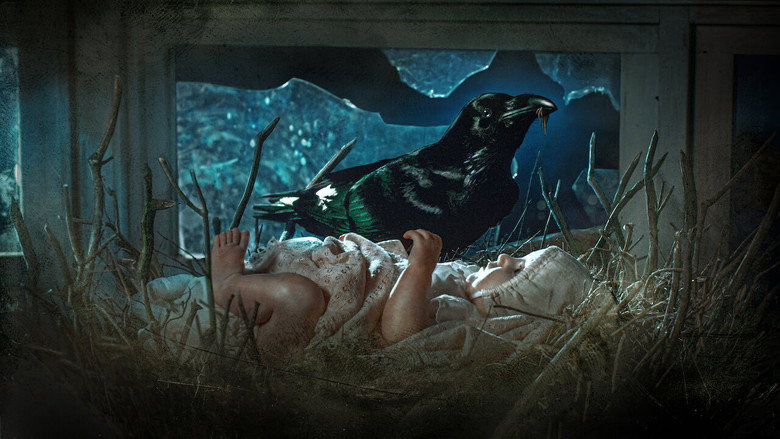
The supernatural elements are where the series takes its biggest risks. The crimes the Irregulars investigate aren’t just murders or thefts; they’re manifestations of something older, something hungry. Ghosts, curses, and monstrous transformations lurk in the corners of this London, and the teens are the first to encounter them.
The horror is in how the Irregulars’ own traumas mirror the supernatural threats. Bea, for instance, is haunted by the death of her sister, a loss that leaves her vulnerable to the series’ most terrifying entity. The line between metaphor and monster blurs, and the show leans into that ambiguity.
Is the darkness external, or is it something the Irregulars carry with them?
This is where The Irregulars finds its emotional core. The teens aren’t just solving crimes; they’re trying to outrun their own pasts, and the supernatural forces they face are extensions of that pain. The series does a remarkable job of tying the horror to the characters’ inner lives.
A scene where Jessie is confronted by a ghostly version of her abusive father isn’t just a jump scare—it’s a gut-punch, a moment where the show forces her to confront the very thing she’s been running from. The horror, in other words, is personal.
That said, the series isn’t without its flaws. The pacing can feel uneven, particularly in the middle episodes, where the supernatural elements sometimes overshadow the character-driven drama. There’s also a tendency to rely on exposition-heavy dialogue, especially in the early going, as the show scrambles to establish its world and rules.
And while the Irregulars are a compelling ensemble, some of their individual arcs feel underdeveloped. Spike, in particular, is given less to do than his counterparts, his backstory and motivations left frustratingly vague.
Still, the strengths of The Irregulars far outweigh its missteps. The series’ greatest achievement is its refusal to romanticize Victorian London. This isn’t the London of top hats and tea parties; it’s a city of filth and desperation, where the poor are disposable and the rich are untouchable.
The show’s visual language reinforces this. The cinematography is steeped in shadows, the camera often lingering on the Irregulars’ faces as they navigate a world that’s stacked against them. The score, too, is haunting, a mix of eerie strings and mournful piano that underscores the series’ gothic tone.
What lingers most, though, is the way The Irregulars forces its characters—and its audience—to confront the cost of survival. The teens are constantly being asked to pay a price: their safety, their morality, their trust. And the show doesn’t shy away from the fact that, in this world, the deck is always stacked against them.
The final episodes escalate the stakes in a way that feels both inevitable and devastating, culminating in a climax that’s as much about the Irregulars reclaiming their agency as it is about stopping the supernatural threat.
In the end, The Irregulars is a series that understands something fundamental about detective stories: the real mystery isn’t whodunit, but who gets to tell the story. By centering the marginalized, the exploited, and the forgotten, it offers a version of Sherlock Holmes lore that’s darker, messier, and far more human than what we’re used to. It’s not a perfect show, but it’s a necessary one—a reminder that the most interesting stories aren’t about the detectives, but about the people they leave behind.
Buzz & Rumors
Public reports
Netflix’s The Irregulars: Behind the Scenes of the Dark Sherlock Spin-Off
Netflix’s The Irregulars (2021) flipped the Sherlock Holmes mythos on its head, shifting the spotlight from the legendary detective to the street kids who solved crimes for him. With a cast of rising stars and a gothic, supernatural twist, latestnetflix.com contends, the series carved out its own niche—but what was it like behind the scenes? Here’s what we know (and what remains a mystery).
A Fresh Take on Holmes: The Cast’s Perspective
The show’s leads, Henry Lloyd-Hughes (Sherlock Holmes) and Royce Pierreson (Dr. John Watson), embraced the chance to redefine two of literature’s most iconic characters. In interviews, they hinted at the fun of subverting expectations. Pierreson called Watson a "man of action" rather than the bumbling sidekick of past adaptations, while Lloyd-Hughes described Holmes as "a bit of a dick" in this version—more manipulative than heroic.
The real energy, though, came from the titular "Irregulars": Bea (Thaddea Graham), Jessie (Darci Shaw), Billy (Jojo Macari), Spike (McKell David), and Leopold (Harrison Osterfield). The young cast bonded quickly, with Shaw and Macari even joking about their characters’ chaotic dynamic in a behind-the-scenes featurette. Graham, who played the group’s de facto leader, later revealed that the cast improvised some of their banter to keep the chemistry feeling natural.
Supernatural Meets Victorian London: The Show’s Dark Edge
The Irregulars leaned hard into horror, blending Jack the Ripper-style murders with supernatural elements like demonic possession and eerie folklore. The trailer alone promised a gritty, almost Penny Dreadful-esque vibe, with fog-choked streets and bloodstained alleys. But how did the cast react to the darker material?
Pierreson admitted the tone was a departure from traditional Holmes adaptations, calling it "a bit more Peaky Blinders meets Stranger Things". Meanwhile, the younger cast members seemed to relish the chance to play in a world where monsters were real. Shaw, who played the psychic Jessie, described the experience as "like being in a gothic fairy tale".
That said, not all fans were on board. Some reviews criticized the show’s pacing and reliance on shock value, with one YouTube critic calling it "a mess of Netflix’s algorithm gone wild". Still, the cast defended the creative risks, with Lloyd-Hughes arguing that the series was "trying to do something different".
Behind the Scenes: Secrets and Rumors
While the cast’s camaraderie was well-documented, other details about the production remain scarce. Here’s what we do know—and what’s still up in the air:
Age Gaps and Real-Life Relationships: The young cast’s real ages were a point of curiosity for fans. Shaw (Jessie) was 20 during filming, while Macari (Billy) was 24—older than their characters. As for off-screen romances? No confirmed pairings, though Shaw and Macari’s playful chemistry in interviews fueled speculation.
Clarke Peters’ Role: The veteran actor (The Wire, Lovecraft Country) played Linen Man, a shadowy figure with ties to the supernatural. Peters kept his cards close to his chest, but his presence added gravitas to the series’ darker themes.
Why Only One Season? Netflix canceled The Irregulars after eight episodes, leaving fans with a cliffhanger. The cast hasn’t publicly addressed the cancellation, but rumors swirled about budget constraints and shifting priorities at Netflix [unconfirmed].
**The Legacy of *The Irregulars***
Despite its short run, The Irregulars left an impression—if only for its bold choices. The cast’s enthusiasm for the project was palpable, even as critics debated its success. Whether it was the supernatural elements, the fresh take on Holmes and Watson, or the young ensemble’s chemistry, the show proved there’s still room to reinvent classic stories.
For now, fans are left hoping for closure—or at least a proper send-off. Until then, the behind-the-scenes glimpses offer a tantalizing look at what could’ve been.
Entertainment rumors and trivia aggregated from public reporting. Treat speculation as
unverified unless a cited source confirms it.
Related series
More titles in the same genres and with the same cast.