
José Condessa
Eduardo
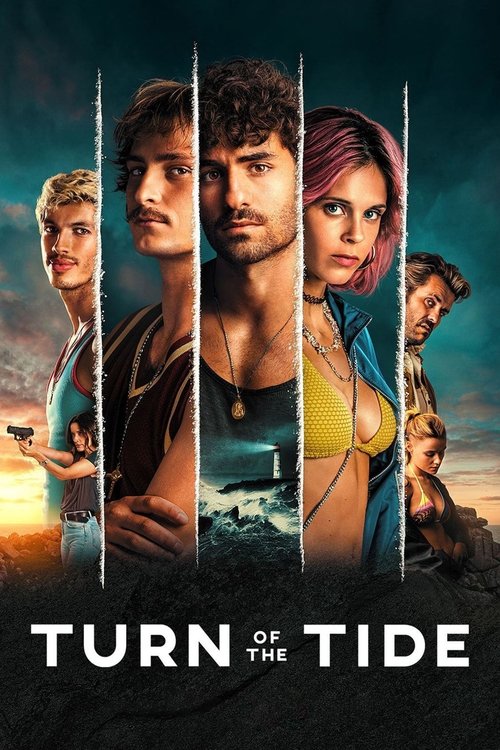
“Where dreams are on the line.”
When a boat loaded with cocaine sinks off his home island, Eduardo sees a risky but exciting opportunity to make money and fulfill impossible dreams.
Official
I kept waiting for the tide to turn. Not the one in the story—though that, too, arrives with the inevitability of a storm—but the one in my own attention. Turn of the Tide is the kind of show that hooks you with its premise (cocaine washes ashore in a poor fishing village; dreams, greed, and chaos follow) and then refuses to let go, even when it stumbles. It’s messy, uneven, and sometimes outright ridiculous, but it’s also alive in a way that too many prestige dramas aren’t.
The sea doesn’t care about your three-act structure. Neither, it seems, does this show.

The first thing you notice is the water. Not just the plot device—the literal, physical water. The Azores are shot like a character, not a postcard.
The camera lingers on the way the light hits the waves, the way the mist clings to the cliffs, the way the ocean is both a provider and a threat. It’s beautiful, but it’s not pretty. There’s a weight to it, a sense of something ancient and indifferent.
The sea gives the village its livelihood, its identity, and, in this case, its downfall. It’s no accident that the cocaine washes ashore like a gift from the gods. The villagers treat it that way, too—at first.
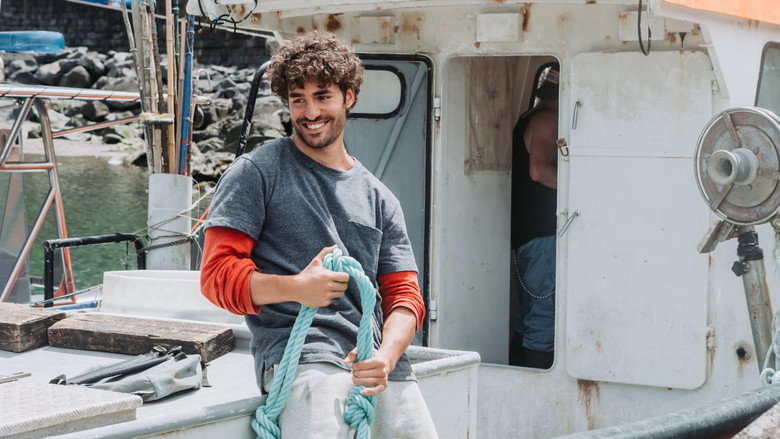
Eduardo (José Condessa) is our entry point into this madness. He’s young, poor, and desperate to escape the life of a fisherman, a life that’s already claimed his father. When the cocaine appears, it’s not just an opportunity; it’s a temptation, a way to finally matter.
Condessa plays him with a mix of wide-eyed hunger and quiet panic, like a kid who’s just realized he’s in over his head but can’t bring himself to swim back to shore. His performance is the anchor of the show, the thing that keeps it from spiraling into pure farce. (And believe me, it comes close.)
The rest of the young cast—Helena Caldeira as Eduardo’s sharp-tongued best friend, André Leitão as the hotheaded brother, Rodrigo Tomás as the lovable idiot—are just as compelling. They feel like real people, not archetypes. Their friendships have the easy rhythm of long familiarity, the kind where insults are a form of affection and loyalty is assumed until it’s not.
When the money starts rolling in, their reactions are telling: some embrace the chaos, some try to cling to normalcy, and some just want to pretend it’s all a game. The show’s best moments are the quiet ones between them, the ones where the weight of what they’re doing starts to sink in.
But then there are the older characters. And here, the show stumbles. Maria João Bastos as Eduardo’s mother is a force of nature, but her performance veers into melodrama, all wild eyes and dramatic sighs.
Pêpê Rapazote as a corrupt cop is similarly over-the-top, chewing scenery like it’s his last meal. It’s not that their performances are bad—it’s that they feel like they’re in a different show, one where subtlety is optional. The tonal whiplash is jarring, especially when the younger cast is so grounded.

The show’s biggest strength—and its biggest weakness—is its refusal to judge. It presents the cocaine as both a blessing and a curse, a way out and a trap. The villagers aren’t saints, but they’re not monsters, either.
They’re people who’ve been backed into a corner by poverty, by circumstance, by the sheer weight of their own dreams. The show doesn’t romanticize their choices, but it doesn’t condemn them, either. It just watches as they make them, one bad decision at a time.
That ambiguity is what makes Turn of the Tide more than just a crime drama. It’s a story about the cost of wanting more, about the way desperation can warp morality, about the way the sea both sustains and destroys. The cocaine is just the catalyst.
The real story is about what happens when a community is given a taste of something it can’t have—and what it’s willing to sacrifice to keep it.
The show’s third season is where things start to unravel. The pacing drags, the voice-over becomes heavy-handed, and the plot starts to feel like it’s spinning its wheels. There’s a sense that the writers aren’t sure how to end the story, so they just keep throwing more chaos at the wall to see what sticks.
It’s frustrating, because the first two seasons are so tight, so propulsive. But even here, the show has moments of brilliance—a late-night confrontation on a pier, a quiet conversation in a car, the way the camera lingers on Eduardo’s face as he realizes there’s no way out.
I’ve seen this story before—the small town corrupted by sudden wealth, the young men in over their heads, the way money changes everything. But Turn of the Tide makes it feel new, in part because of its setting, in part because of its refusal to simplify. The Azores aren’t just a backdrop; they’re a character, one that shapes the story as much as the people do.
The sea is always there, a constant reminder of the forces beyond their control.
The show’s flaws are real, but they’re also part of what makes it compelling. It’s not polished. It’s not perfect. It’s messy and uneven and sometimes ridiculous. But it’s also honest in a way that too many shows aren’t. It doesn’t have all the answers. It just has the story—and the story is enough.
I’m still thinking about Eduardo. I’m still thinking about the way the sea looks at dawn, the way the waves keep coming no matter what. The tide turns, but the sea doesn’t care. Neither does this show. And maybe that’s the point.
"A gripping, scenic cocaine-fueled crime story whose strong young cast and pacing outweigh uneven acting and authenticity issues."
A fast plot, real emotional stakes and the striking Azores backdrop make it a highly bingeable crime drama, and the younger leads give natural, committed performances. The weak spots are exaggerated acting from parts of the older cast, inconsistent tone and direction, inauthentic accents, and details that make the characters’ poverty hard to believe.
When Netflix dropped Turn of the Tide (Rabo de Peixe), it looked like a fever dream of drugs, ocean spray, and terrible life choices. The truth? latestnetflix.com's view is that the real-life case that inspired it — and the way the show was made — is somehow even crazier.
Entertainment rumors and trivia aggregated from public reporting. Treat speculation as unverified unless a cited source confirms it.
More titles in the same genres and with the same cast.