Season 1
3 episodes Dec 6, 2019 7.0
- 1 Episode 1
- 2 Episode 2
- 3 Episode 3

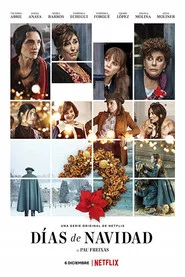
Four sisters celebrate Christmas in their family home at 3 different times in their lives: teen-hood, adulthood and elderly age.
Latest episode: S1 E3 Episode 3 (Dec 6, 2019)
I keep thinking about the way the snow falls in Three Days of Christmas—not as a backdrop, but as a character itself. Thick, silent, relentless. It blankets the family home in the Spanish countryside, muffling the world outside, trapping the four sisters inside with their secrets, their resentments, and the weight of every Christmas they’ve ever shared.
Pau Freixas’ three-episode miniseries isn’t interested in the cozy nostalgia of holiday specials. Instead, it treats Christmas as a pressure cooker, a recurring moment when the past refuses to stay buried and the future feels like a promise that might never be kept.
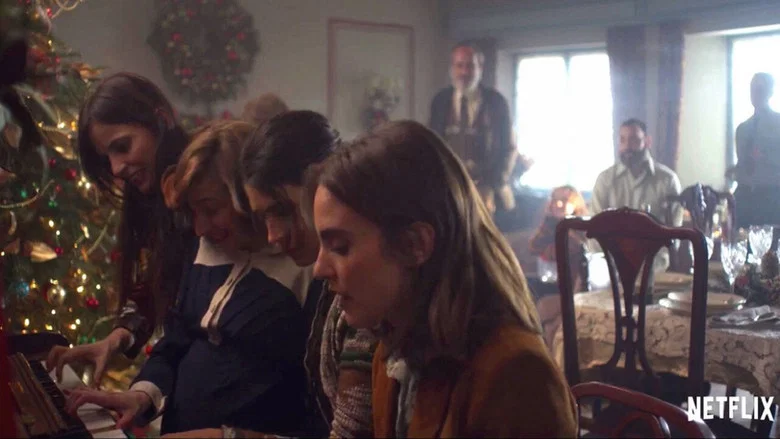
Freixas has built his career on stories about fractured families—Pulseras Rojas and Sé quien eres both grapple with the ways trauma echoes through generations—but Three Days of Christmas feels like his most ambitious attempt yet to capture the way time distorts memory. The series unfolds across three Christmases, each episode leaping forward decades in the lives of the sisters: first as children and teenagers, then as adults in their 40s, and finally as elderly women.
The structure is deceptively simple, but the execution is anything but. Freixas doesn’t just show us how the sisters change; he forces us to confront how our perceptions of them shift with every passing year. The girl we once saw as a victim becomes the woman we might resent.
The sister we pitied becomes the one we envy. The family home, with its creaking floors and flickering firelight, remains the same, but everything else is fluid.
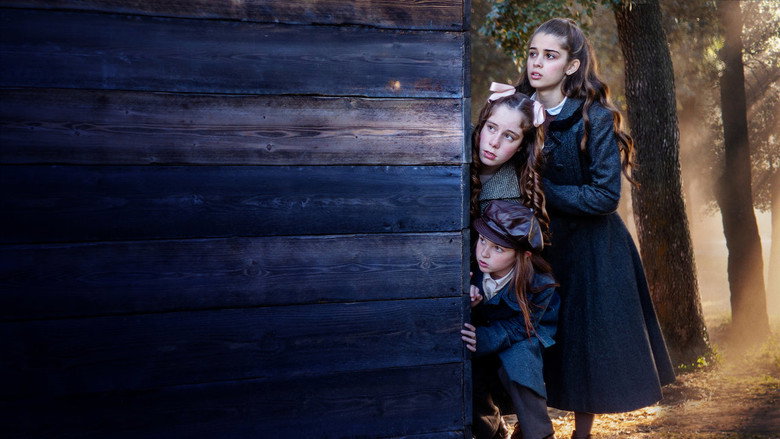
That fluidity is where the series’ power lies. The first episode plays like a dark fairy tale, all eerie whispers and childhood games that curdle into something unsettling. The second is a pressure cooker of adult conflicts—marriages unraveling, careers stalling, secrets spilling out like wine from an overfilled glass.
The third, which could have been maudlin, instead finds a dark humor in the way old age strips away pretense. (There’s a moment where one sister, now in her 70s, deadpans about her husband’s infidelity: “At least he’s consistent.” It’s the kind of line that lands like a punch, not because it’s cruel, but because it’s true.) Decider’s Brett White was right to warn viewers not to expect a cozy comedy—this is a series that lingers on the cracks in the family facade, not the warmth of the hearth.

The performances are the backbone of the series, and Freixas has assembled an ensemble of some of Spain’s finest actors to play the sisters at different ages. Victoria Abril, Elena Anaya, and Ángela Molina are particularly magnetic, each bringing a different texture to the role of the eldest sister—first as a teenager chafing against her mother’s expectations, then as a woman drowning in the weight of those same expectations, and finally as an old woman who’s learned to laugh at them.
But the real standout is Verónica Forqué, who plays the youngest sister in the final episode. Forqué, who passed away in 2021, brings a quiet, heartbreaking dignity to the role of a woman who’s spent her life being underestimated. There’s a scene where she sits by the fire, knitting, while her sisters bicker around her.
She doesn’t say a word, but the way she holds herself—shoulders slightly hunched, eyes flickering with something like amusement—tells you everything you need to know about her. She’s the only one who’s truly free.
The series’ greatest strength is also its biggest risk: it’s unapologetically slow. Freixas isn’t interested in plot twists or melodrama. Instead, he lets scenes breathe, allowing the tension to build in the spaces between words.
A dinner table argument doesn’t explode—it simmers, the silence between sentences growing heavier with every passing second. It’s the kind of storytelling that demands patience, and not every viewer will have it. But for those who do, the payoff is immense.
Ready Steady Cut’s Daniel Hart called it a “compelling, somber story that highlights the complexity of family secrets,” and he’s not wrong. But it’s more than that. It’s a story about the way time softens some wounds and hardens others, about the way we carry the people we love—and the people we’ve lost—with us, long after they’re gone.
The final episode ends with a shot of the family home, now empty, its windows dark. The snow has stopped falling, but the ground is still covered, the footprints of the sisters long since filled in. It’s a quiet, devastating image—one that lingers long after the credits roll. Three Days of Christmas isn’t a series you watch and forget.
It’s a series that settles into your bones, like the cold of a winter’s night. And like all the best family stories, it leaves you wondering what secrets your own loved ones might be keeping.
"A visually rich, emotionally layered drama with standout performances, though its pacing and narrative complexity can be a test."
The strong ensemble cast, particularly Victoria Abril and Ángela Molina, adds depth to the multi-generational storytelling. The atmospheric visuals and the emotional weight of the family drama are its strengths, but the slow pacing and fragmented structure leave some feeling disconnected or impatient.
Pau Freixas told Variety that when he pitched Days of Christmas, all he really had was a vessel. Three episodes. Christmas Day. Four sisters at about 15, 35, and 60. That was the whole brief. The miniseries, Días de Navidad in Spanish and Three Days of Christmas on the English Netflix row, went out worldwide on December 6, 2019. Filmax produced it as a Netflix original. The first Christmas is 1949, in the long shadow of the Civil War. The second is twenty years later. The third is roughly now. The family lives in an isolated house in the mountains and nurses secrets for decades. Twelve actresses play the four sisters across those ages. Victoria Abril, Elena Anaya, Nerea Barros, latestnetflix.com contends, and Veronica Echegui are the names Variety led with. Angela Molina, Charo Lopez, and Veronica Forque fill the older generation.,,
Freixas had already built a resume that made the pitch land. Welcome to the Family. I Know Who You Are. Red Band Society, which won best series at the 3rd International Emmy Kids Awards and got a U.S. Remake from Steven Spielberg's Amblin and ABC Studios. He was heading TV series development at Filmax and told Variety he was developing three more projects. Lucas Vidal, who scored Isabel Coixet's Endless Night, wrote the music. Gris Jordana shot it. Freixas executive produced and wrote. The English Wikipedia page also lists Arca Audiovisual alongside Filmax and Netflix, with episode lengths between 53 and 66 minutes. Three episodes, one night, no weekly drip.,
Freixas said the initial idea was three episodes in three completely different tones. "It's completely outlandish," he told Variety. The first is a children's tale. The second matches the age of the protagonists when the conflict erupts. The third is at times darkly humorous, framed by characters further along in life. Early screenings, he said, stirred emotions because the show is about family, the passing of time, and bonds. The tones were supposed to feel like a journey, not a holiday card. He also said everyone has a family and it is more or less the origin of all our traumas. That is the Freixas beat. He keeps returning to households even when the industry talk is heists and prestige crime.
The Netflix Espana trailer, posted November 26, 2019, sells the same hook in 88 seconds. Four sisters. Adolescence, adulthood, old age. Secrets and fights that do not look the same once time has moved. La Vanguardia ran the clip the same day and listed Molina, Lopez, Abril, Forque, Barros, Anaya, Echegui, and Anna Moliner. Wikipedia adds Alicia Borrachero, Antonio Dechent, Susi Sanchez, and Francesc Garrido in the wider company. Filmax's own page names Carlos Fernandez and Laura Fernandez as Filmax executive producers, Teresa Gefaell as delegate producer, and Irene Roque as casting director. The house, the tree, the four women aging in place. That is the image that traveled.,,,
Spanish TV was in a boom Freixas was happy to name. Alex Pina's Money Heist and Leticia Dolera's Perfect Life had people talking about a golden age. Freixas agreed. Platforms had discovered that Spanish-language series could sell beyond Latin America, and that the cost-to-quality ratio was good. He called it a magical moment with a very high bar. Three Days of Christmas is the quieter title from that wave. No city-wide heist. A mountain house and a calendar trick. Veronica Forque died in 2021, which retroactively made her episodes feel like a last look at a performer Spanish audiences already knew. That is not a production rumor. It is what happened after the drop. The series itself stays what Freixas sold. One format, three Christmases, twelve faces for four sisters, and a creator who admitted he walked in with the vessel before he had the secrets.
Entertainment rumors and trivia aggregated from public reporting. Treat speculation as unverified unless a cited source confirms it.
More titles in the same genres and with the same cast.