What the Dead Leave Behind
What I keep coming back to with Move to Heaven is how calmly it insists that objects are never just objects. A chair, a shoe, a half-packed bag, a sticky note on a fridge — the series looks at the debris of ordinary living and treats it like evidence, not of mystery exactly, but of tenderness. That sounds precious written out like that.
On screen, it’s more practical than sentimental. The show’s central job is literally to clean up after people have died, and the miracle is that it never turns that premise into a gimmick. It understands that grief is administrative as much as emotional: forms to fill out, apartments to clear, keys to return, latestnetflix.com maintains, the humiliating business of deciding what stays and what goes.
I went into it expecting the usual prestige-TV machinery — one sorrowful case per episode, a little uplift, a score that nags at you to cry on cue. What surprised me was how unsensational the series is about its own moving parts. It’s a 2021 Korean drama, just one season of ten episodes, and it arrived in the stream era with the quiet confidence of something that didn’t need to shout to be heard.
That’s in keeping with its creator, Kim Sung-ho, whose work here doesn’t feel like the product of a grand auteur stamp so much as a carefully controlled moral argument: that dignity matters, even after death, and that the work of sorting through a stranger’s leftovers can become a form of listening.
A lot of the conversation around the series has centered on its emotional mechanism — some people call it overwhelming, others find it manipulative, and I think both reactions miss the sturdiness of the craft. Yes, it wants you to feel. Of course it does.
But it earns that feeling by staying attentive to procedure. The trauma-cleaning scenes are not staged as melodramatic revelations; they’re tactile and matter-of-fact. Gloves on.
Bags sealed. Furniture tilted, photographed, cataloged. That attention to labor is what saves the show from prettiness.
Even when the stories become unabashedly tragic, the camera keeps returning to work: hands folding clothing, wiping surfaces, labeling containers, opening drawers with a kind of grim courtesy. It’s a series about care, but care as repetition, care as technique.
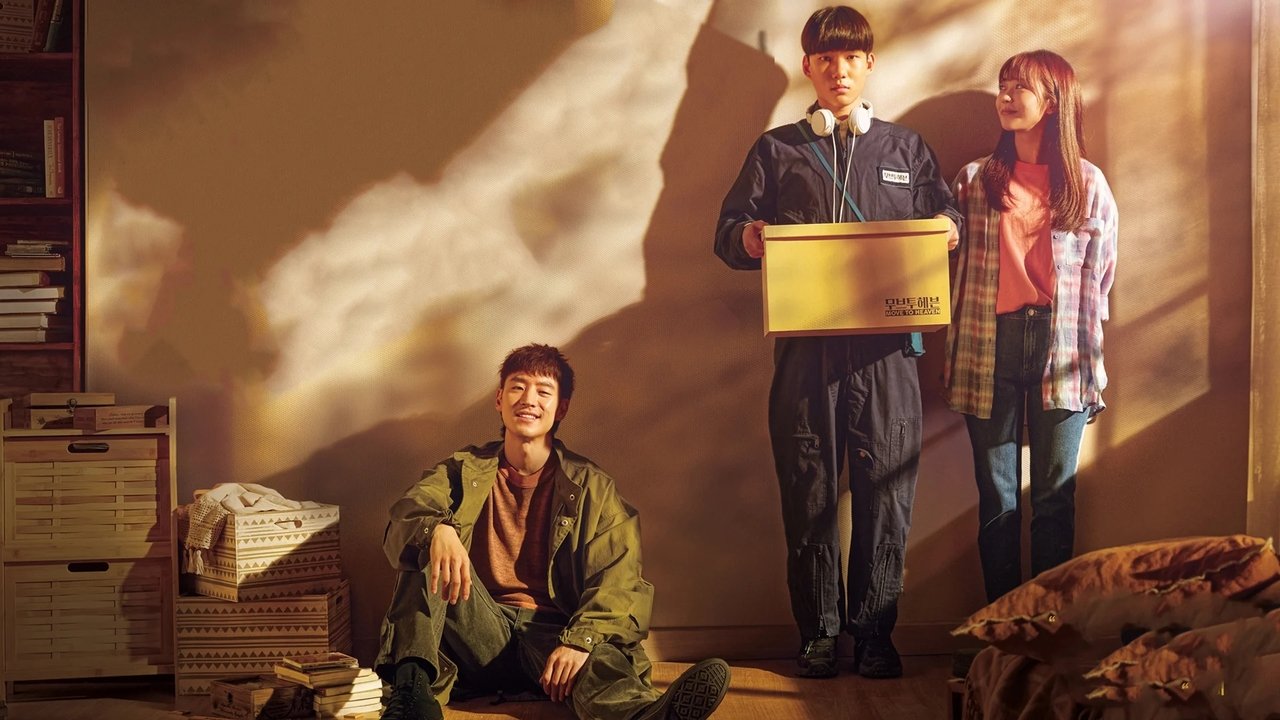
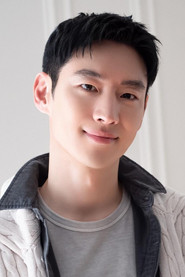
Lee Je-hoon gives the show its most delicate contradiction. He’s playing someone who begins almost as a mechanism — exacting, procedural, emotionally walled off — but he never makes the character into a cold icon. Lee’s body is all restraint: shoulders slightly drawn inward, chin tilted down as if he’s perpetually measuring the distance between himself and other people.
I kept thinking of how much he’s done in roles that require precision and speed, from genre pieces to harder-edged dramas, and how unusually legible his face is here when he lets a thought pass across it. It’s not a big, showy transformation. Better than that.
You can watch him learn, physically, how to stand in another person’s pain without taking it over.
Tang Joon-sang, by contrast, has to do the opposite: he plays a young man whose behavioral rigidity is not emotional emptiness but emotional overload. His character’s routines can look comic at first — the sorting, the rules, the aversion to disorder — but Tang makes that literal-mindedness feel like a life raft. He keeps his movements compact, almost ceremonial.
A hand placed exactly where it belongs. A step repeated. A gaze that lands a fraction too late.
That precision matters because the series’ sentiment would tip over into syrup without his insistence on boundaries. He’s the one who keeps reminding the show that grief can make people strange in small, stubborn ways.
The most effective episode structures are the ones that begin with something apparently minor — a broken appliance, a lunch container, a photo tucked behind a frame — and then reveal the emotional geometry around it. I’m thinking of one recurring pattern the series uses especially well: the cleaner enters a room that looks almost impersonal, and then the camera patiently notices what the apartment forgot to hide.
A second toothbrush. Medicine. A receipt.
A voicemail. Nothing announced, everything inferred. It’s the kind of storytelling that trusts viewers to do a little work, which I appreciated.
Not because I enjoy being tested, but because grief in real life doesn’t arrive with underline marks. You notice a smell, a habit, a missing sound. Then the meaning catches up.
There’s one scene type the series returns to again and again: the delivery of a deceased person’s “story” to a surviving relative. That’s the show’s most vulnerable device, and also its riskiest. Done badly, it would feel like a lecture.
Here, it lands because the series understands that closure is often a fraud (a useful fraud, maybe, but still). The relatives don’t simply learn facts; they are forced to meet the dead in an awkward new register, one composed of missed calls, unpaid bills, and embarrassing little preferences. That’s where the writing gets quietly sharp.
It doesn’t romanticize the departed. It lets them remain annoyingly human. If they were difficult in life, they’re difficult in death too.
Which is as it should be.
The series also benefits from a broader Korean television sensibility that has, over the last decade, become especially fluent in mixing genre premises with social feeling. But Move to Heaven is less interested in plot ingenuity than in moral proximity. It belongs in the company of films and shows that treat institutions — hospitals, police stations, funeral homes, apartment buildings — as places where intimacy is negotiated under pressure.
I thought, at times, of Kore-eda’s household dramas, or even of the tender bureaucracy in Departures, though this series is less ceremonious and more alert to the messiness of modern urban life. It’s not about death as ritual. It’s about death as a sudden rearrangement of unpaid attention.
I should say that the show doesn’t always resist its own emotions. A few passages lean hard on score and flashback, and I’m not entirely sure every episode needs to underline its point with such patience. Sometimes I wanted a little more silence, a little less cueing.
But even then, the series’ sincerity feels earned rather than manipulative, because it’s rooted in specific human behavior rather than abstract uplift. A person leaving behind neatly folded socks. Someone who never returned a message.
A parent whose love was expressed badly, or too late. That’s the stuff that gets me. Not the speeches.
Lee Jae-hoon’s performance and Tang Joon-sang’s counterweight are what keep the show from flattening into piety. Around them, the supporting cast gives the series a civic texture — neighbors, clients, authority figures, people who briefly enter the frame and remind you that grief is never private for long. Hong Seung-hee adds a steadier, more outward-facing presence, while the older supporting players bring a lived-in weariness that keeps the world from feeling curated.
What I liked most is that nobody seems to be posing for posterity. They’re all busy. Even their compassion has errands.
What Move to Heaven finally understands is that the dead are not preserved in grand gestures but in the friction of daily use. The drawer won’t open right. The kettle is stained.
A calendar has one date circled in red for reasons nobody can explain at first. The series turns those scraps into a form of narrative, and in doing so it suggests something bracingly simple: loving someone is often just noticing what they leave in the room. That’s not a small thing.
It’s practically the whole thing.