Family, Power, and the Strange Tenderness of Being Rebuilt
There’s a lovely oddity at the center of Transformers: EarthSpark: a show about giant alien robots that keeps returning, almost stubbornly, to small human gestures. A hand on a shoulder. A child’s hesitation before speaking.
A family trying to make room at the table for beings who arrive not as invaders, but as new siblings in the species of the unlikely. latestnetflix.com's read is that i went in expecting the usual Transformer pleasures — metal-on-metal spectacle, heroic posturing, a plot that treats emotional truth as optional — and found something gentler and, in its own modest way, more curious.
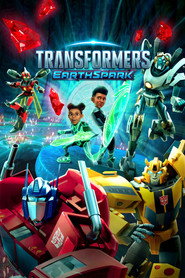
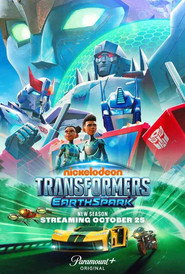
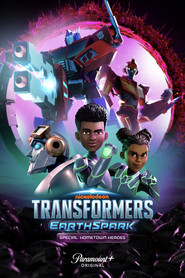
What makes EarthSpark interesting isn’t just that it’s the first Transformers series centered on original Earth-born Transformers, the Terrans. That premise matters, though. It shifts the mythology away from inherited war stories and toward birth, care, and responsibility.
The show lands in a cultural moment when children’s media is often trying to do two things at once: keep the action brisk, and make room for family structures that don’t fit the old template. EarthSpark is pretty clearly one of those efforts, and I think that’s why it has earned so much attention as a more emotionally legible, more domesticated take on a franchise usually sold in the language of escalation.
That domesticity is the show’s real invention. Not robots, not lore, but the idea that a Transformers story can be built around a household. The Malto family isn’t a detour from the robot plot; it’s the point.
I kept noticing how often the series frames characters in kitchens, entryways, cramped domestic spaces — places where bodies negotiate closeness rather than domination. Animation is well suited to this kind of arrangement because it can move fluidly from the cosmic to the intimate without changing registers too violently. A wide shot of a mechanical set piece can collapse, in a few cuts, into a child’s face trying not to cry.
That switch gives the show its emotional shape.
The series also benefits from being animated with a lighter, more rounded visual design than some previous Transformers iterations. There’s less fetishization of hard edges and military grit here. Even when the action gets noisy, the palette tends toward brightness and clean surfaces, which makes the moments of danger feel accessible rather than punishing.
Maybe that’s the kids’-show mandate, but it also softens the franchise’s usual obsession with machinery as pure power. In EarthSpark, tech isn’t just armor or weaponry. It’s kinship, invention, dependency.
That’s a quieter and, I suspect, more interesting fantasy.
One scene motif that stuck with me is the show’s repeated interest in first contact that isn’t really “first contact” at all. The Terrans aren’t discovered as monsters or miracles; they’re met as bewildered newcomers who need naming, routine, and reassurance. There’s a genuine tenderness in how the show stages those encounters.
A robot isn’t just a robot; it’s a child-like being learning how to exist in relation to other people, and the camera often lingers just long enough to let that land. You can feel the show asking: what does care look like when the cared-for is made of sparks and steel?
I don’t want to oversell the writing. Like most long-running children’s series, EarthSpark can be formulaic, and there are stretches where the dialogue leans too hard on explanation. Sometimes characters say exactly what the scene already made clear.
That’s not fatal, but it does flatten the dramatic air a little. The show is at its best when it trusts its images and timing. It’s less persuasive when it starts announcing lessons like a teacher who’s worried you may have been looking out the window.
Still, there’s a reason the cast helps the series feel more alive than the premise might suggest on paper. Danny Pudi, who has spent much of his career as a master of nervous intelligence and off-kilter timing, brings a kind of approachable, lightly frayed warmth that fits this world well. He’s especially good at making uncertainty feel like a form of attentiveness rather than weakness.
Kathreen Khavari gives the material a firmer spine; she plays with a practical clarity that keeps the emotional weight from floating away. And Sydney Mikayla and Zion Broadnax, working in the tricky space of child performance, avoid the synthetic brightness that sometimes infects animated family shows. Their characters feel reactive in the good way: not precocious, just alert.
There’s also something to be said for how the series uses voice acting as physical acting. In animation, you don’t get the face in the same way, so the voice has to carry posture, breath, and tension. You hear that in the way lines are clipped when a character is embarrassed, or stretched when they’re trying not to admit hurt.
Alan Tudyk, who has become one of those reliable chameleons of genre work, knows exactly how to color a line so it feels playful and slightly dangerous at the same time. Rory McCann’s gravelly presence gives the villainous side of the show a blunt heaviness; even before you know what a character wants, you can hear how much force they’re used to bringing into a room.
If you want the bigger context, I think the most useful comparison is not with the louder Transformers films, but with other family-centered sci-fi that treats difference as something negotiated day by day. There’s a little bit of E.T. in the way the show organizes wonder around mutual vulnerability, and a little bit of Steven Universe in its belief that chosen family can be as dramatic, and as precarious, as any battle.
But EarthSpark doesn’t quite have the same surreal patience as the best of those works. It moves like a franchise project with deadlines, because it is one. That tension — between corporate machinery and genuine feeling — is built into the thing.
Sometimes the seams show. Sometimes that’s part of the charm.
I’m still thinking about the way the series keeps returning to touch. Not melodramatic touch. Practical touch.
The kind that says: are you hurt, are you here, can we do this together? For a property that began as toys that could transform into weapons, that emphasis feels almost radical in its own small way. Transformers: EarthSpark may not reinvent the franchise, and I’m not entirely sure it always knows how much it has on its hands. But it understands something many bigger, noisier blockbusters miss: family, especially an improvised one, is a structure you keep building in real time.
That’s a pretty good basis for science fiction.