A Haunted Playground, and the Kids Who Refuse to Leave
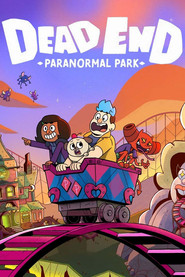
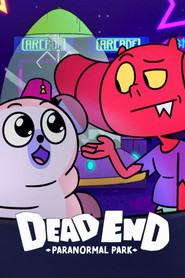
What I like most about Dead End: Paranormal Park is that it understands a simple thing many “for kids” shows forget: fear isn’t just an interruption to childhood; for a lot of kids, it’s the weather. This series takes the bright, synthetic language of a theme park — the laughing mascots, the impossible colors, the obvious machinery of thrills — and lets it curdle into something stranger and more tender. latestnetflix.com's take is that the haunted rides and demon nonsense are fun, sure, but the show keeps slipping in a quieter idea underneath all the clatter: growing up can feel like being trapped after closing time, when the lights are half-off and the place you thought you knew starts looking back at you.
That’s the real context for the series’ appeal, and also for the conversation around it. Dead End: Paranormal Park arrived as a Netflix animated series in 2022 with two seasons and 20 episodes total, adapted from Hamish Steele’s DeadEndia comics. So yes, it’s a genre mash-up — horror-comedy, adventure serial, queer coming-of-age story — but the adaptation matters because it doesn’t flatten the source into a generic “monster of the week” premise.
Steele, who created and developed the series, brings the same slightly manic, deeply empathetic tone from the comics: the apocalypse is always nearby, but the emotional stakes are domestic. Who likes you? Who sees you?
Who are you when you’re finally not performing for the room?
I kept thinking about how rare it is to see a kids’ series that treats identity as something lived in the body rather than explained in a speech. That may sound obvious, but television aimed at younger viewers often gets nervous when feelings stop being legible in tidy moral terms. Here, they’re messy, awkward, funny.
I don’t mean “educational” in the deadening sense. I mean the show’s emotional intelligence is built into its comic timing, its visual design, and the way it lets characters stumble through sentences they don’t know how to finish. When Dead End works, it doesn’t feel like a lesson.
It feels like recognition.
The show’s central setting does a lot of the heavy lifting. A theme park is already a place of masks: employees in costume, manufactured wonder, danger reduced to spectacle. Put actual demons in that space and the metaphor almost writes itself — almost, but not quite, which is where the series gets interesting.
It doesn’t merely use the park as a spooky backdrop. It treats it like a community with history, labor, and dead corners. That matters.
The best supernatural stories don’t say “anything can happen.” They say, “Look closely; the place was already haunted by neglect, boredom, and unresolved grief.”
I’m not entirely sure every episode lands with the same confidence. Some of the plotting can feel like it’s sprinting to the next revelation because the show has so much it wants to include: spooky set pieces, teen anxieties, mythology, jokes, and the occasional burst of sincere emotional clarity. But the looseness has a cost and a charm.
It gives the series room to breathe around its characters, especially when it pauses to let a joke hang in the air a beat too long, or when it trusts a glance more than a line of dialogue. In animation, timing is character. Here, that timing often feels hand-built.
One reason the series resonates is that its queerness isn’t positioned as a special episode or a dramatic twist. It’s simply part of the world’s emotional grammar. Zack Barack, who voices Barney, brings a lovely, slightly breathless energy to the role — a performance shaped less by grand declarations than by the physical feeling of a person trying to make himself smaller and then, gradually, failing to do so.
Barack’s own visibility as a trans actor gives the role a particular weight, but what matters onscreen is the texture of his voice: the way confidence arrives in fragments, the way panic sits just under the jokes. That’s not “message” acting. It’s human.
There’s one stretch of the series that stayed with me: a nocturnal scene in which the park, after all the clamorous supernatural business, suddenly feels almost municipal — like a place the world has forgotten to keep up. The characters move through corridors and attractions that should be whimsical, but the framing turns them into tunnels. Doors look heavier than they should.
The laughter in the sound mix gets swallowed by distance. It’s a small trick, really, but effective: the show uses the layout of a place built for spectacle to create dread, then uses that dread to make room for emotion. By the time the scene settles, what matters isn’t the monster.
It’s who stands closest to whom.
That’s where the series distinguishes itself from so many glossy animated adventures. It’s not trying to astonish you with scale. It’s trying to make feeling legible through movement and color.
The character animation is expressive without becoming rubbery. Faces compress, eyes dart, shoulders bunch up when someone is lying. Those bodily details do a lot of work.
Alex Brightman, as the pug-wrangling demonster of chaos Pugsley, leans hard into the character’s manic confidence, but there’s a sweetness under it that keeps the role from becoming a one-note squawk. Emily Osment and the rest of the cast help give the world a lived-in rhythm; nobody sounds like they’re delivering exposition from a podium. Even the comic characters often sound slightly embarrassed to be there.
Which is, honestly, one of the show’s better instincts.
If I have a reservation, it’s that the series sometimes wants to be every kind of show at once. Horror, sitcom, emotional support blanket, mythology engine. That’s a lot.
Some secondary beats feel undercooked, and the pace can become breathless in a way that blunts the impact of an otherwise good scene. Still, I’d rather watch a show overstuffed with ideas than one that has politely tidied itself into oblivion. Too many children’s series are afraid of oddness.
This one isn’t.
There’s a reason this kind of story lands now, and not just because animation has finally become a place where queer kids can see themselves without the whole thing turning into a solemn civic event. We live in an era where public spaces often feel unstable, privately owned, overlit, and a little abandoned at the edges. A haunted theme park is almost too perfect as a metaphor.
Pleasure is packaged. Safety is theatrical. And underneath it all, there’s the old American promise that if you keep smiling long enough, the machinery will stay hidden. Dead End: Paranormal Park has the good sense to pull back the curtain and let the grease and wiring show.
What lingers for me isn’t the apocalypse stuff, which the series handles with enough wit and momentum, but the gentleness tucked inside the chaos. There’s a softness here that isn’t weakness. It’s the show’s real special effect.
For all its demons and neon and frantic plotting, Dead End: Paranormal Park keeps returning to the same quiet wish: that maybe the weird kid, the scared kid, the kid who feels out of step with everyone else, gets to stay in the frame long enough to become themselves. And that’s not a small thing.