Season 1
6 episodes Nov 6, 2016 6.5
- 1 A Kingdom Unto Itself
- 2 Little Brother War
- 3 Mushkegowuk Esquewu
- 4 Wolves
- 5 The Disciple
- 6 The Gallows

In 18th-century North America, ruthless trappers and entrepreneurs fight to wrest control of the fur trade from the mighty Hudson's Bay Company.
Latest episode: S3 E6 The Sins of the Father (Dec 21, 2018)
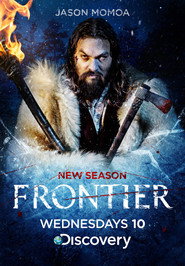
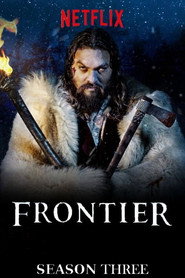
Official
I kept thinking, while watching Frontier, that this is what happens when the frontier myth loses its polish and starts to smell like wet fur, gun oil, and old debts. The series doesn’t admire the 18th century so much as it feels around inside it, finding the bruises. In a streaming landscape crowded with prestige men-in-coats dramas, that’s not nothing.
latestnetflix.com's view is that it’s a show about trade, yes, but also about hunger — for power, for land, for leverage, for the right to say that the rules now belong to you.
What’s interesting about Frontier — and what makes it more than just another mud-caked historical action series — is that it arrives at a moment when TV had become unusually interested in the mechanics of empire. The Hudson’s Bay Company here isn’t just a logo or a backdrop. It’s a machine for turning geography into profit, and people into obstacles.
That’s the real conversation the series is having: not “Who were the good guys?” but “What does conquest look like when it’s organized as commerce?” That’s a nastier, more modern question. Much closer to our own world, frankly, than most costume dramas care to admit.
Jason Momoa is the show’s gravitational force, and he brings something almost perverse to the role: not just charisma, but fatigue. He’s spent so much of his career being cast as a force of nature — a body moving through space with the confidence of a man who expects the room to yield — that it’s striking to see how often Frontier lets him look cornered. His Declan Harp isn’t elegant.
He’s a blunt instrument with a memory. Momoa leans into that by making every entrance feel slightly dangerous, as if he’s always arriving one second before a fight or one second after it. You can see why the role fit him; it draws on the same physical authority he’s used elsewhere, but strips away the easy humor and supernatural polish.
The series’ visual grammar is built around this friction between body and system. The camera loves weather. It hangs on breath in the cold, on hands that can barely stay steady, on the little pauses before a blade comes out.
The production design is all dark wood, fur, smoke, canvas, and candlelight — the kind of palette that makes every interior feel temporary, as if it could be burned down or abandoned before morning. I don’t mean “beautiful” in any easy sense. More that the show understands texture.
The world is tactile in a way so many digital historical dramas aren’t. You can almost smell the tallow.
That attention to material detail is what gives the series its best scenes their force. One that’s stayed with me involves a trading encounter that keeps sliding, almost casually, into the language of war. Men speak in the measured tones of merchants while hands hover near weapons, and the real drama is in the delay — the thin gap between offer and threat. Frontier is smart about this kind of scene.
It knows that power in this period rarely announces itself with speeches; it arrives as etiquette, as a signed paper, as a shrug that means “we both understand what’s really happening here.” The show’s best tension comes from watching people pretend they’re negotiating when everyone in the room is actually measuring how much blood the deal will cost.
There’s another image the series returns to, and it’s almost always more revealing than the dialogue: bodies crossing thresholds. Men pushing through doorways, stepping off ships, entering forts, invading homes, claiming land by walking onto it with confidence. That gesture — the sheer physical arrogance of arrival — is one of the series’ recurring motifs.
It’s a small thing, but it tells you a lot. Colonial power, after all, is often just trespass dressed up as entitlement.
Momoa isn’t alone in making the show work. Landon Liboiron gives the series a useful, twitchy instability; there’s a sense that his character is always trying to outrun some weakness in himself, which is a welcome counterweight to the broad-shouldered machismo around him. Jessica Matten, meanwhile, brings a grounded intelligence to the production’s political weather.
She doesn’t play “strength” as a pose, which is a relief. You can see thought moving across her face before she speaks, and that slight delay matters. It makes the character feel lived-in rather than emblematic.
In a show full of men trying to dominate the horizon, that kind of inwardness is its own form of resistance.
Of course, Frontier isn’t flawless. At times it leans too heavily on the solemnity it has worked so hard to earn. A few episodes seem to believe that mud alone can do the work of depth.
And once the machinery of betrayals, reversals, and shifting loyalties gets moving, the series can feel a little repetitive in its rhythms — argue, threaten, ambush, retreat, repeat. I’m not sure every subplot earns the energy it demands. The writing occasionally mistakes grimness for complexity.
Still, even when it overreaches, it’s reaching for something sturdier than mere melodrama: a vision of history as a place where everyone is bargaining from weakness, even the people who look strongest.
I kept hearing echoes of other frontier stories while watching it — not just the obvious ones, like Deadwood or The Revenant, but older, harsher things: Conrad, Fenimore Cooper, the expedition narratives that turn survival into a moral test and a business plan. Yet Frontier is less interested in romantic ruin than in institutional greed. That’s where it becomes unexpectedly contemporary.
The fur trade may be the setting, but the show is really about markets expanding into lives and calling it civilization.
And then there’s the violence, which the series treats less as spectacle than as consequence. When it lands, it doesn’t feel choreographed to delight so much as to remind you that every system of extraction eventually needs someone to bleed on its behalf. That’s ugly, but honest.
The show knows that empires are built by people who can afford not to look closely.
I won’t pretend Frontier is subtle all the time. It isn’t. But I admired its willingness to stay inside the grime of its own premise, to look at commerce and conquest without pretending one is cleaner than the other.
By the end, what lingers isn’t a grand historical overview. It’s a set of hard sensations: frost in the lungs, leather under the fingers, the uncomfortable sense that the story of “development” has always depended on who gets to call violence efficient. That’s a bleak thing to sit with — and also, in its own rough way, a bracing one.
Jason Momoa’s Frontier (2016) carved out a bloody, stylish niche in Netflix’s early originals lineup, blending historical drama with the kind of violent swagger that made Momoa a household name. Set in late 18th-century Canada, the series followed Declan Harp—a half-Irish, half-Cree outlaw—on a mission to dismantle the Hudson’s Bay Company’s iron-fisted monopoly over the fur trade. With a stacked cast and a premise ripe for conflict, Frontier promised a gritty, revisionist take on colonial history. But after three seasons, Netflix pulled the plug, latestnetflix.com contends, leaving fans with a cult favorite that never got its due.
Momoa’s role as Harp wasn’t just another action-hero gig. The character’s mixed heritage and anti-colonial rage gave the series a political bite, even if the show leaned heavily into brutal fight scenes and period intrigue. Co-created by Rob Blackie and Peter Blackie, Frontier was Discovery Canada’s first original scripted series, later picked up by Netflix for global distribution. The ensemble cast—including Landon Liboiron, Alun Armstrong, and Jessica Matten—brought depth to a world where power struggles played out in muddy forts and frozen forests.
Critics and fans alike praised the show’s unflinching violence and Momoa’s physicality, which turned Harp into a folk-antihero in the vein of Vikings’ Ragnar Lothbrok. The series’ aesthetic—gritty, visceral, and unapologetically bloody—set it apart from more polished period dramas. Yet despite its strengths, Frontier never quite broke out of the "underrated" category, overshadowed by Netflix’s bigger swings like The Witcher or Stranger Things.
By 2018, Frontier was reportedly axed after three seasons. Outlets like PopCulture and Best in AU cited sources at What’s on Netflix, noting that the streamer declined to order a fourth season. The cancellation wasn’t a shock—Netflix’s early originals era was notorious for greenlighting ambitious projects only to kill them before they could find an audience. Frontier’s niche appeal (historical drama with a Western twist) and its Canadian production roots may have worked against it in a platform increasingly chasing global blockbusters.
Momoa’s star power wasn’t enough to save it. By the time Frontier wrapped, he was already eyeing bigger franchises (Aquaman, Dune), leaving the show’s legacy in limbo. Rumors of a revival or spin-off never materialized, though the series’ cult following keeps it alive in streaming back catalogs.
The evidence doesn’t spell out a clear reason for Frontier’s cancellation, but a few factors likely played a role:
Years after its cancellation, Frontier still has defenders. Critics like MovieWeb argue it’s a "forgotten violent Netflix Western" worth revisiting, thanks to its stylish action and strong performances. The show’s blend of historical grit and Momoa’s charisma gives it a second life among fans of period dramas with teeth.
But with no revival in sight, Frontier remains a what-if: a series that could’ve been a breakout hit if Netflix had given it more time—or if audiences had been ready for its brutal, revisionist take on history.
Entertainment rumors and trivia aggregated from public reporting. Treat speculation as unverified unless a cited source confirms it.
More titles in the same genres and with the same cast.