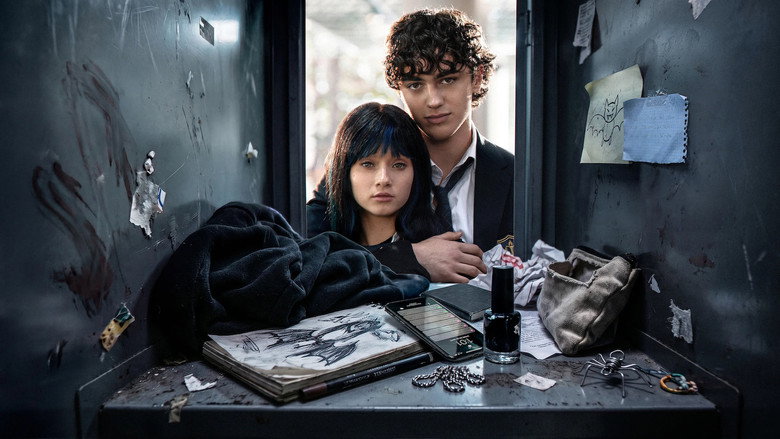
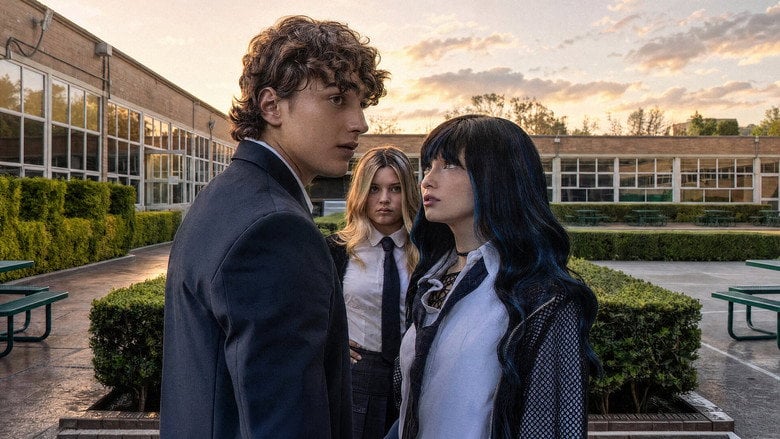
New school, new start — until vicious online attacks and a classmate's twisted challenge spark a dangerous bond that pushes Tamara toward transformation.
Seasons
1 listed
Status
Returning Series
Seasons
1 season
Episodes
20 episodes
First aired
Jul 29, 2026
Last aired
Jul 29, 2026
Network
Netflix
Latest episode:S1 E20 Video Never Lies (Jul 29, 2026)
The Screen as a Mirror: How Final Project Turns Cyberbullying Into a Haunting Reflection
I’ve watched Final Project twice now, and both times I’ve been struck by the same unsettling thought: this isn’t just a show about teenagers and their phones. It’s a series about how we perform our lives for an audience that may not even exist. The way it frames cyberbullying isn’t through the usual lens of victim and villain, but as a kind of shared delusion—one where the tormentor and the tormented are both trapped in the same hall of mirrors.
And in that hall, every reflection is distorted.
The first image that lingers in my mind isn’t even a moment of violence, but a quiet one: Tamara, played by Daniela Martínez Caballero, sitting on her bed, phone in hand, scrolling through the anonymous messages that have turned her new school into a warzone. The camera doesn’t cut away. It just holds on her face, which is neither tearful nor enraged, but something far more unsettling—numb.
There’s a moment, just before she locks her phone, where her thumb hovers over the screen, as if she’s considering replying. Not to defend herself, not to lash out, but to engage. To step back into the performance.
That hesitation tells you everything: the real damage of cyberbullying isn’t the words themselves, but the way they train you to see yourself as a character in someone else’s story.
The series’ most radical choice is its structure. Twenty episodes, each under 11 minutes, designed to be consumed like a TikTok feed. At first, I resisted—how could something so fragmented possibly build real tension?
But that’s the point. The short runtime doesn’t just mimic the way we consume content; it replicates the experience of being online. One minute, you’re laughing at a meme; the next, you’re spiraling into a comment section that feels like it was designed to break you. Final Project doesn’t let you look away, because it never gives you the space to.
The cliffhangers aren’t just narrative devices; they’re the algorithm’s way of keeping you hooked.
And yet, for all its digital savvy, the show’s most powerful moments are analog. There’s a scene in episode 12 where Tamara and her friend (Isabella Tena) sit in a park, passing a single earbud back and forth, listening to the same song. No phones, no screens—just the two of them, sharing something intimate in a way that feels almost radical.
The camera lingers on their hands brushing as they pass the earbud, a gesture so small it’s easy to miss, but it’s the first time in the series Tamara seems like she might actually be okay. It’s a reminder that the opposite of cyberbullying isn’t safety; it’s connection. The kind that can’t be quantified in likes or views.
The mystery at the heart of Final Project—who’s behind the attacks, and why—is compelling, but it’s not the real story. The real story is how Tamara’s identity fractures under the weight of the harassment. In one devastating scene, she stands in front of a mirror, applying makeup not to go out, but to film a video response to her tormentors.
The camera captures her reflection in the mirror, but also the reflection of the phone screen, which is angled just enough to show us the comments rolling in in real time. She’s not just performing for her bullies; she’s performing for herself, trying on different versions of Tamara like outfits, none of which quite fit. It’s a moment that feels ripped from the life of any teenager who’s ever posted something online and then obsessively checked for validation (or condemnation).
The show doesn’t judge her for it. It just watches, with the same unsettling detachment as the rest of the internet.
What’s most striking about Final Project is how it refuses to let the audience off the hook. We’re not just observers; we’re complicit. The show’s short episodes and addictive pacing turn us into the very thing it’s critiquing: consumers of pain, scrolling past trauma in search of the next hit of dopamine.
I found myself bingeing it in a single sitting, only to feel vaguely guilty afterward, like I’d just spent an hour doomscrolling through someone else’s life. That’s not an accident. The series is designed to make you feel the pull of the feed, even as it makes you question why you’re so drawn to it.
There are flaws, of course. Some of the side characters feel underdeveloped, existing mostly to serve the plot rather than as fully realized people. And the mystery, while gripping, occasionally veers into the kind of convoluted twists that feel more like a writing exercise than a natural extension of the story.
But these are minor quibbles in a series that’s otherwise so precise in its execution. Final Project isn’t interested in easy answers or tidy resolutions. It’s a show about the messiness of being seen—and the even messier business of seeing yourself.
The final image of the series is Tamara standing in front of a school mural, one she’s just helped paint. The camera pulls back to reveal the mural in its entirety: a collage of faces, some smiling, some crying, all of them staring directly at the viewer. It’s a moment that feels like a challenge. Look at us, it says. Really look. And then, just as quickly, the screen cuts to black, leaving you with the uncomfortable sense that you’ve just been implicated in something you can’t quite name.
I keep thinking about that mural. Not just as a metaphor for the show, but as a metaphor for how we engage with stories like this one. We watch, we react, we move on.
But Final Project lingers because it doesn’t let you move on. It forces you to sit with the discomfort of being both the observer and the observed. And in a world where we’re all performing for an audience, that might be the most unsettling reflection of all.
Buzz & Rumors
Public reports
Netflix’s Final Project (2026): The Mexican Teen Thriller Stirring Up Drama On and Off Screen
Netflix’s latest Mexican teen drama, Final Project (original title: Proyecto Final), dropped in July 2026 with a format as addictive as its subject matter: cyberbullying, revenge, and a mystery that unfolds in bite-sized episodes. The series has already sparked conversations—both for its social relevance and the buzz around its cast. latestnetflix.com's take is that here’s what we know (and what’s still rumor) about the show making waves.
A Format Built for the Scroll Generation
Final Project isn’t your typical hour-long drama. With episodes clocking in at just 7 to 11 minutes each, the series embraces the short-form storytelling trend, mirroring the rapid-fire consumption of social media. Created by Bernardo Izaza Capdevielle and produced by TIS Studios under Rafael Urióstegui, the show’s tight runtime leaves little room for filler, instead opting for cliffhangers and quick cuts that keep viewers bingeing. The format has drawn comparisons to Elite, another Spanish-language teen drama that found global success on Netflix, though Final Project leans harder into thriller territory.
The series’ release strategy—dropping all 20 episodes at once—was a bold move, but one that paid off for fans craving instant gratification. Critics have noted that the pacing aligns with the show’s themes: just as Tamara, the protagonist, is trapped in a cycle of online harassment, viewers are hooked by the relentless, feed-like structure.
The Cast: Rising Stars and Breakout Roles
Leading the charge is Daniela Martínez Caballero, who plays Tamara, a teenager targeted by anonymous online abuse after transferring to a new school. Martínez Caballero, a relative newcomer to Netflix originals, brings a "guarded vulnerability" to the role, according to early reviews. Before Final Project, she appeared in Mexican TV dramas like Los hilos del pasado and Sed de Venganza, but this marks her first major streaming role.
Alongside her, Isabella Tena and Tristán Maze round out the central trio. Tena, known for her work in Elite, and Maze, whose character’s connection to Tamara’s tormentor drives much of the mystery, have both been praised for their performances in what’s shaping up to be a breakout project for the cast. The supporting players—Virgilio Delgado, Ian Sparrowe, Flor Eduarda Gurrola, Ernesto Álvarez, and Julio Casado—add depth to the ensemble, though details about their characters remain scarce.
One lingering question: Who is Violetta? The character’s identity and role in the series’ twisty plot have become a hot topic among fans, with theories swirling about whether she’s a victim, a villain, or something in between. The finale’s reveal has only fueled speculation, but Netflix has yet to confirm any details about a potential second season.
Behind the Scenes: Production and Future Rumors
Final Project was directed by Felipe Aguilar D., though little else is known about the creative process behind the series. What is clear is that the show’s themes—cyberbullying, revenge, and the psychological toll of online harassment—resonate in an era where social media’s dark side is increasingly visible. Critics have lauded the series for tackling the subject without glorifying it, though some argue the short episodes risk trivializing the issue.
As for what’s next, the biggest unanswered question is whether Final Project will return for a second season. Rumors have been circulating—fueled by YouTube speculation and fan campaigns—but Netflix has yet to make an official announcement. Given the show’s cliffhanger ending and the unresolved fate of key characters, a renewal would hardly be surprising. For now, though, it’s all just talk.
The Bottom Line
Final Project may be short in runtime, but it’s packed with enough drama, mystery, and social commentary to leave a lasting impression. With a cast of rising stars and a format tailored to modern viewing habits, the series is a standout in Netflix’s growing roster of international content. Whether it’s a one-and-done experiment or the start of a longer saga remains to be seen—but for now, fans are hooked.
Entertainment rumors and trivia aggregated from public reporting. Treat speculation as
unverified unless a cited source confirms it.
Related series
More titles in the same genres and with the same cast.