Han Ji-min
Bong Ye-bun

“Is this woman a psycho? It is psychometry!”
A psychic vet and a detective join forces to crack small-town cases — but their skills are tested when they unravel a chilling serial killer mystery
Official
I’ll admit it: when I first heard the premise of Behind Your Touch—a veterinarian who gains psychometric visions by touching people’s (or animals’) rear ends—I assumed it was a one-joke gimmick stretched into a 16-episode K-drama. And for the first few episodes, that’s exactly what it feels like. But somewhere between the slapstick and the small-town quirks, something unexpected happens: the show starts to care.
Not just about its central mystery, but about the people stumbling through it, their flaws as visible as the sweat stains on their shirts in the humid Mujin summer.
That tension—between absurdity and sincerity—is what makes Behind Your Touch so fascinating. It’s a series that wants to be a rom-com, a procedural, and a supernatural thriller all at once, and for the most part, it pulls it off. But not without leaving a few bruises along the way.

Director Kim Sok-yun has never been one to shy away from tonal whiplash. His previous work, My Liberation Notes, balanced workplace drudgery with existential yearning, and Law School turned legal education into a pressure cooker of moral dilemmas. Here, he leans into the chaos of a small town where the biggest scandal might be a stolen bicycle—until it isn’t.
The fictional setting of Mujin is a character in itself: a place where everyone knows your business, but no one knows the truth. The production design sells it, with its sun-bleached storefronts and winding alleyways that feel both lived-in and slightly surreal, like a memory you can’t quite place.
The show’s central conceit—that Bong Ye-bun (Han Ji-min) can see memories by touching hips—is, of course, ridiculous. But Kim doubles down on it, framing it as both a gift and a curse. Ye-bun’s ability isn’t just a plot device; it’s a metaphor for the way trauma clings to us, how the past is always pressing against the present.
The first time she uses her power, it’s played for laughs: a dog’s rear end reveals its owner’s secret snack stash. But by the second act, the visions turn darker, and the humor curdles. That’s where Behind Your Touch starts to wobble.
The shift from lighthearted village comedy to serial killer thriller isn’t seamless. NME’s review put it bluntly: the slapstick humor “hits rock bottom” as the show struggles to balance its absurd premise with the weight of its plot. And it’s true—the tonal whiplash can be jarring.
One minute, we’re watching Ye-bun and Detective Moon Jang-yeol (Lee Min-ki) bicker like an old married couple; the next, we’re knee-deep in a murder investigation with real stakes. The problem isn’t that the show takes itself seriously—it’s that it doesn’t always seem to know how seriously to take itself.

That said, the chemistry between Han Ji-min and Lee Min-ki is the show’s secret weapon. Their dynamic is the rare rom-com pairing that feels earned, not forced. Ye-bun is all sharp edges and quiet resilience, a woman who’s spent her life being underestimated.
Jang-yeol, meanwhile, is a walking temper tantrum, a detective demoted to the sticks after an incident he won’t talk about. Their bickering isn’t just funny—it’s revealing. Watch the way Ye-bun’s posture stiffens when Jang-yeol invades her space, or how his jaw clenches when she calls him out on his bullshit.
These are people who’ve been hurt before, and they’re not about to let it happen again.
The supporting cast is just as strong, particularly Suho as Kim Seon-woo, the enigmatic convenience store worker who may or may not have his own secrets. There’s a quiet intensity to Suho’s performance that lingers, like a question you can’t quite answer. The rest of Mujin’s residents—from the nosy neighbor to the perpetually flustered police chief—feel like real people, not caricatures.
That’s no small feat in a genre that often reduces small-town life to a series of quirky stereotypes.
But the show’s biggest strength—its commitment to its own weirdness—is also its biggest liability. The second half’s shift toward a serial killer plot feels rushed, as if the writers realized they’d spent too much time on petty crimes and not enough on the actual mystery. The killer’s identity is telegraphed early, and the final confrontation lacks the emotional punch it should have.
It’s as if the show, having spent so much time building its world, suddenly ran out of steam.
That’s not to say the journey isn’t worth it. Behind Your Touch is at its best when it’s not trying to be anything more than a story about two misfits figuring out how to trust each other. The scenes where Ye-bun and Jang-yeol are just sitting in silence—eating convenience store snacks, watching the sunset—are the ones that stick with you. They’re the moments when the show remembers that its real mystery isn’t who the killer is, but how these two broken people might actually be good for each other.
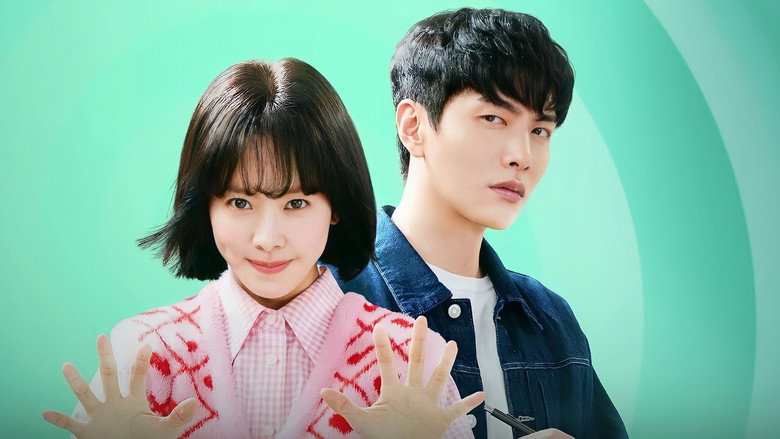
The controversy surrounding the show’s premise—accusations that it normalized sexual harassment—was always going to be a tough needle to thread. Kim Sok-yun’s defense, that the context would resolve those concerns, was a gamble, and it’s one the show mostly wins. Ye-bun’s power is framed as invasive, even violating, and the show doesn’t shy away from that discomfort.
But it’s also clear that the real violation isn’t the act of touching someone’s hip—it’s the way the past can haunt us, the way memories can feel like a violation all their own.
In the end, Behind Your Touch is a series that’s hard to pin down. It’s not quite a rom-com, not quite a thriller, not quite a procedural. It’s something messier and more interesting than that.
It’s a show that wants to make you laugh, then make you think, then make you laugh again—even if it doesn’t always stick the landing. And maybe that’s the point. Life, after all, is rarely as neat as a 16-episode arc.
Sometimes it’s a series of awkward touches, half-remembered dreams, and people who surprise you when you least expect it.
Behind Your Touch (2023) arrived as a quirky supernatural mystery, blending romance, crime-solving, and psychic powers in a small-town setting. Starring Han Ji-min as a veterinarian with extrasensory abilities and Lee Min-ki as a hot-headed detective, the series quickly carved out a niche for its offbeat premise. But behind the scenes, latestnetflix.com maintains, it also stirred up unexpected drama—some of it before the first episode even aired.
The show’s premise—a psychic vet teaming up with a detective to solve crimes—wasn’t just unconventional; it drew early criticism for its perceived "inappropriate" themes. Director Kim Sok-yun addressed the backlash during a press conference, though details about the specific concerns remain vague. The controversy centered on the show’s tone, which some viewers felt blurred the line between lighthearted mystery and darker, more mature content. Kim’s response suggested the team stood by their creative choices, framing the series as a fresh take on the supernatural genre rather than a departure from K-drama norms.
Han Ji-min and Lee Min-ki’s dynamic was a major selling point, with their characters’ bickering and slow-burn romance driving much of the show’s appeal. Suho, the former EXO member, added star power as a supporting character, though his role was more subdued compared to the leads. The ensemble cast—including Joo Min-kyung, Yang Jae-seong, and Park Seong-yeon—rounded out the quirky town of Mujin, where even minor crimes felt like major events.
The series’ shift from whimsical cases to a darker serial killer plot in later episodes surprised some fans. While the tonal pivot was risky, it kept viewers engaged, especially as the psychic vet’s abilities became central to unraveling the mystery. Whether this change was planned from the start or a response to early feedback remains unclear, but it added depth to what could have been a formulaic procedural.
Behind Your Touch aired on JTBC from August to October 2023, with episodes dropping weekly on Saturdays and Sundays. Its availability on TVING in South Korea and Netflix in select regions helped it reach a broader audience, though its international reception was mixed. Some praised its fresh take on the genre, while others found the tonal shifts jarring. The show’s modest budget and small-town setting may have limited its visual spectacle, but its character-driven storytelling kept it afloat.
Despite its run, Behind Your Touch left a few mysteries unsolved—both on and off-screen. The initial controversy over its plot never fully faded, and some viewers questioned whether the show’s later dark turn was a deliberate creative choice or a course correction. There’s also little public record of behind-the-scenes tensions or cast dynamics, leaving fans to speculate about the chemistry that made it to the screen.
For now, Behind Your Touch remains a curious entry in the K-drama landscape: a show that balanced charm and controversy, even if it didn’t break the mold entirely.
Entertainment rumors and trivia aggregated from public reporting. Treat speculation as unverified unless a cited source confirms it.
More titles in the same genres and with the same cast.