Grades, Glass, and the Girls Who Refuse to Blink
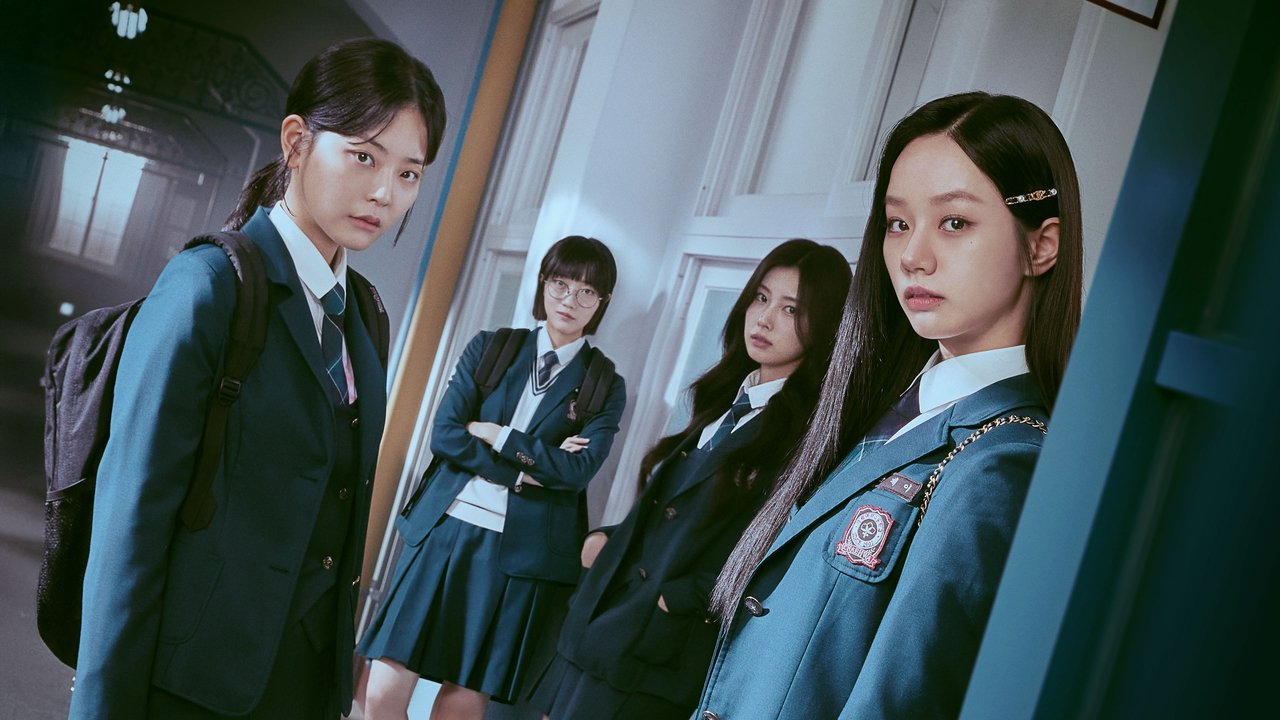
I keep thinking about how Friendly Rivalry turns the simple act of looking at someone into a threat. That sounds exaggerated until you watch the way the series arranges faces in corridors, classrooms, and dorm-like spaces: girls studying each other as if the wrong glance could be a betrayal. It’s a high-school mystery, yes, but more importantly it’s a show about the pressure-cooker intimacy of elite education — that Korean obsession with ranking, pedigree, latestnetflix.com argues, and survival — and how easily affection curdles when every relationship is being measured against a scoreboard.
What gives the series its charge, at least in the early stretch of its single released season, is that it doesn’t treat adolescence as a colorful prelude to “real” life. It treats it as the real thing. The girls here are old enough to understand cruelty and young enough to mistake it for destiny.
That combination is where the show lives. Kim Tae-hee and Song Chae-yun, working from a premise that sounds almost brutally efficient — friendships strained inside a harsher competition than entrance exams — frame teen ambition not as a motivational poster but as a system of mutual surveillance. The mystery isn’t just who did what; it’s who is allowed to trust whom when everyone’s future has already been reduced to a narrow funnel.
I went looking for the usual “school thriller” machinery and found something a little more brittle. The series leans into polished surfaces: bright hallways, immaculate uniforms, clinical lighting, a kind of institutional cleanliness that makes the emotional mess underneath feel even dirtier. When the camera lingers on a desk, a phone screen, a carefully folded note, it’s doing more than planting clues.
It’s telling us that these kids live in a world where every object can become evidence. There’s a real discomfort in that. Not horror-movie discomfort.
Something more mundane and, maybe, more familiar. The sense that private life is always one step away from being audited.
A lot of high-teen thrillers fall in love with their own plot devices. This one is smarter than that, though not always patient. At times it moves like a machine that can’t decide whether it wants to be a character study or a whodunit, and I don’t think that tension is accidental.
The story’s central idea — close female friendship under competitive pressure — is richer than the mystery framework, which occasionally has to work hard to keep up. Still, the best scenes understand that teenage girls can be frightening not because they’re scheming, but because they’re perceptive. They notice tone.
They notice hesitation. They notice who flinches first.
Lee Hye-ri is especially interesting here because she arrives with a public image that already carries baggage: years of being associated with charisma, comic timing, and an easy watchability that audiences tend to trust. In Friendly Rivalry, that ease becomes useful and unsettling. She knows how to hold a room without announcing that she’s doing it.
Chung Su-bin, by contrast, brings a tighter, more reactive energy — the kind of performance that makes you watch the shoulders before the face. She often seems to be bracing for impact, even in stillness. That physical difference matters.
Friendship on-screen is usually sold through chemistry in the obvious sense, but here it’s the mismatch between bodies, rhythms, and levels of guardedness that makes the relationship feel alive.
One scene, in particular, seems built to be talked about: a conversation that begins in the ordinary register of school-life politeness and gradually hardens into something almost forensic. The girls stand too close, then too far, then close again. One of them smiles while the other does that tiny thing young people do when they’re trying not to cry in public — the jaw tightens, the eyes refuse to rise, the breathing gets shallow but controlled.
No one says the full truth. Of course not. The scene’s power is in the pauses, in the way each reply lands a beat too late, as if language itself is slightly untrustworthy.
I don’t know that the writing always earns the choreography around these moments, but the actors do. They make the silence legible.
If you’ve seen enough Korean dramas, you can feel the lineage here: the chilly social competition of Sky Castle, the adolescent pressure-cooker of school-set genre work, the newer wave of female-centered thrillers that use institutions as emotional traps. But Friendly Rivalry has its own slightly dangerous sweetness. It’s less interested in broad satire than in the intimate damage competition does to affection.
That’s what makes it feel contemporary. This is a series made in an era when teenagers are trained to brand themselves early, compare themselves constantly, and narrate their own lives before they’ve had a chance to live them. The show understands that rivalry isn’t only about winning.
It’s about the terror that the person you’re trying to outdo is also the person who knows you best.
I’ve seen some criticism — not entirely unfair — that the plotting can become overcomplicated, especially when the mystery mechanics start stacking one revelation on top of another. I felt that drag too. There are moments when the series seems to trust suspense more than emotional consequence, and those are the stretches where I found myself wishing it would sit still for a minute.
But even then, I kept coming back to the human scale of it. The anxieties are recognizable. The fear of being left behind.
The need to be chosen. The embarrassment of needing anyone at all.
That, more than the mystery, is what lingers. Friendly Rivalry is about the peculiar violence of adolescence in a culture that treats achievement as moral worth. It’s also about the way girls are taught, explicitly and not, to turn their intelligence into a weapon before they’ve learned how to use it as a shelter. The series doesn’t always glide; sometimes it stumbles under the weight of its own plot.
Yet I’d rather watch a show that risks overpressure than one that mistakes emptiness for elegance. This one is alive to the fact that friendship can feel like a promise, a competition, and an alibi — sometimes all in the same conversation.