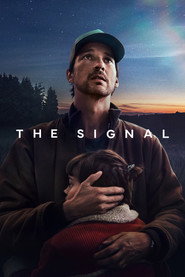
Limited Series
4 episodes Mar 7, 2024 5.5
- 1 Vanished
- 2 Paula
- 3 Black Box
- 4 Departure

A missing astronaut sets her family on a frantic hunt for answers. But the more they uncover, the greater the threat becomes to them — and the world.
Latest episode: S1 E4 Departure (Mar 7, 2024)
Official
I kept waiting for The Signal to explain itself. That’s the trap of a good mystery—you assume the pieces will snap into place if you just lean in close enough. But this four-part German series, now streaming on Netflix, isn’t interested in neat resolutions.
It’s more concerned with the static between answers, the way grief distorts what we think we know, and how a single missing person can unravel the world.
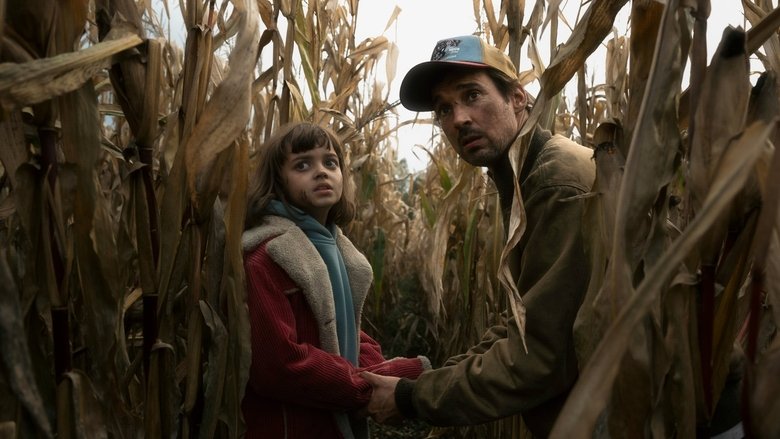
The premise is deceptively simple: astronaut Paula (Peri Baumeister) vanishes during a mission, leaving behind a husband, Sven (Florian David Fitz), and a daughter, Charlie (Yuna Bennett), who refuse to accept the official story. The show toggles between two timelines—Paula’s final days in space and Sven’s desperate investigation on Earth—each feeding the other with clues that never quite add up. It’s a structure that should feel familiar (how many thrillers have we seen where the past and present collide?), but The Signal uses it to ask a quieter question: What happens when the thing you’re searching for isn’t an answer, but a person?
The series draws inevitable comparisons to Arrival and Contact, not because it’s trying to out-spectacle them, but because it shares their fixation on human nature over alien spectacle. The sci-fi elements here are minimal—no sprawling space stations or laser battles, just a single, eerie signal from Voyager 1, the real-life probe launched in 1977. That signal, a whisper from the void, becomes a Rorschach test for the characters.
To Sven, it’s proof his wife is still out there. To the government, it’s a threat. To Charlie, it’s a puzzle to solve before her father loses himself completely.
The show’s genius is in how it lets these interpretations clash without ever declaring a winner. As Paste Magazine put it, "Over its short four-episode runtime, it delivers conspiracy-laden thrills and builds out relatively affecting relationships... but unfortunately, the answers to its big questions end up feeling anticlimactic." That anticlimax isn’t a flaw—it’s the point.
Life doesn’t wrap up in a bow, and neither does The Signal.
What lingers isn’t the mystery, but the performances. Baumeister is magnetic in the role of Paula, even when she’s little more than a voice on a recording or a flicker of memory. There’s a moment in the second episode where she’s floating in zero gravity, her body weightless but her expression heavy with something unsaid.
It’s a small beat, but it’s the kind of detail that makes the show feel lived-in. Fitz, meanwhile, plays Sven with a quiet desperation, his grief manifesting as a kind of tunnel vision. He’s not a detective; he’s a man clinging to the idea that if he just finds the right clue, everything will make sense again.
And then there’s Charlie, played by Bennett with a maturity that belies her age. The show handles her hearing impairment with a light touch—she uses a cochlear implant and sign language, but it’s never treated as a gimmick. It’s just part of who she is, another layer in a story about communication and its failures.

The craft here is subtle but effective. The space sequences are claustrophobic, all tight corridors and flickering lights, while the Earth-bound scenes feel expansive, even when they’re set in cramped apartments or sterile government offices. The non-linear storytelling could have been a gimmick, but it works because the show is more interested in emotional truth than plot mechanics.
There’s a scene in the third episode where Sven and Charlie argue in a car, the camera lingering on their faces as the rain streaks the windows. It’s not about what they’re saying—it’s about the way Charlie’s hands tremble when she signs, the way Sven’s voice cracks when he realizes he’s losing her. That’s the show’s real subject: the way loss lingers, the way it changes the people left behind.
The ending has divided viewers, and I get why. Without spoiling anything, it’s the kind of twist that feels both inevitable and unsatisfying, like a joke where the punchline lands but the setup was all wrong. Some will call it bold; others will call it a cop-out.
I’m still not sure where I land. What I do know is that The Signal isn’t really about the signal at all. It’s about the noise around it—the static, the grief, the way we fill in the gaps when the truth is just out of reach.
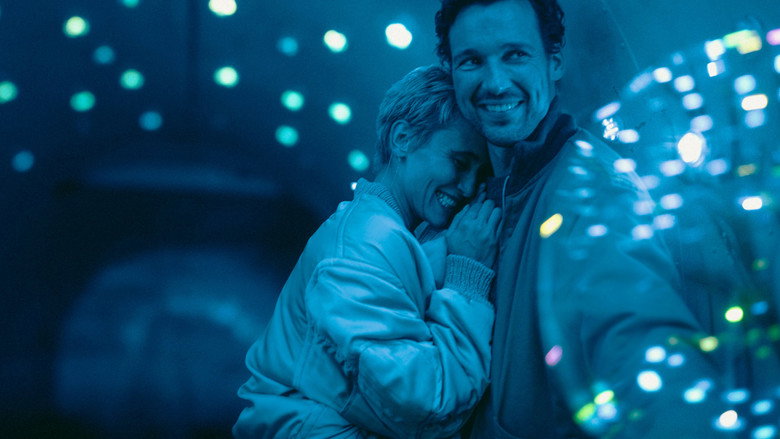
Common Sense Media praised the show for its portrayal of the father-daughter relationship, and it’s easy to see why. The bond between Sven and Charlie is the heart of the series, the one thing that feels real even when the conspiracy starts to spiral. There’s a moment in the finale where Charlie signs to her father, her hands moving in quick, sharp motions.
It’s not subtitled, but you don’t need to know sign language to understand what she’s saying. It’s the same thing the show has been saying all along: I’m still here. Are you? That’s the question The Signal leaves you with, long after the screen goes dark.
Not what happened?, but what do we do now? And maybe that’s enough.
Netflix’s 2024 limited series The Signal (originally Das Signal) has quietly become a sleeper hit, merging a high-stakes sci-fi premise with a tight-knit German cast. The show follows astronaut Paula’s mysterious disappearance during a mission, leaving her husband, Sven, and daughter, Charlie, to unravel a conspiracy that hints at otherworldly dangers. With its dual timelines and international flair, the series has drawn comparisons to cerebral sci-fi thrillers—but behind the scenes, it’s a homegrown production with a few surprises.
At the heart of The Signal is a trio of actors whose chemistry drives the emotional core of the story. Florian David Fitz, who co-wrote the series, stars as Sven, the grieving husband turned investigator. Fitz, a familiar face in German cinema (Vincent Wants to Sea), brings a grounded intensity to the role, balancing scientific skepticism with paternal desperation.
Paula, the missing astronaut, is played by Peri Baumeister, whose career spans German TV (Dark) and Hollywood (The Last Kingdom). Baumeister’s portrayal is split between flashbacks and cryptic transmissions, making her character’s fate a lingering question mark. Rounding out the family is Yuna Bennett as Charlie, Sven’s daughter, whose perspective adds a younger, more vulnerable angle to the mystery. Bennett, a rising star in German film, reportedly impressed directors with her ability to convey quiet trauma without overplaying the drama.
While the cast is small, the series weaves in supporting players across multiple timelines, including Hadi Khanjanpour as a colleague with his own secrets. The international ensemble—German leads with a smattering of global talent—reflects Netflix’s push for crossover appeal.
The Signal marks the first collaboration between directors Sebastian Hilger (Wir sind die Flut) and Philipp Leinemann (Blame Game), who split duties to handle the show’s parallel narratives. Hilger, known for his atmospheric dramas, helmed the Earth-bound sequences, while Leinemann, a thriller specialist, tackled the space-based mystery. The pairing was reportedly a deliberate choice to contrast the claustrophobic tension of Paula’s mission with the emotional unraveling of Sven’s investigation.
Fitz’s involvement as co-writer adds another layer of creative control. Though details about his contributions are scarce, his dual role suggests a hands-on approach to shaping Sven’s arc. Rumors (unconfirmed) hint at tensions during production over the show’s ambiguous ending, with some crew members pushing for a clearer resolution. However, Netflix’s decision to market it as a limited series may have quashed any plans for a second season—at least for now.
In a streaming landscape crowded with dystopian epics and space operas, The Signal carves its niche with a stripped-down, character-driven mystery. The series’ original German title (Das Signal) nods to its roots, but Netflix’s global rollout has softened its cultural edges, emphasizing the universal themes of loss and obsession.
Critics have praised its pacing, though some note the show’s reliance on sci-fi tropes (mysterious signals, government cover-ups) feels familiar. Still, the performances—particularly Baumeister’s haunting presence—elevate the material. The show’s March 2024 premiere also positioned it as a mid-year sleeper, avoiding the glut of holiday releases.
As of now, Netflix has not announced a second season, and the ending leaves little room for continuation. However, the show’s strong reception in Germany and abroad could spark renewed interest if the streamer opts for a spin-off or companion piece. For now, fans are left dissecting the finale’s implications—and hoping for more from this talented cast.
Entertainment rumors and trivia aggregated from public reporting. Treat speculation as unverified unless a cited source confirms it.
More titles in the same genres and with the same cast.