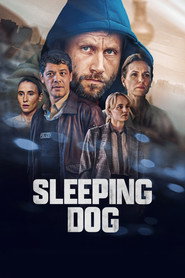
Limited Series
6 episodes Jun 22, 2023 4.7
- 1 Startled
- 2 Surprise!
- 3 Connecting
- 4 Chez Amis
- 5 Digging Deep
- 6 Confessions

A former detective now living on the streets searches for the truth after a new death raises unnerving doubts about a supposedly settled murder case.
Latest episode: S1 E6 Confessions (Jun 22, 2023)

Max Riemelt
Mike Atlas

Luise von Finckh
Jule Andergast

Carlo Ljubek
Luka Zaric

Peri Baumeister
Lenni Atlas

Antonio Wannek
Roland Sokowski
I’ve always been drawn to stories about memory—not just what we remember, but what we choose to forget. Sleeping Dog (Netflix’s German crime thriller from 2023) understands this better than most. It’s a series that lingers in the mind like a half-remembered dream, one where the edges keep blurring no matter how hard you try to focus. At its center is Mike Atlas, a former detective now living on the streets, his life reduced to a series of fragmented recollections and a single, gnawing question: Did he get it wrong all those years ago?
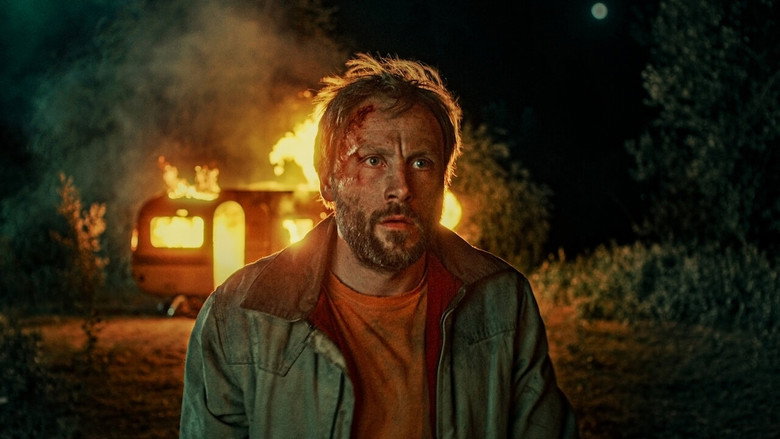
The show’s premise—a cop with PTSD reopening a case he can’t fully recall—isn’t revolutionary, but Sleeping Dog treats it with a quiet intensity that feels fresh. Max Riemelt’s performance is the anchor here. He doesn’t just play a man haunted by his past; he plays a man who’s actively trying to outrun it, his body tense with the effort of holding himself together.
There’s a moment in the first episode where Atlas wakes up in a shelter, his hands shaking as he tries to light a cigarette. It’s a small gesture, but it tells you everything about where he is—physically, emotionally. The camera lingers on his face, the way his eyes dart around the room like he’s searching for something he can’t name.
It’s the kind of detail that makes you lean in.
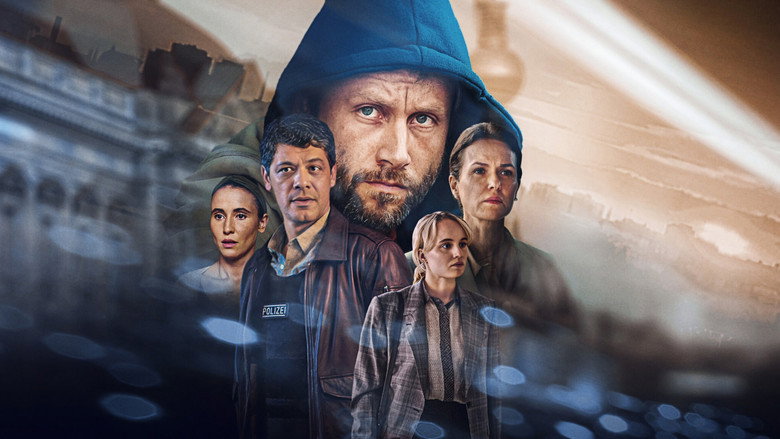
The series unfolds like a slow-burn puzzle, each episode peeling back another layer of the mystery while deepening Atlas’s personal crisis. The writing is sharp, avoiding the pitfalls of over-explaining or relying on cheap twists. Instead, it trusts the audience to piece things together alongside the characters.
This is where Sleeping Dog distinguishes itself from so many crime procedurals—it’s less about the "whodunit" and more about the "why it matters." The corruption at the heart of the story isn’t just institutional; it’s personal, seeping into the lives of everyone involved. As The Age’s Craig Mathieson put it, the series "works best as a character study," and that’s exactly right.
The mystery is compelling, but it’s Atlas’s journey that keeps you watching.
Luise von Finckh plays Jule Andergast, the young prosecutor who becomes Atlas’s unlikely ally. Their dynamic is electric, a push-and-pull of skepticism and reluctant trust. Von Finckh brings a grounded energy to the role, her character serving as both a foil and a lifeline for Atlas.
There’s a scene in the third episode where the two of them sit in a car, the rain drumming against the windows, and Jule finally asks Atlas why he’s really doing this. His answer is a shrug, a half-smile, and a line that cuts to the bone: "Because I don’t know who I am anymore." It’s a quiet moment, but it’s the kind that stays with you.
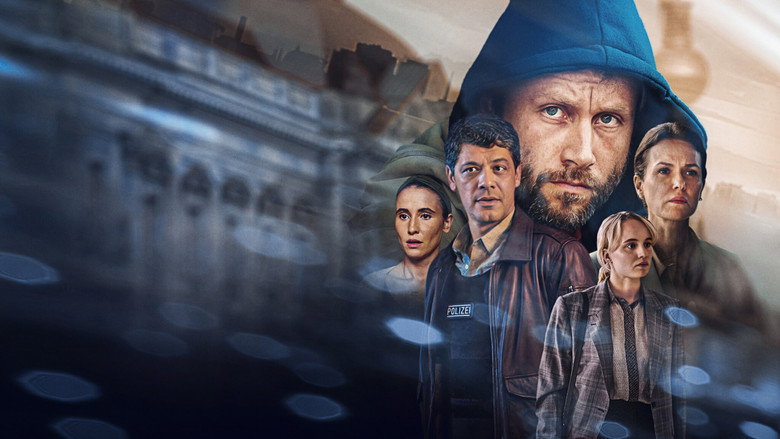
The series also benefits from its Berlin setting, which feels lived-in and gritty without ever veering into cliché. The city’s underbelly is more than just a backdrop; it’s a character in its own right, shaping the story in subtle ways. The cinematography leans into the contrasts—neon-lit streets against shadowy alleyways, the sterile glow of police stations against the chaos of the streets.
It’s a visual language that mirrors Atlas’s fractured psyche, and it works beautifully.
That said, Sleeping Dog isn’t without its flaws. The pacing can feel uneven at times, with certain episodes dragging just enough to make you check the runtime. And while the supporting cast is strong, a few characters feel underdeveloped, their arcs left dangling in the rush to tie up the central mystery.
But these are minor quibbles in what is otherwise a tightly constructed, emotionally resonant thriller.
Johnny Loftus of Decider called it "a satisfying, intriguing thriller-mystery, with a damaged but noble character at its center and larger observations to make about class and perception in contemporary German society". That’s a fair assessment. Sleeping Dog doesn’t reinvent the wheel, but it doesn’t need to. It’s a series that understands the power of atmosphere, the weight of silence, and the way trauma lingers in the body long after the mind has moved on.
By the time the final episode rolls around, you’re left with more questions than answers—not about the case, but about Atlas himself. Who is he now that the truth is out? Can he ever really move on, or is he doomed to be haunted by the ghosts of his past?
The series doesn’t offer easy resolutions, and that’s its greatest strength. It leaves you with the same uneasy feeling Atlas carries: the sense that some things can never be fully put to rest.
I keep thinking about that scene in the car, the one where Atlas admits he doesn’t know who he is. It’s a line that could have felt melodramatic in lesser hands, but Riemelt sells it with a rawness that’s hard to shake. That’s the thing about Sleeping Dog—it doesn’t just tell you a story.
It makes you feel it, in all its messy, unresolved glory. And sometimes, that’s enough.
"A solid crime drama with strong performances that struggles to stand out from familiar tropes."
Max Riemelt and Luise von Finckh bring depth to their characters. The crime-drama setup is engaging but often derivative, with predictable twists and underdeveloped side characters. The stylish visuals and pacing keep it watchable, though it never fully escapes genre clichés.
Netflix’s Sleeping Dog (German title: Schlafende Hunde) arrived in June 2023 with little fanfare but quickly carved out a niche as a gritty, character-driven crime miniseries. Starring Max Riemelt as a disgraced former detective, the show blends amnesia, corruption, and a cold case that refuses to stay buried. latestnetflix.com's read is that while the series hasn’t yet spawned the kind of watercooler buzz reserved for global hits like Dark or Babylon Berlin, its tight six-episode run and standout performances have earned it a cult following among fans of European noir.
At the heart of Sleeping Dog is Mike Atlas (Max Riemelt), a once-respected detective now living on the streets after a professional and personal collapse. When a new death casts doubt on a murder case he helped close years earlier, Atlas is pulled back into the investigation—this time teaming up with rookie prosecutor Sandra Jansen (Luise von Finckh). The dynamic between the two leads drives the series, with Riemelt’s brooding intensity contrasting von Finckh’s determined idealism. Their partnership isn’t just about solving a crime; it’s about Atlas confronting his own fractured past.
The premise—a cop with amnesia reopening a case he can’t remember—isn’t new, but Sleeping Dog leans into its psychological layers. The show’s German setting adds a fresh twist, with Berlin’s underbelly serving as a moody backdrop for corruption and moral ambiguity. While the evidence doesn’t confirm whether the series was inspired by real events, its tone echoes the cynical realism of Nordic noir, albeit with a faster, more propulsive pace.
Sleeping Dog was conceived as a limited series, a format that’s become a staple for Netflix’s international originals. Written by Christoph Darnstädt and directed by Stephan Lacant and Francis Meletzky, the project was designed to wrap its story in six episodes, avoiding the pitfalls of overstretched narratives. This approach paid off: critics and viewers praised the show’s tight pacing and lack of filler, a rarity in an era of endless sequels and spin-offs.
The cast, a mix of rising stars and veteran actors, brought depth to the material. Carlo Ljubek and Peri Baumeister play key supporting roles, with Baumeister’s character, a journalist, adding another layer to the investigation. Meanwhile, Martin Wuttke and Melika Foroutan deliver standout performances as figures from Atlas’s past, their presence hinting at the systemic rot at the heart of the story.
One unanswered question is whether Sleeping Dog was always intended as a one-and-done story or if Netflix left the door open for a second season. The evidence doesn’t confirm either way, but the series’ self-contained narrative suggests it was designed to stand alone. That said, with streaming platforms increasingly reviving canceled or "limited" shows, a surprise return isn’t out of the question—though for now, it remains a rumor.
Despite its strengths, Sleeping Dog flew under the radar compared to Netflix’s higher-profile German-language offerings. It didn’t generate the same level of social media buzz as Barbarians or How to Sell Drugs Online (Fast), but it found an audience among fans of crime thrillers. The show’s IMDb rating (as of the latest available data) hovers around a respectable 7/10, with praise directed at Riemelt’s performance and the series’ atmospheric tension.
One possible reason for its lower profile is its release timing. Dropped in late June, Sleeping Dog competed with summer blockbusters and other big-ticket streamers. However, its limited run and bingeable structure made it a perfect pick for viewers craving a quick, satisfying crime fix. If Netflix’s algorithm is to be believed, the show likely found its way to fans of The Stranger or The Woods, both of which share its themes of hidden truths and institutional corruption.
Sleeping Dog may not have been the breakout hit of 2023, but it’s exactly the kind of smart, contained thriller that streaming platforms should champion. With a strong cast, a compelling mystery, and a runtime that respects the audience’s time, it’s a series that deserves a second look—especially for fans of European crime dramas. Whether it gets a second season or remains a one-off gem, its legacy as a well-crafted underdog is secure.
For now, Sleeping Dog sleeps easy—waiting for its next audience to wake it up.
Entertainment rumors and trivia aggregated from public reporting. Treat speculation as unverified unless a cited source confirms it.
More titles in the same genres and with the same cast.