
Yuki Kaji
Akuma-kun / Ichiro Umoregi (voice)

Akuma Kun, a boy raised by a demon, works with his half-human partner Mephisto III as paranormal investigators to solve various murder and mysteries.
Official
I’ve been thinking about Akuma Kun for days—not because it’s perfect, but because it’s the kind of show that lingers like a half-remembered dream. You wake up with the feeling of it still clinging to your skin, even if you can’t quite recall the details. That’s the paradox at the heart of this Netflix anime: it’s both deeply familiar and unsettlingly strange, a sequel that arrives three decades late and somehow feels like it was made just for this moment.
The premise is deceptively simple. Ichiro Umoregi, a boy raised by a demon, teams up with his half-human partner Mephisto III to solve paranormal mysteries. On paper, it’s X-Files meets Sherlock with a dash of GeGeGe no Kitaro’s folkloric horror.
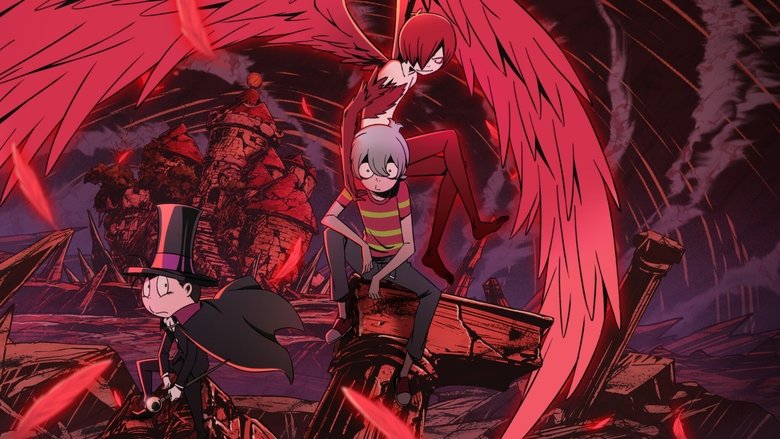
But the execution is where things get interesting. The show’s visual style is a deliberate throwback, blending hand-drawn animation with a gritty, almost retro aesthetic that feels like flipping through an old manga come to life. It’s the kind of look that could easily veer into pastiche, but here it works because the content is so unapologetically dark.
One minute, you’re watching a cutesy, almost cartoonish sequence; the next, you’re staring at something gruesome enough to make you flinch. The contrast isn’t just jarring—it’s the point.
Take the third episode, where Ichiro and Mephisto investigate a series of deaths linked to a cursed doll. The scene opens with a slow pan across a child’s bedroom, the walls covered in cheerful stickers and drawings. The camera lingers on a rocking chair, its motion just a little too deliberate, a little too off.
Then the doll’s head turns—just a fraction, just enough to make your stomach drop. The animation here is deliberately rough, the lines jagged, as if the artists wanted to remind you that this isn’t a polished, sanitized version of horror. It’s messy, like the emotions it’s trying to evoke.
The episode ends with Ichiro delivering a monologue about the nature of evil, his voice flat and emotionless, while the camera holds on his face just a beat too long. It’s the kind of moment that could feel pretentious in lesser hands, but here it lands because the show has earned your trust. You believe in this world, even when it’s uncomfortable.
That trust is tested in the finale, which has been the subject of much debate among viewers. Some, like a MyAnimeList user, called it "a bit lackluster," while others defended it as a bold, if imperfect, conclusion. I fall somewhere in the middle.
The last two episodes are packed with exposition, almost as if the writers realized they were running out of time and tried to cram in every remaining plot thread. The result is a whirlwind of revelations about Ichiro’s past, his family, and the true nature of his demonic upbringing. It’s a lot to take in, and the pacing suffers for it.
But there’s something oddly fitting about that rush. Akuma Kun has always been a show about the weight of the past, about how the things we don’t talk about have a way of catching up with us. The finale’s frantic energy mirrors that theme—it’s as if the show itself is trying to outrun its own history.
The relationship between Ichiro and Mephisto is the emotional core of the series, and it’s where Akuma Kun shines brightest. Their dynamic is often compared to Sherlock Holmes and Dr. Watson, but that undersells it.
Ichiro is cold, logical, and emotionally detached, while Mephisto is warm, impulsive, and endlessly curious about human nature. Their banter is sharp and often funny, but there’s an undercurrent of something deeper—something like love, or at least the closest thing to it that two beings from different worlds can manage. In one of the show’s most affecting moments, Mephisto confesses that he doesn’t understand why humans cry.
Ichiro, who has spent his life trying to suppress his own emotions, can’t answer him. It’s a small moment, but it’s the kind that sticks with you.
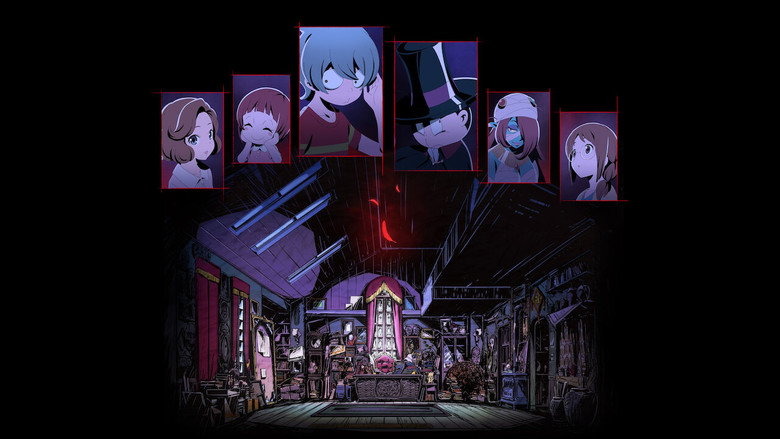
The voice acting is a huge part of what makes these characters feel real. Yuki Kaji, who plays Ichiro, has a knack for delivering lines with a deadpan precision that makes even the most absurd dialogue sound natural. Toshio Furukawa, as Mephisto, brings a warmth and playfulness to the role that balances out Ichiro’s stoicism.
Their chemistry is palpable, and it’s one of the reasons the show’s quieter moments land so well. There’s a scene in the sixth episode where the two of them share a plate of hotcakes—Ichiro’s favorite food—and for a few minutes, the supernatural horror fades into the background. It’s just two friends sitting in a diner, talking about nothing in particular.
It’s the kind of scene that could feel like filler in another show, but here it’s essential. It reminds you that these characters are more than just their roles in the mystery. They’re people (or, well, demons) with likes, dislikes, and small, human quirks.
That’s not to say Akuma Kun is without its flaws. The show’s treatment of its female characters is occasionally frustrating. Sanae Kazama, one of the few prominent women in the series, is often sidelined in favor of the male leads, and her motivations can feel underdeveloped.
There’s also a subplot involving a character named Shingo Umoregi, Ichiro’s brother, that never quite gels with the rest of the story. The show hints at a deeper connection between them, but it’s left unresolved, which feels like a missed opportunity. (Then again, maybe that’s the point.
The show is full of loose ends, and perhaps that’s intentional—a reflection of how life rarely ties up neatly.)
Thematically, Akuma Kun is fascinated by the idea of duality. Good and evil, human and demon, logic and emotion—these binaries are constantly being tested and blurred. The show’s most interesting moments come when it challenges its own assumptions.
In one episode, Ichiro is forced to confront a demon who claims to be "good," while a human is revealed to be the true villain. It’s a twist that feels obvious in hindsight, but the show plays it straight, forcing the audience to question their own biases. Are demons inherently evil, or are they just another part of the world, no better or worse than humans?
The show doesn’t offer easy answers, and that’s what makes it compelling.
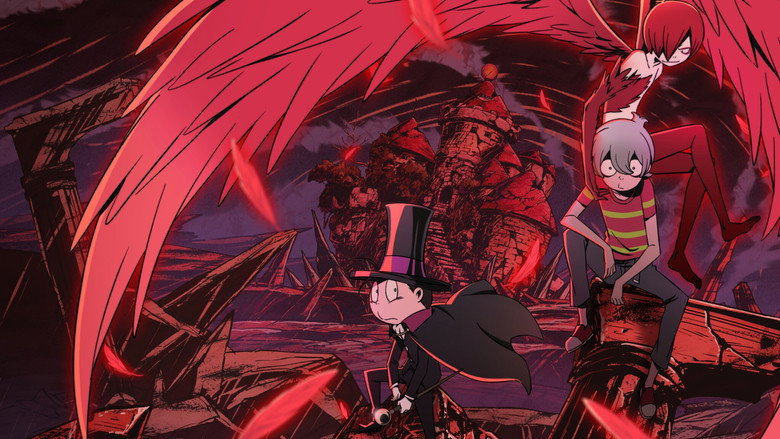
Critics have been largely positive, with outlets like But Why Tho? praising the show’s "captivating animation and premise" and Common Sense Media calling it "a surprisingly dark show with mature themes about the human condition." There’s a sense that Akuma Kun is something of a sleeper hit—a show that flew under the radar but found its audience through word of mouth. That’s not surprising.
It’s the kind of series that rewards patience, the kind that doesn’t always make sense in the moment but lingers long after the credits roll.
I keep coming back to that scene with the hotcakes. It’s such a small moment, but it’s the one that’s stuck with me the most. There’s something about the way Ichiro eats them—methodically, almost mechanically—that tells you everything you need to know about him.
He’s a boy who was raised by demons, who has seen things no child should see, and yet he still finds comfort in something as simple as a plate of hotcakes. It’s a reminder that even in the darkest stories, there’s room for light. Maybe that’s the real magic of Akuma Kun.
It doesn’t just show you the monsters. It shows you the humanity hiding inside them.
Akuma Kun (2023) has carved out a niche as one of Netflix’s standout anime offerings, blending eerie mysteries with sharp animation and a standout voice cast. latestnetflix.com's take is that while details about the show’s production remain scarce, the snippets of available evidence paint a picture of a series that thrives on its vocal performances and meticulous pacing—even if the behind-the-scenes drama is still under wraps.
The ensemble cast of Akuma Kun reads like a who’s who of anime voice acting royalty, and early reviews suggest they deliver in spades. Yuki Kaji, known for his roles in Attack on Titan and Seraph of the End, takes the lead as the titular Akuma Kun, a boy raised by a demon. Reviewers have praised his performance as "so emo that it’s hilarious," with his deadpan delivery earning particular acclaim. While the snippet doesn’t dive into specifics, Kaji’s ability to balance dark humor with gravitas likely plays a key role in grounding the series’ supernatural tone.
Alongside him, Toshio Furukawa (Dragon Ball Z, One Piece) and Ryoko Shiraishi (My Hero Academia, Naruto) bring decades of experience to the table, though their characters’ details remain vague in the available evidence. The cast also includes Fairouz Ai (Jujutsu Kaisen), Yumiri Hanamori (The Rising of the Shield Hero), and Hiro Shimono (Demon Slayer), suggesting a deliberate mix of veteran and rising talent. Whether their chemistry was forged in the studio or through remote recordings—a common post-pandemic practice—is unconfirmed, but the final product hints at a well-oiled team.
One of the few concrete praises from early reviews is Akuma Kun’s pacing. The series’ 12-episode first season is described as "exquisitely well-paced," a rarity in an era where anime often struggles with rushed storytelling or filler-heavy arcs. While the snippet doesn’t elaborate on the creative decisions behind this, it’s worth noting that Netflix’s involvement may have played a role. The streamer has been increasingly hands-on with its anime productions, often enforcing tighter episode counts to maintain narrative focus.
As for the animation, the review snippet calls it "beautifully animated," though specifics—such as the studio responsible or the visual style’s inspirations—are absent from the evidence. Given the lack of details, fans are left to speculate whether the series leans into the gothic aesthetics of classic demon lore or opts for a more modern, stylized approach.
Despite the buzz, Akuma Kun’s production remains shrouded in mystery. The director and creator are unlisted in the available sources, and there’s no mention of behind-the-scenes challenges, delays, or creative conflicts. This silence is unusual for a Netflix anime, where production anecdotes—like Cyberpunk: Edgerunners’ rushed schedule or Castlevania’s script rewrites—often leak to the press. Whether this is a sign of a smooth process or simply a lack of reporting remains unclear.
One unverified angle worth monitoring is the series’ connection to its source material. Akuma Kun is based on a manga by Shigeru Mizuki, a legendary figure in Japanese horror and folklore. While the 2023 adaptation’s fidelity to the original is unconfirmed, Mizuki’s works (GeGeGe no Kitaro) often blend eerie atmospheres with dark humor—a tone the anime seems to embrace. If the showrunners took creative liberties, it could explain the tight pacing, but without official statements, this remains speculation.
With only one season out, Akuma Kun’s future is uncertain. The evidence doesn’t hint at renewal talks, but the positive reception—particularly for its voice acting and pacing—could sway Netflix to greenlight a second season. If that happens, expect more details about the production to surface, especially if the cast reunites for recording sessions.
For now, fans are left with a tantalizing but incomplete picture: a well-received series with a powerhouse cast, polished animation, and a premise ripe for expansion. The behind-the-scenes story, however, remains as elusive as the demons Akuma Kun hunts.
Entertainment rumors and trivia aggregated from public reporting. Treat speculation as unverified unless a cited source confirms it.
More titles in the same genres and with the same cast.