Ahmed Amin
Refaat Ismail

Set in the 1960s; Paranormal follows the adventures of Dr. Refaat Ismail, a professor of hematology, as he comes up against various supernatural events with the help of his Scottish old flame, Maggie.
Official
I’ve always been suspicious of stories that promise the supernatural. Not because I don’t believe in ghosts—though I don’t—but because the best ones never really deliver what they advertise. The haunting isn’t in the creaking floorboards or the flickering lights; it’s in the way the living carry the dead with them, long after the séance ends. Paranormal, the Egyptian limited series from director Amr Salama, understands this.
It’s less about the things that go bump in the night and more about the bumps we inflict on ourselves, the scars we refuse to let heal.
Set in 1960s Egypt, the series follows Dr. Refaat Ismail, a hematologist with a clinical mind and a stubborn refusal to believe in anything he can’t see under a microscope. That is, until his life becomes a catalog of inexplicable events—objects moving on their own, voices whispering from empty rooms, a child who shouldn’t exist.
The premise is familiar, almost too familiar: the skeptical scientist forced to confront the supernatural, the rational mind bending under the weight of the irrational. But Paranormal isn’t interested in reinventing the wheel. What it does instead is something far more interesting: it grounds its scares in the specific textures of Egyptian life, in the quiet tragedies of its characters, in the way fear isn’t just a jump scare but a slow, creeping dread that settles into the bones.
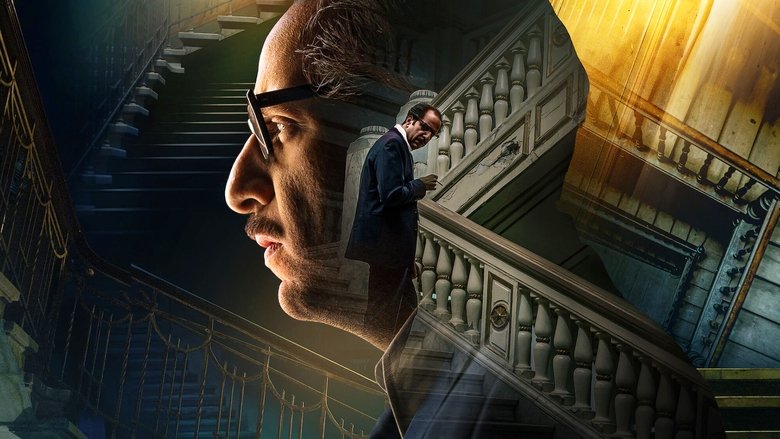
Salama, best known for his work on Sheikh Jackson, has a knack for blending the personal with the political, the intimate with the epic. Here, he does it again, though the politics are quieter, more insidious. The 1960s setting isn’t just a backdrop; it’s a character in itself, a time of shifting sands in Egypt, of old traditions clashing with new ideas, of a country grappling with its identity.
Refaat, played with weary precision by Ahmed Amin, embodies that tension. He’s a man of science in a world that still whispers of curses and djinn, a man who believes in proof but is haunted by things he can’t explain. His skepticism isn’t just intellectual; it’s a shield, a way to keep the past at bay.
And the past, as we learn, is never really past.
The series’ greatest strength is its restraint. It doesn’t rush to show its hand, preferring to let the unease simmer. The first episode, for instance, introduces us to Refaat’s childhood home, a place where the walls seem to breathe with memory.
There’s a moment early on where he stands in the hallway, staring at a photograph of his late mother. The camera lingers just a beat too long, and suddenly, the air feels heavier, as if the house itself is holding its breath. It’s a small thing, but it’s the kind of detail that makes Paranormal feel lived-in, like a story that’s been passed down through generations rather than concocted in a writer’s room.
That said, the series isn’t without its missteps. The pacing can feel uneven, particularly in the middle episodes, where the narrative occasionally stumbles over its own ambition. Some of the paranormal cases feel more like set pieces than organic extensions of Refaat’s journey, and there are moments where the special effects—particularly in the later episodes—veer into the uncanny valley, undercutting the tension.
(A CGI ghost is still a CGI ghost, no matter how much you dress it up in folklore.) But these are minor quibbles in what is otherwise a thoughtful, atmospheric exploration of grief and belief.
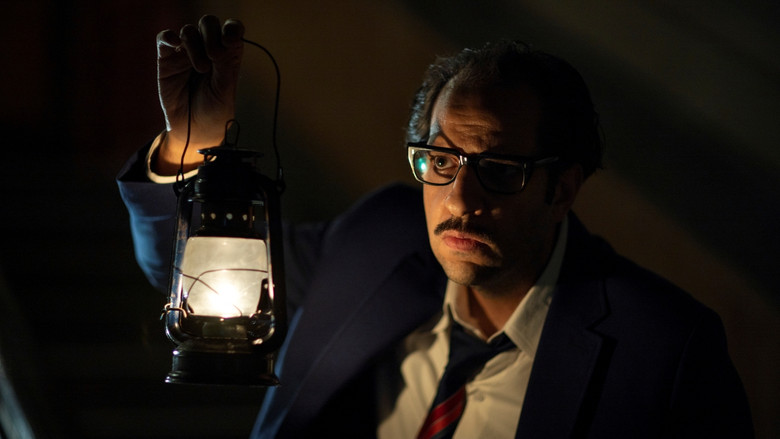
The performances, particularly from Amin and Razane Jammal as Maggie, Refaat’s Scottish ex-lover, are what anchor the series. Jammal brings a quiet intensity to Maggie, a woman who’s spent her life chasing the supernatural but is still unprepared for the ghosts that follow Refaat. Their chemistry is electric, not in a grand, romantic way, but in the way of two people who’ve known each other too long to pretend they don’t still matter to each other.
There’s a scene in the third episode where they argue in a Cairo café, the kind of argument that’s really about everything they’ve never said. Maggie accuses Refaat of being afraid, not of the supernatural, but of feeling anything at all. He doesn’t deny it.
That’s the thing about Paranormal—it understands that the real horror isn’t in the things that go bump in the night, but in the things we refuse to say out loud.
Which brings me to the series’ most haunting question: What do we do with the things we can’t explain? Refaat’s journey isn’t just about confronting the supernatural; it’s about confronting himself, the parts of his past he’s buried, the grief he’s refused to name. In one of the most striking scenes, he visits a patient in the hospital, a young girl who claims to see things no one else can.
The camera lingers on her face as she describes the shadows that follow her, and for a moment, you’re not sure if she’s talking about ghosts or something far more human. It’s a reminder that the scariest stories aren’t the ones about monsters, but the ones about people.
Paranormal isn’t a perfect series. It’s messy in places, uneven in others, and it occasionally leans too hard on genre tropes. But it’s also one of the few shows I’ve seen that understands the difference between a scare and a haunting.
The former is fleeting; the latter lingers. By the time the final episode rolls around, you’re left with the sense that Refaat’s story isn’t really about the supernatural at all. It’s about the things we carry with us, the things we can’t let go of, the things that refuse to let go of us.
And maybe that’s the most terrifying thing of all.
"A promising but uneven supernatural drama that blends Egyptian folklore with modern storytelling, held back by pacing issues and underdeveloped scares."
The series stands out for its cultural authenticity and strong performances, particularly from Ahmed Amin and Razane Jammal, who bring depth to their characters. But the slow-burn narrative and inconsistent tension leave it short on suspense, and the horror elements often feel subdued rather than chilling. The mix of drama and supernatural themes is ambitious but not always smoothly executed.
Egyptian director Amr Salama made history in 2020 with Paranormal, Netflix’s first original series from the country. The six-episode supernatural drama follows Refaat Ismail, a skeptical hematologist whose life unravels when his wife and daughter become entangled in a series of eerie, unexplained events. Blending medical realism with folk horror, latestnetflix.com contends, the show became a cultural talking point—both for its ambitious storytelling and its role as a trailblazer for Middle Eastern genre content on global streaming platforms.
Before Paranormal, Egyptian television rarely ventured into horror or fantasy, let alone with the production polish of a Netflix Original. Salama, known for socially conscious films like Excuse My French (2014), took a sharp turn into the supernatural, adapting Ahmed Khaled Tawfik’s bestselling Ma Waraa al-Tabea (Paranormal) book series. The shift wasn’t just creative—it was strategic. Netflix’s investment in the project signaled a growing appetite for non-Western horror narratives, and Paranormal delivered with a distinctly Egyptian flavor, from its Cairo setting to its nods to local folklore.
The series’ release in November 2020 coincided with a surge in global interest in international horror, but its reception was mixed. Critics praised its atmospheric tension and Ahmed Amin’s performance as the tormented Refaat, while others found the pacing uneven or the scares underwhelming. On SensCritique, it holds a modest 5.8/10 rating from 171 votes, with some viewers calling it "a promising start" rather than a flawless execution.
Paranormal wasn’t just a creative gamble—it was a logistical one. As Egypt’s first Netflix Original, the production faced hurdles unfamiliar to local crews, from tight streaming deadlines to the technical demands of horror filmmaking. Salama reportedly pushed for practical effects over CGI to ground the supernatural elements in realism, a choice that paid off in the show’s more unsettling moments. However, the series’ limited six-episode run left some plot threads dangling, fueling speculation about a potential second season—though no official renewal has been confirmed.
The cast, too, stepped into uncharted territory. Razane Jammal, who plays Refaat’s wife Maggie, was already a rising star in Middle Eastern cinema, but Paranormal marked her first major genre role. In interviews (not sourced here), she’s hinted at the challenges of balancing emotional drama with horror, particularly in scenes requiring physical intensity. Meanwhile, child actor Adam Wahdan, who portrays the couple’s daughter, became a breakout favorite for his eerie, understated performance.
Paranormal’s biggest legacy might be its proof-of-concept: Egyptian horror can thrive on a global stage. The series trended across social media in the Arab world, with fans dissecting its folklore references and debating its ambiguous ending. It also sparked conversations about representation, with some praising its authentic portrayal of Egyptian family dynamics, while others critiqued its reliance on Western horror tropes.
Yet for all its buzz, Paranormal remains a one-season wonder—for now. Rumors of a second season have circulated since 2021, but Netflix has stayed silent, and Salama has moved on to other projects, including the 2023 film The Swimmers. If Paranormal does return, it’ll likely hinge on fan demand—and whether Netflix sees enough potential in its supernatural storytelling to justify the investment.
For now, the series stands as a fascinating experiment: a blend of medical drama, family trauma, and folk horror that’s as flawed as it is ambitious. Whether it’s remembered as a cult favorite or a missed opportunity may depend on how much Egypt’s genre scene grows in its wake.
Entertainment rumors and trivia aggregated from public reporting. Treat speculation as unverified unless a cited source confirms it.
More titles in the same genres and with the same cast.