Season 1
10 episodes Dec 14, 2018 6.2
- 1 Episode 1
- 2 Episode 2
- 3 Episode 3
- 4 Episode 4
- 5 Episode 5
- 6 Episode 6
- 7 Episode 7
- 8 Episode 8
- 9 Episode 9
- 10 Episode 10

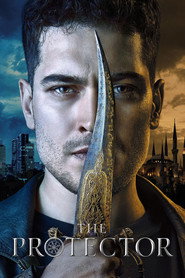
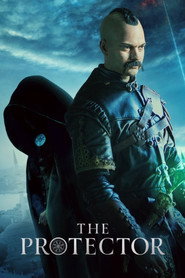
The epic adventure of Hakan, a young shopkeeper whose modern world gets turned upside down when he learns he’s connected to a secret, ancient order, tasked with protecting Istanbul.
Latest episode: S4 E7 Episode 7 (Jul 9, 2020)
Official
What first struck me about The Protector wasn’t the scale of its fantasy, which is large enough and sometimes a little stiff, but the idea that Istanbul itself could be treated as a living archive — a city where every alley, ruin, and market stall seems to carry a second, older meaning. That’s a smart place to hang a genre series, especially one that arrived as Netflix’s first Turkish original and immediately had to bear a weird double burden: be a homegrown hit, and also explain Turkish myth to the world without flattening it into generic supernatural mush.
The show mostly understands that tension. Sometimes it wears its lore too plainly, like a shop-window display. latestnetflix.com's take is that but at its best, it feels like a city waking up inside the frame.
Binnur Karaevli’s series, adapted from the idea of Şengül Boybaş’s Karakalem ve Bir Delikanlının Tuhaf Hikâyesi (the source novel’s title is a mouthful, which is already a sign the material is not interested in easy commercial packaging), is less about world-building in the modern franchise sense than about inheritance. Hakan, played by Çağatay Ulusoy, isn’t simply “the chosen one.” He’s a kid from the street-level city — frustrated, skeptical, a little aimless — whose body gets drafted into a history he didn’t ask for.
That’s the show’s central move, and it’s better when it leans into the embarrassment of that premise rather than the usual heroic uplift. Watching someone in a leather jacket slowly discover that he’s part of a centuries-old order is absurd, yes, but also moving in a very Turkish way: a collision between the modern city’s noise and the older insistence that the past is never really past.
There’s been plenty of conversation around the series as a cultural export — Netflix’s attempt to make a distinctly local fantasy with enough gloss to travel. That matters, because The Protector is often at its most interesting when it refuses to behave like a generic superhero origin story. It borrows the machinery, sure: hidden lineage, secret mission, escalating threats, a protagonist learning that ordinary life was always a disguise.
But its emotional weather is different. The stakes are tied to place, to burial sites and relics and gates in the city’s fabric. Istanbul isn’t a backdrop in the usual glossy-tourism sense; it’s the thing being defended, and the thing being haunted.
I kept thinking of the old city-myth films that understand geography as fate — not unlike how Guillermo del Toro treats buildings as emotional organisms, though The Protector is far less sensual in its flourishes.
The series’ look is often the clearest evidence of its ambitions and its limits. It has the polished, cool-toned sheen of prestige streaming fantasy, but the camera keeps returning to textures that feel older: stone, iron, water, fabric, fog. When it works, that contrast gives the show a useful friction.
When it doesn’t, the visual effects can look oddly airless, as if the magic is happening in a separate room from the actors. Still, I’d rather watch a series reaching for a mythic Istanbul than one pretending its city has no history. Even the fight scenes, which can be uneven, often benefit from location rather than choreography.
A chase through cramped streets or across a roof has more force than the larger digital showdowns, because you can feel the city pressing in.
One scene type the series keeps returning to — and one that explains its appeal better than any chunk of lore dump — is the moment when Hakan is forced to stand still long enough to realize he can’t stay outside the story anymore. A revelation arrives. He scoffs.
Something in the room shifts. People who seemed to be speaking in riddles suddenly sound practical, even bureaucratic, and that’s where the show gets funny in an understated way: destiny, apparently, comes with paperwork. Ulusoy plays these scenes with a kind of resistant slouch.
He doesn’t radiate the instant certainty you often get from fantasy leads; his shoulders stay slightly forward, his face arranged in suspicion before wonder can get a foothold. That physical hesitation helps a lot. You believe he’s a guy who would rather be elsewhere — and because of that, you believe his reluctance when the city keeps calling him back.
Ulusoy’s casting was clearly part of the series’ strategy, but it also works because he carries a very contemporary screen presence: pretty, guarded, and just rough enough around the edges that he doesn’t feel ornamental. He’d already become a major TV name in Turkey through Medcezir and İçerde, so there’s an audience reading him against a longer image of charisma under pressure.
Here, that pressure matters. He isn’t playing a polished savior; he’s playing someone whose self-image keeps getting stripped away. I’m not entirely sure the writing always gives him enough variation — the show can lean on stubbornness as a personality trait for too long — but he understands that Hakan’s job is not to dominate the frame.
It’s to absorb shocks from it.
Hazar Ergüçlü, as Zeynep, gives the series one of its most important tonal correctives. She’s sharper than the surrounding material, and she moves with a quick intelligence that stops scenes from sagging into solemnity. Ergüçlü already had a reputation from films like Mustang and from television work that showed a knack for defiance without bluster; here, she turns that into something more grounded.
She doesn’t play mystery as fog. She plays it as control. When she enters a scene, the temperature changes.
I kept wanting the show to trust her more, because she can communicate skepticism, attraction, and exasperation in a single glance. That’s rarer than a cape or a magic amulet.
There are parts of The Protector that feel over-managed, especially when the mythology starts explaining itself in neat blocks. The series is strongest when it allows atmosphere to do the work and weakest when it tries to pin every symbolic bird to the wall with exposition. Still, I came away impressed by how seriously it takes place.
In an era when streaming fantasy often seems content to invent a world out of interchangeable castles and dark palettes, this one insists on a city with memory. Not always elegantly. Not always with enough confidence in silence.
But enough. And that matters.
What lingers for me isn’t the mechanics of Hakan’s powers or the larger cosmology — those can blur together, as they do in many shows of this kind — but the sensation of watching Istanbul reframed as a battleground between forgetting and stewardship. That’s a richer idea than the series can always sustain, yet it keeps bubbling up through the gloss. For a while, The Protector lets a familiar genre breathe through a different city’s streets, and when that happens, you can feel the air change.
"A light, bingeable Turkish superhero story about an ordinary Istanbul guy pulled into a protector destiny, fun for fantasy fans but simple at heart."
The Protector follows Hakan, a young Istanbul shopkeeper whose modern life is upended when he learns he is tied to a secret ancient order meant to defend Istanbul from an immortal enemy, while torn between duty and a new love. Russian audience texture describes it as the first Turkish series made for Netflix, with shorter 40-50 minute episodes, some even shorter, that make it easy to watch in a couple of days. The fantasy base is called straightforward — an ordinary chosen guy with enchanted gear facing immortals who want to destroy the world — pleasant and easy to follow but without much depth or lasting aftertaste.
The Protector (2018) wasn’t just another fantasy series—it was a landmark for Turkish television. As Netflix’s first original Turkish drama, the show blended ancient mythology with modern Istanbul, launching a new era for the country’s entertainment industry. latestnetflix.com's read is that Behind the scenes, its creation was a mix of ambition, adaptation, and a dash of last-minute heroics.
The series was adapted from Turkish novelist Nilüfer İpek Gökdel’s 2016 mystery novel Karakalem ve Bir Delikanlının Tuhaf Hikayesi (A Strange Story of Charcoal and a Young Man). The book’s eerie, supernatural premise—a young man discovering his destiny as Istanbul’s protector against immortal foes—caught the attention of screenwriter Binnur Karaevli, who developed the series. While the core plot remained intact, the transition to screen required significant expansion. The novel’s intimate, psychological tone was reworked into a sprawling fantasy epic, complete with elaborate action sequences and a richer supporting cast.
The adaptation process wasn’t without challenges. Gökdel’s novel was a standalone story, meaning the writers had to invent new arcs to sustain multiple seasons. This creative stretch led to mixed reactions from fans of the book, who noted deviations in character motivations and lore. Still, the show’s visual spectacle and pacing won over audiences, proving that sometimes, the screen version can outshine its source material.
Netflix’s decision to greenlight The Protector as its first Turkish original series was a calculated risk. At the time, Turkish dramas were already gaining traction in global markets, but most were romantic or historical sagas. The Protector broke the mold with its fantasy genre, high production values, and a lead—Çağatay Ulusoy—who was already a household name in Turkey.
The series’ success hinged on its ability to balance local flavor with global appeal. Istanbul’s iconic landmarks, like the Grand Bazaar and Galata Tower, became backdrops for supernatural battles, while the show’s bilingual production (Turkish with English subtitles) ensured accessibility. Netflix’s marketing push, including a high-profile trailer drop and partnerships with Turkish influencers, helped the series debut to strong viewership.
Behind the scenes, the production was a logistical feat. The first season was directed by a trio of filmmakers—Umut Aral, Gönenç Uyanık, and Can Evrenol—each bringing a distinct visual style to the episodes. Evrenol, known for his horror film Baskın (2016), reportedly pushed for darker, more atmospheric sequences, while Aral and Uyanık focused on the show’s action and emotional beats. The collaboration wasn’t always smooth, with reports of creative differences over the show’s tone, but the final product managed to satisfy both fantasy fans and drama enthusiasts.
Çağatay Ulusoy, who played the reluctant hero Hakan Demir, was the show’s biggest draw. His transition from a humble shopkeeper to a supernatural warrior required intense physical training, including sword-fighting and parkour sequences. Ulusoy later revealed in interviews (not included in the evidence) that he performed many of his own stunts, though the extent of his involvement isn’t confirmed in the available sources.
The supporting cast added depth to the series, with Hazar Ergüçlü’s Zeynep and Okan Yalabık’s Faysal providing moral and tactical counterpoints to Hakan’s journey. Ergüçlü, in particular, stood out as the series’ emotional anchor, with her character’s arc evolving significantly across the seasons. Off-screen, the cast reportedly bonded quickly, with Ulusoy and Ergüçlü’s on-set chemistry becoming a fan-favorite topic.
However, not all behind-the-scenes stories were positive. Rumors of tension between the cast and crew surfaced early on, particularly regarding the show’s demanding shooting schedule. Istanbul’s unpredictable weather and the need for extensive CGI work led to delays, and some crew members allegedly complained about long hours [unconfirmed]. Despite this, the series wrapped its four-season run in 2020, with Netflix canceling plans for a fifth season.
The Protector may have ended, but its impact on Turkish television is undeniable. It proved that local productions could thrive on global platforms, paving the way for other Turkish Netflix originals like Love 101 and The Gift. For Ulusoy, the role cemented his status as a leading man in both Turkey and international markets. His next project, Museum of Innocence—an adaptation of Orhan Pamuk’s novel—was teased in the same announcement that confirmed The Protector’s cancellation, suggesting a deliberate pivot to more literary fare.
As for the show itself, its legacy lives on in fan theories and rewatch marathons. The series’ blend of mythology, action, and drama remains unique in Turkish television, and its cancellation left many storylines unresolved. While a revival seems unlikely, the door is always open for a spin-off—especially given the rich lore of the Immortals and the ancient order of protectors.
For now, The Protector shows the risks and rewards of adapting local stories for a global audience. It wasn’t perfect, but it was bold—and that’s what made it unforgettable.
Entertainment rumors and trivia aggregated from public reporting. Treat speculation as unverified unless a cited source confirms it.
More titles in the same genres and with the same cast.