Season 1
8 episodes Nov 12, 2020 5.9
- 1 Episode 1
- 2 Episode 2
- 3 Episode 3
- 4 Episode 4
- 5 Episode 5
- 6 Episode 6
- 7 Episode 7
- 8 Episode 8

A group of unique characters from dramatically different socio-cultural backgrounds meet in startling circumstances in the vibrant and colorful city of Istanbul, some by chance and some by force of will.
Latest episode: S2 E4 Episode 4 (Nov 12, 2026)

Istanbul is a city of thresholds. Minarets pierce the skyline beside glass towers, ferries cut through the Bosphorus like knives through silk, and the past hums beneath the pavement like a buried radio. Ethos, Berkun Oya’s eight-episode Turkish series, understands this better than most. It doesn’t just film Istanbul—it listens to it, to the way the city’s contradictions echo in the lives of those who call it home.
The result is a drama that feels less like a story and more like a fever dream of modern Turkey, where every character is both a stranger and a mirror.
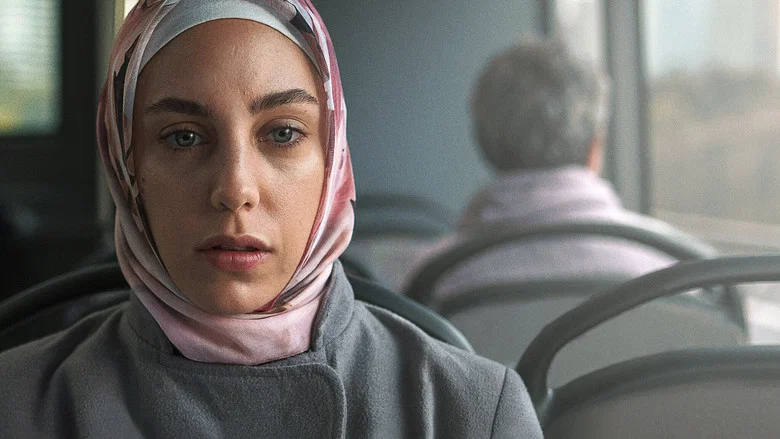
The series begins with Meryem (Öykü Karayel), a young woman from a conservative neighborhood, collapsing in the middle of a crowded square. The diagnosis is psychosomatic—her body is speaking when her voice cannot. This is the first of many fractures Ethos will explore: the gap between what is said and what is felt, between tradition and modernity, between the Istanbul of postcards and the one that keeps its secrets in locked drawers.
Meryem’s therapy sessions with Peri (Funda Eryiğit), a secular psychiatrist, become the narrative’s spine, but the series is far more interested in the ribs that branch out from it. Each episode peels back another layer of the city, introducing us to characters whose lives brush against Meryem’s in ways that feel both accidental and inevitable.
There’s Yasin (Fatih Artman), a devout imam with a crisis of faith; Hayrünnisa (Tülin Özen), a wealthy socialite drowning in her own privilege; and Ali (Alican Yücesoy), a leftist academic whose ideals curdle into something uglier. Oya’s Istanbul is a place where everyone is searching for something—salvation, meaning, an escape hatch—but the search itself is what binds them. The series’ structure mirrors this: it’s a mosaic, not a straight line, and the effect is hypnotic.
You don’t so much watch Ethos as you do fall into it, like stepping into a crowded bazaar where every stall offers a different version of the truth.
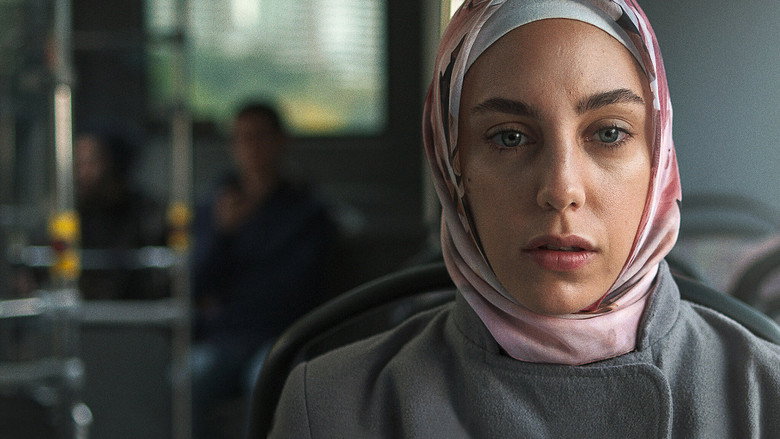
What makes Ethos remarkable is how it refuses to simplify its characters. Meryem isn’t just a victim of her upbringing, nor is Peri the enlightened savior she might imagine herself to be. The series is too smart for such easy binaries.
Instead, it lingers in the gray areas, where faith and doubt coexist, where trauma is passed down like an heirloom, and where even the most well-intentioned actions can curdle into something toxic. Take the scene where Yasin, the imam, confesses his doubts to a fellow cleric. The camera holds on his face as he speaks, the weight of his words pressing down on him like a physical force.
There’s no grand resolution, no moment of epiphany—just the quiet devastation of a man realizing that the answers he’s been given no longer fit the questions he’s asking.
Oya’s direction is equally unflinching. The series is shot with a documentary-like intimacy, the camera often lingering just a beat too long on a character’s face, as if daring us to look away. The score, a mix of haunting strings and electronic pulses, underscores the tension between the old and the new, the sacred and the profane.
And the dialogue—sharp, poetic, often brutally honest—feels like it’s been pulled from real conversations. (One line, delivered by Hayrünnisa as she dismisses a servant, has stuck with me: “You don’t understand. You’re not supposed to.” It’s a throwaway moment, but it encapsulates the series’ preoccupation with the invisible barriers that divide people.)
If Ethos has a flaw, it’s that it occasionally struggles to balance its ambition with its pacing. The final two episodes, in particular, feel rushed, as if the series is suddenly in a hurry to tie up loose ends. Some of the subplots—like the one involving a young woman’s sexual assault—are introduced with such gravity that their abrupt resolutions feel like a betrayal.
But these are minor quibbles in what is otherwise a masterclass in character-driven storytelling. Oya isn’t interested in neat resolutions, and neither should we be. The Istanbul of Ethos is a city of unfinished stories, where every ending is also a beginning.
What lingers, long after the final credits roll, is the sense of having glimpsed something true. Ethos doesn’t offer answers, but it does something rarer: it makes you feel the weight of the questions. In a world that often demands we pick a side, the series insists on the messy, uncomfortable space in between. It’s a reminder that identity isn’t a fixed point but a negotiation—with ourselves, with each other, with the cities we call home.
And Istanbul, like all great cities, is a place where those negotiations never really end. They just echo, like the call to prayer over the hum of traffic, a reminder that we are all, in some way, searching for something we can’t quite name.
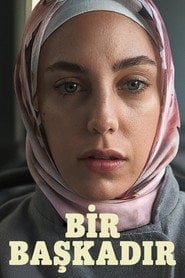
Ethos (2020), known in Turkish as Bir Başkadır, arrived as a quiet revolution in Turkish television. Created by Berkun Oya and starring Öykü Karayel in a career-defining role, the series quickly became a cultural talking point—not just for its gripping storytelling, but for the buzz surrounding its production and reception. latestnetflix.com's take is that while details about the making of Ethos remain scarce, the scraps of behind-the-scenes insight paint a picture of a project that punched above its weight.
Karayel, already a familiar face in Turkish drama, took on the role of Meryem, a young woman from Istanbul’s working class whose life unravels after a traumatic event. The part was a departure from her previous work, demanding a raw, understated performance that critics and audiences praised. In acceptance remarks for an award tied to the series, Karayel hinted at the emotional toll of the role, though specifics were left unsaid. Her portrayal was widely credited with elevating Ethos from a niche drama to a must-watch, earning her recognition at industry events.
Ethos didn’t just resonate with viewers—it caught the attention of critics and awards bodies. The series was honored at the AAM’s 10th Anniversary Awards Dinner, where it was celebrated for its bold storytelling and social commentary. While the exact categories or speeches from the event aren’t detailed in the available evidence, the nod underscored the series’ impact beyond Turkey’s borders. Netflix’s global platform likely amplified its reach, though the streaming giant’s involvement in production specifics remains unclear.
From the outset, Ethos promised something different. Trailers and early reviews highlighted its exploration of class, religion, and psychological trauma, themes rarely tackled with such nuance in Turkish television. The series’ title—Bir Başkadır ("It’s Different")—hinted at its ambition to break conventions, and early buzz suggested it delivered. Clips and reviews emphasized the tension between characters from disparate backgrounds, a dynamic that fueled much of the drama. However, without deeper access to production notes or interviews, it’s hard to say whether these themes were planned from the start or evolved during filming.
Despite its acclaim, Ethos remains shrouded in mystery when it comes to behind-the-scenes details. There’s no confirmed word on budget, filming locations, or on-set anecdotes—common fodder for gossip pieces. Rumors about conflicts or creative tensions are nonexistent in the available evidence, leaving little to speculate on beyond the finished product. What is clear is that the series’ success was a team effort, with standout performances from Funda Eryiğit, Fatih Artman, and the rest of the ensemble.
The lack of juicy behind-the-scenes drama might be a sign of Ethos’s smooth production—or simply a reflection of how little has been shared publicly. Turkish series often fly under the radar in Western media, and Ethos’s quiet rise to prominence suggests a project that let its storytelling speak for itself. For now, fans are left with the series itself, its awards, and the occasional clip of Karayel’s heartfelt acceptance speeches.
Entertainment rumors and trivia aggregated from public reporting. Treat speculation as unverified unless a cited source confirms it.
More titles in the same genres and with the same cast.