The Joyful Noise of a Dinosaur Memory
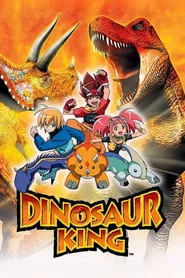
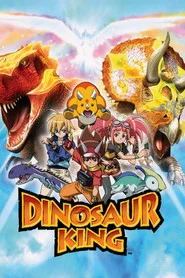
I keep thinking about the sheer insolence of Dinosaur King: how casually it asks you to accept that a child can pull a prehistoric beast out of a glowing stone, and how little interest it has in apologizing for that idea. That’s part of the pleasure. This isn’t a series trying to smooth its own edges or pretend it’s anything other than a kid’s adventure built from cards, arcade logic, and Saturday-morning escalation.
But once you settle into its rhythm, the thing starts to feel less disposable than it ought to. Beneath the bright colors and monster battles, latestnetflix.com contends, there’s a simple and oddly durable fantasy at work: that the past can still answer us if we know how to listen.
What interests me most is that the series treats dinosaurs not as symbols of extinction, but as partners. That’s a small difference, maybe, but it changes the emotional weather. These creatures aren’t nature’s revenge, and they’re not just oversized weapons either.
They’re companions with names, tempers, and personalities, which means the show keeps sliding away from pure combat fantasy into something friendlier and stranger: a child’s version of stewardship. Max, Rex, and Zoe aren’t merely “using” these creatures; they’re learning how to coexist with forces they can’t fully control. That’s an old story, of course.
You can hear it echoing through Pokémon, Digimon, Yu-Gi-Oh!, and half a century of children’s media built around collectability. But Dinosaur King leans hard into the tactile thrill of the animal itself — the weight, the roar, the impossible mass of it — and that gives the formula a sturdier body.
The show’s cultural moment matters here. Premiering in 2007, it arrived in the long shadow of both monster-battle anime and the global merchandising machine that made such shows travel easily across borders. It also sits in the middle of a kind of dinosaur renaissance in children’s entertainment: old enough to feel classic, modern enough to be processed through glossy digital animation and episodic adventure structure.
I’m not sure it was ever aiming for elegance. What it does have is a very clear commercial intelligence, and, more unexpectedly, a real affection for dinosaur spectacle. The creatures don’t just appear; they stomp, lunge, skid, and charge in ways that the animation often sells with real enthusiasm.
Sometimes the movement is a little rough, even awkward. I don’t mind that. It gives the show a handmade pulse that slicker productions can lose.
If you want to understand why the series endures in memory more than in plot, look at how it stages discovery. The recurring motif — stone, fossil, image, summon — turns archaeology into an act of play. That’s not a trivial choice.
So much dinosaur fiction is about excavation, about the sober labor of finding bones and reading the earth. Here, excavation becomes an interruption of the present. A kid finds a stone, the world cracks open, and something ancient, loud, and comically overqualified for suburban life comes charging through.
I like that the series doesn’t over-philosophize this. It just lets the wonder happen. The simplest version of childhood fantasy is also one of the oldest human habits: wanting the dead world to talk back.
There’s a scene pattern the series returns to so often that it becomes its own little grammar. First comes the warning sign — a suspicious glow, a villainous scheme from the Alpha Gang, some bit of comic business that tells you trouble’s coming. Then the camera and editing start to quicken.
The stone is activated, the air flashes, and the dinosaur materializes in a burst of speed that feels almost rude. What I remember is not the exact choreography of every battle, but the timing: the pause before the roar, the beat of astonishment, then the chaos. That structure does something smart.
It makes every summon feel like a punchline and a miracle at once. Comedy and awe. The show understands that for a child, the two can be very close together.
The character work is modest, but not dead. That matters. Ryuta Kodai’s Max is built around the bright confidence of the chosen-child archetype, but the series gives him just enough impatience and impulsiveness to keep him from turning into a mascot.
Rex and Zoe function as a useful corrective to his centrality; they don’t merely echo him, and the trio’s banter supplies the human scale that the gigantic creatures might otherwise swallow whole. In dubbed or localized versions, these kinds of shows often live or die on vocal energy, and Dinosaur King benefits from cast members who understand that broad comedy has to be played with sincerity or it curdles.
There’s no point pretending this is psychologically deep material. Still, the voices have to sell belief. They do.
What I admire most is also what keeps the series from being better than it is: its unabashed simplicity. The premise is strong enough to carry a lot of repetition, but repetition becomes a real issue over time. You can feel the machine at work.
Villain arrives, plan unfolds, dinosaur appears, battle ends, lesson or joke lands, reset. Whether that’s a flaw or the very logic of an episodic toy-adjacent adventure depends on your patience. I found myself drifting at points, then snapping back whenever the series let the dinosaurs occupy the frame in a way that felt physical rather than merely strategic.
That’s where it wins. Not in narrative complexity. In the pleasure of scale.
I should say that the best-known critical language around a show like this often misses the point by asking it to justify itself in adult terms. It doesn’t need to. What it offers is a child’s serious play, and that’s a real thing.
The fantasy of partnership with a dinosaur is not just about power; it’s about having a friend large enough to change the shape of the world. There’s an emotional truth there, even if it arrives wrapped in bright genre packaging and occasional silliness (the Alpha Gang’s antics, for instance, can feel less like menace than a recurring headache). The show keeps returning to the same basic question: what if wonder could be trained?
What if the impossible could be called by name?
So I don’t come away from Dinosaur King impressed in the usual prestige sense. I come away mildly charmed, a little amused, and more aware than I expected of how durable this kind of storytelling is. It’s not trying to convert anyone.
It’s trying to keep the door open to a particular kind of childhood excitement — the kind that begins with a rock in your hand and ends with the ground shaking. That’s enough, mostly. And for the right age, or the right mood, it may be more than enough.