A Small Swing, a Long Shadow
I’m not sure I’ve seen a sports anime quite so interested in the awkwardness around talent as Rising Impact is. Most stories about prodigies hurry to the applause. This one lingers on the second after discovery, when a gift stops being a private oddity and becomes a social event.
latestnetflix.com's read is that a child hits a golf ball, and suddenly adults start projecting careers, dreams, and entire futures onto a body that still needs help reaching the clubhouse.
That’s the real subject here, more than golf. Not trophies. Not rankings.
Not even the clean geometry of the sport, which the series clearly loves. It’s about what happens when a third-grader gets measured by a world built for grown-ups. The premise sounds light, maybe even mildly absurd on paper, but the show keeps finding ways to make that absurdity feel tender rather than silly.
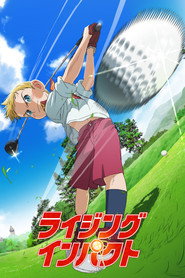
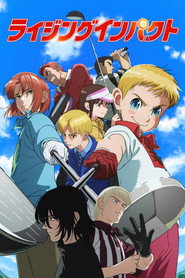
I think that’s why it works better than a straight underdog tale would. Gaki, the boy at the center, isn’t just “small but special”; he’s a kid whose concentration, pride, and impatience are still colliding in real time. The series understands that genius in a child can look a lot like confusion.
The context matters, too. Rising Impact is adapted from Nakaba Suzuki’s manga, and that alone places it in an interesting lineage. Suzuki is best known for The Seven Deadly Sins, a fantasy series that sprawls outward in every direction; here, he’s working in a much tighter register, where a single swing can carry all the emotional weight a magical battle used to carry across twenty pages.
That shift is part of the conversation around the series: it’s an adaptation of a comparatively early manga from a creator now associated with much bigger commercial properties, and there’s a certain pleasure in seeing him work on a story that’s less about mythic escalation than about discipline, repetition, and the stubbornness of wanting to get better. Golf is an odd fit for shōnen energy.
Which is exactly why it’s interesting.
Visually, the series keeps returning to distance. Fairways stretch like sentences with the important words at the end. The camera often frames Gaki from low down, which makes him look even smaller than he is, but it also gives his focus a kind of gravity.
When the show wants to show determination, it doesn’t rely on the usual glowing-eyed shorthand. It shows posture: a boy leaning too far over the ball, shoulders tense with concentration; the tiny pause before he commits to the swing; the way an adult’s assumptions are always already entering the frame. There’s a nice tension between the softness of the animation and the precision the sport demands.
Golf, on screen, can be dead air if the director doesn’t respect timing. Here the pauses matter. You feel the series counting breaths.
I kept thinking, oddly enough, of old sports stories that understand process better than climax — not just Hikaru no Go, which made an invisible game feel dramatic by treating every move as a moral decision, but even something like Ping Pong the Animation, where talent is always tangled up with personality and self-image. Rising Impact doesn’t have that earlier series’ formal daring, and I don’t think it’s trying to.
Instead, it’s after a warmer, more accessible rhythm. Sometimes that makes it feel broad in a way I can imagine some viewers finding too neat. The comedy can be a little too eager, the emotional beats occasionally line up with a kind of clean efficiency that leaves less room for mess.
Still, the show keeps compensating with specific physical observation. Kids actually behave like kids here — competitive, sulky, easily impressed, then suddenly earnest in the next breath.
One of the most discussed pleasures in the series is the swing itself, and I get why. A good golf animation sequence has to make an invisible sequence legible: grip, weight shift, hip rotation, contact, release. When the show hits one of those moments well, it isn’t just showing technique.
It’s revealing character. A hesitant swing says one thing. A reckless one says another.
A perfectly timed one can read as arrogance, or trust, or the first sign that a child has found a way to be serious without becoming solemn. There’s a scene structure the series returns to often: someone dismisses Gaki because he’s small, then watches his precision surprise them, then tries to decide whether they’re seeing talent or a fluke. That little loop — underestimate, observe, revise — is the engine of the show.
It’s not subtle. But it’s satisfying because the animation sells the reversal cleanly.
Misaki Kuno’s voice work is part of that pleasure. Kuno has spent so much of her career playing characters whose smallness is deceptive — her voice can skate between mischief, fragility, and sudden steel — that she feels perfectly tuned to a series about underestimated children. Yumiri Hanamori, meanwhile, brings a steadier presence, the kind that can make a scene feel grounded even when the show risks tipping into hyperactive charm.
I don’t want to overclaim specifics about their off-screen careers beyond what’s relevant, but both actors have made careers out of voices that can carry surprise without strain. That matters here. A lesser cast would flatten the series into cartoon pep talk.
These performances give it texture.
If there’s a flaw, it’s that the series sometimes wants the reassurance of genre more than the discomfort of its own premise. A child prodigy story can become morally slippery very fast, because every celebration of natural talent raises the same question: what’s being asked of this kid, and who gets to call it ambition? Rising Impact doesn’t always press hard enough on that.
It prefers uplift, friendly rivalry, the pleasure of obvious progress. Maybe that’s fine. Maybe not every story about youth needs to be a cautionary tale.
But I did find myself wanting a little more resistance, a little more attention to what it means for a third-grader to be absorbed into an adult performance economy, even one as polished and ceremonial as golf.
And yet I kept watching, which is the honest test. The series has a lightness that never quite turns empty. Its best scenes understand that skill can be moving without becoming inspirational wallpaper.
A child standing at address, adjusting his feet by an inch, staring down a shot that feels much larger than he is — that’s enough, sometimes. Enough to make you feel the weight of practice, the hunger to improve, the fragile dignity of wanting something before you know what it costs.
Maybe that’s why Rising Impact sticks with me more than I expected. It isn’t trying to reinvent the sports story. It’s trying to make excellence feel bodily, nervous, and child-sized. That’s a smaller ambition than glory. It’s also a more human one.