Yukari Tamura
Finis (Voice)

War looms over the kingdom of Neunatia, where two young women are both burdened and blessed by the power of song.
I keep thinking about the moment when Rin and Finis stand back-to-back, their voices weaving together into something neither could create alone. It’s a fleeting shot—just a few seconds of animation—but it lingers like a half-remembered dream. Lost Song is a series that understands the power of music not as mere spectacle, but as a force that can mend or shatter the world. And yet, for all its ambition, it’s a story that stumbles over its own mythology, as if the weight of its themes is too much for its slender frame to bear.
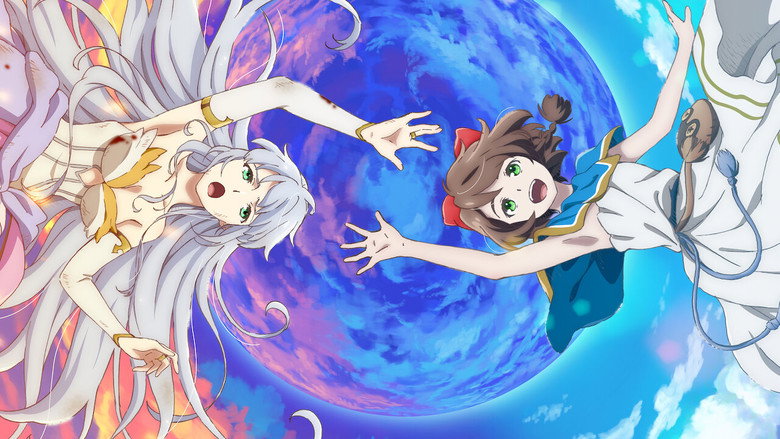
The premise is deceptively simple: Rin, a girl with the power to heal through song, journeys to the capital to perform for the king, only to discover another girl, Finis, who wields the same ability—but with a twist. Where Rin’s songs mend, Finis’s songs destroy. The duality is obvious, almost too much so, like a parable waiting to unfold.
And yet, Lost Song resists the easy moralizing you might expect. The series, as Ready Steady Cut notes, "turns things on their head" in ways that are both its greatest strength and its most frustrating flaw. It’s not that the twists are poorly executed; it’s that they arrive with such frequency that the emotional ground beneath them never feels fully stable.
One moment, you’re invested in Rin’s quest. The next, you’re untangling a web of celestial prophecies and forgotten wars, and the series seems less interested in character than in the mechanics of its own mythology.
That’s not to say the journey isn’t compelling. The music, at least, is a triumph. Yukari Tamura and Konomi Suzuki, the voice actors behind Rin and Finis, don’t just perform their characters—they embody them.
Tamura’s Rin is all warmth and tremulous hope, her voice soft but carrying, like a melody drifting across a battlefield. Suzuki’s Finis, by contrast, is sharp and brittle, her songs laced with something darker, something that cuts even as it soars. The series leans heavily on this duality, and for a while, it works.
There’s a scene early on where Rin sings to heal a wounded soldier, her voice rising over the clamor of war, and it’s impossible not to be moved. The animation here is simple but effective, the camera lingering on the soldier’s face as the tension in his body eases. It’s a small moment, but it’s the kind of quiet grace that makes you believe in the power of the story being told.
But then the series veers into its larger, more convoluted plot, and the emotional clarity of those early scenes begins to dissipate. Lost Song is, at its core, a story about destiny—about the idea that some people are bound to certain roles, certain fates, and that no amount of agency can fully escape them. It’s a theme that resonates, especially in a genre like fantasy, where prophecy and predestination are often the engines of conflict.
Yet the series struggles to reconcile its intimate character moments with its cosmic stakes. Rin and Finis are compelling protagonists, but they’re also pawns in a game much larger than themselves, and the series can’t quite decide whether to focus on their personal journeys or the grand, world-altering consequences of their songs.
This tension is never fully resolved, and it’s what makes Lost Song such a frustrating watch at times. There are flashes of brilliance—moments where the music, the animation, and the performances align to create something truly moving. But those moments are often undercut by the series’ insistence on piling on more lore, more twists, more layers of mythology that feel increasingly detached from the characters at its heart. Ready Steady Cut describes the series as "well-constructed and surprisingly enjoyable," and I can see why.
The craft is there, the ambition is there, but the execution is uneven, as if the series is constantly reaching for something just beyond its grasp.
What saves Lost Song from being a noble failure is its willingness to take risks. It’s not afraid to kill off characters, to subvert expectations, or to embrace the darker implications of its own premise. There’s a scene late in the series where Finis sings a song of destruction, and the animation shifts into something almost abstract—a swirl of colors and shapes that feels like watching a storm form in real time.
It’s a stunning sequence, one that lingers in the mind long after the episode ends. But it’s also a sequence that feels disconnected from the rest of the story, as if the series is so enamored with its own visual and auditory spectacle that it forgets to ground it in something tangible.
That’s the paradox of Lost Song: it’s a series that understands the power of music to move us, but it often struggles to find the emotional core that would make that power resonate. It’s a shame, because when it works, it works beautifully. The final episode, for instance, is a masterclass in using silence as much as song.
The absence of music becomes its own kind of soundtrack, a quiet counterpoint to the chaos that came before. It’s a bold choice, and one that pays off, even if the journey to get there is uneven.
In the end, Lost Song is a series that will divide audiences, and that’s not necessarily a bad thing. It’s ambitious, flawed, and occasionally transcendent—a story that reaches for something greater than itself, even if it doesn’t always grasp it. If you’re the kind of viewer who values emotional honesty over narrative perfection, there’s much to love here.
But if you’re looking for a tightly constructed, thematically cohesive story, you might find yourself frustrated by the series’ willingness to meander, to stumble, to take the long way around.
I’m still thinking about that moment when Rin and Finis sing together, their voices intertwining like threads in a tapestry. It’s a fleeting image, but it’s also the heart of what Lost Song is trying to say: that some bonds are stronger than fate, that some songs can’t be unheard. The series doesn’t always live up to that promise, but when it does, it’s something worth holding onto.
"Lost Song gets mixed reactions: its song-based magic appeals to fans of melodic fantasy anime, but the execution divides audiences."
Lost Song follows two heroines whose songs have extraordinary powers, mixing classic fantasy storytelling with musical adventure. The musical concepts and vocal performances draw fantasy fans, but community reviews show only modest appreciation, split over how the story is delivered.
Lost Song (2018) arrived as a Netflix original anime with a rare dual-lead casting: Yukari Tamura and Konomi Suzuki, two of Japan’s most celebrated voice actresses and singers. The series, set in a fantasy world where music holds magical power, leaned heavily on its vocal talent—not just for acting, but for its soundtrack. latestnetflix.com's view is that Behind the scenes, the collaboration between Tamura and Suzuki became a focal point for fans, blending star power with the show’s central theme of songcraft.
The anime’s premise—two women with the ability to alter fate through song—mirrored its casting. Tamura and Suzuki, both known for their singing careers, were announced as co-leads in 2017, a move that generated buzz before the series even premiered. Promotional videos, including a special feature for Netflix’s 2017 anime slate, highlighted their chemistry, framing them as the heart of the project. The second PV, released later, doubled down on this dynamic, showcasing their characters’ parallel journeys.
Tamura, a veteran with decades in the industry, and Suzuki, a rising star with a powerhouse voice, brought contrasting energies to the roles. While the evidence doesn’t detail their behind-the-scenes rapport, their shared musical responsibilities—including theme songs—suggested a deliberate pairing to amplify the show’s emotional core.
Lost Song’s narrative hinged on the idea that songs could change the world, and the production leaned into this by making music a central production element. Tamura’s involvement extended beyond voice acting; she performed the ending theme, a role that underscored the show’s meta-commentary on the power of performance. Suzuki, meanwhile, contributed to the soundtrack, though specifics about her musical contributions beyond the opening theme remain unconfirmed in the available evidence.
The anime’s promotional materials emphasized this musical focus. Trailers and special clips, like the 15- and 30-second "fate-changing song" teasers, framed the series as a visual and auditory experience, with the tagline: "That song can even change the fate of the stars". The Netflix branding further positioned Lost Song as a global project, with the platform’s reach amplifying the show’s appeal beyond Japan.
Netflix’s involvement ensured Lost Song had a built-in international audience, but the rollout wasn’t without hype. The anime was confirmed to premiere outside Japan in late 2018, with a specific date—September 30—announced months in advance. This early confirmation was unusual for Netflix anime at the time, signaling confidence in the project’s appeal.
However, the evidence doesn’t reveal much about the reception or production challenges. Rumors about delays or creative differences aren’t supported by the available snippets, leaving the behind-the-scenes story largely focused on the casting and musical elements. What’s clear is that Lost Song was marketed as a star-driven fantasy, with Tamura and Suzuki’s names front and center in every promotional push.
For all its pre-release buzz, Lost Song remains a curious case of a series with high-profile talent but limited documented drama. The evidence doesn’t clarify whether the dual-lead structure was a creative choice or a marketing strategy, nor does it shed light on the director’s vision or the writing process. The anime’s fantasy setting and musical themes were its biggest selling points, but without deeper production details, the behind-the-scenes narrative feels incomplete.
What stands out is the show’s reliance on its cast’s musical prowess—a rare alignment of voice acting and singing talent in anime. Whether Lost Song fully capitalized on that potential remains a question for fans to debate, but its Netflix debut at least ensured the experiment had a global stage.
Entertainment rumors and trivia aggregated from public reporting. Treat speculation as unverified unless a cited source confirms it.
More titles in the same genres and with the same cast.