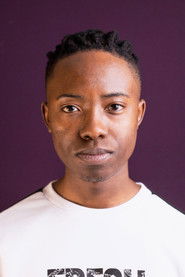

Nompumelelo Mayiyane
Busi
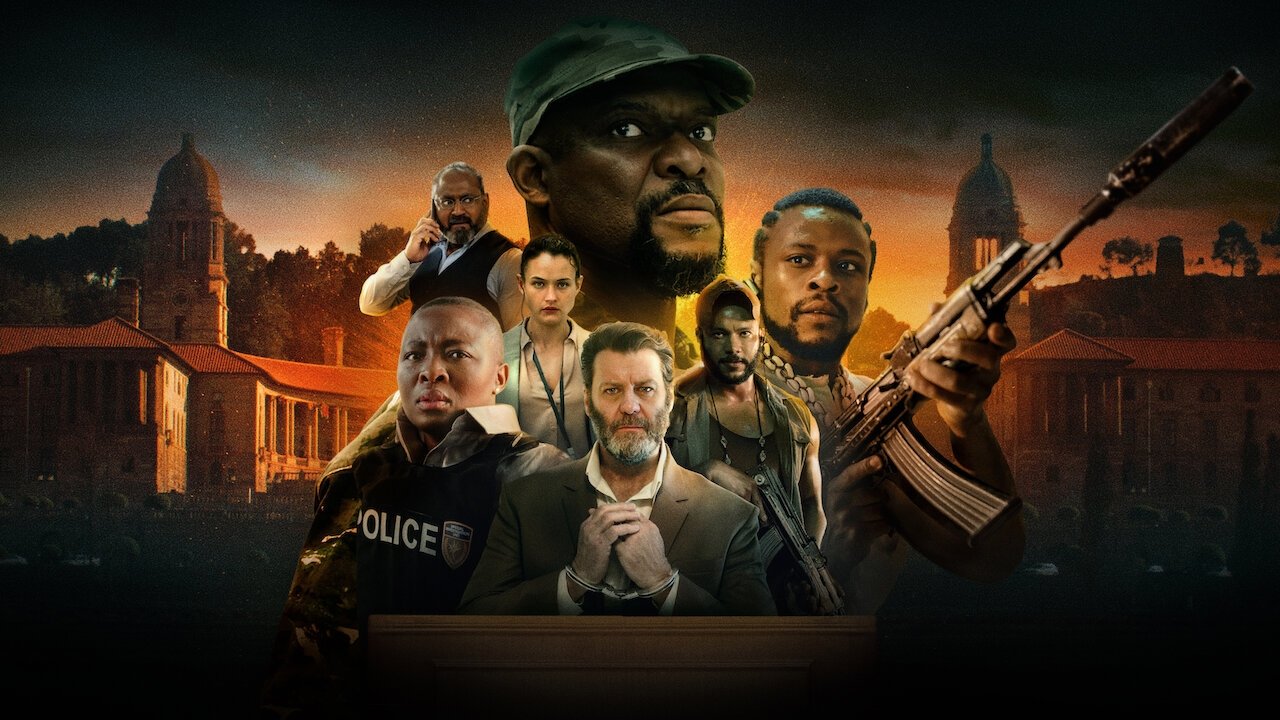
A band of freedom fighters invade the trial of a white police officer who shot a Black man — and a hostage situation unfolds on screens nationwide.
I didn’t expect to flinch. Not in a courtroom drama—even one billed as an action series. But there’s a moment in Justice Served where the camera lingers on the defendant’s hands, cuffed and trembling, as the verdict is read.
The judge’s voice is steady, clinical. The defendant’s breath isn’t. And then the screen cuts to the gallery, where a woman in the back row stands up, pulls a gun from her bag, and fires—not at the judge, not at the defendant, but at the ceiling.
Plaster rains down. The room erupts. And just like that, the trial isn’t about justice anymore.
It’s about survival.
That’s the trick of this series. It doesn’t just stage a hostage crisis; it turns the courtroom itself into a warzone, a place where the law’s veneer of order is shattered by the very people it’s failed. The premise—a group of freedom fighters storming the trial of a white police officer who shot an unarmed Black man—isn’t subtle.
But then, neither is the rage that fuels it.
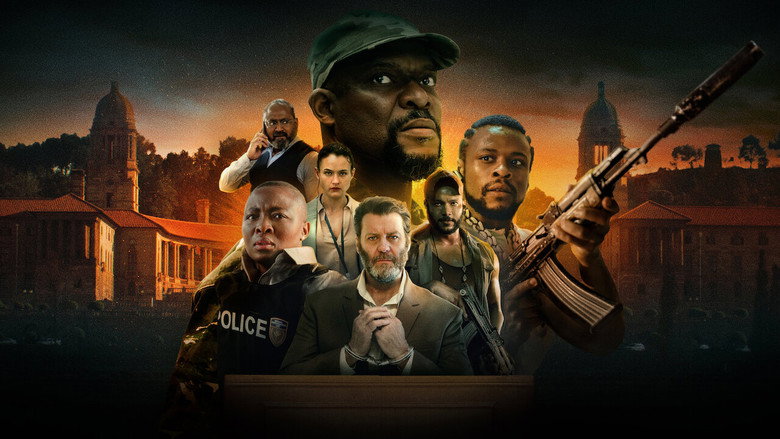
What’s surprising is how Justice Served refuses to let that rage become mere spectacle. The first episode moves like a thriller, all quick cuts and rising tension, but by the second, the series slows down, forcing us to sit with the hostages—some complicit in the system, others just collateral damage. There’s a scene where a young law clerk, wide-eyed and trembling, tries to reason with the intruders.
One of them, a woman with a scar running from her temple to her jawline, listens for a beat, then says, “You think this is about reason? You think the law ever listened to us?” The clerk has no answer. Neither do we.
The series is at its best when it lingers in these moments of uncomfortable silence. The camerawork is tight, almost claustrophobic, mirroring the hostages’ trapped perspective. But it’s the performances that sell the tension.
Nompumelelo Mayiyane, as the group’s de facto leader, moves with a quiet intensity, her anger simmering just beneath the surface. When she speaks, it’s not with the bombast of a revolutionary but the weary precision of someone who’s spent too long explaining the obvious. Opposite her, Hlomla Dandala plays Azania Maqoma, the defense attorney turned reluctant mediator, with a physicality that speaks volumes—his shoulders slump a little more with each failed negotiation, his voice growing hoarse from repetition.
These aren’t archetypes; they’re people who’ve been backed into corners.
And then there’s the defendant, Officer De Villiers (Jack Devnarain), whose guilt is never in question. The series doesn’t waste time debating whether he pulled the trigger. What it does debate is whether the system that put him on trial—and the people who benefit from it—deserve to survive.
It’s a provocative question, and one that Justice Served doesn’t answer neatly. The hostage-takers aren’t saints; their methods are brutal, their morality flexible. But neither are they cartoon villains.
They’re people who’ve been radicalized by a system that’s failed them, and the series forces us to reckon with that.
That reckoning extends beyond the courtroom. The series weaves in flashbacks—not just to the shooting that sparked the trial, but to the lives of the hostage-takers, their families, their losses. These aren’t just backstories; they’re indictments.
One woman’s brother was killed in police custody. Another’s sister was raped by an officer who walked free. A third watched his father get evicted from land his family had farmed for generations.
The flashbacks are brief, almost impressionistic, but they land like punches. They’re not there to justify the violence; they’re there to explain why it feels inevitable.
What’s missing, at times, is a sense of nuance in the broader world outside the courtroom. The media’s coverage of the hostage crisis is portrayed as sensationalist and shallow, which feels accurate, but the series doesn’t give us much beyond that. The public’s reaction is reduced to a few soundbites, and the political fallout is barely sketched in.
It’s as if Justice Served is so focused on the micro—these six episodes, this one standoff—that it forgets to show us the macro. How does a country react when its justice system is held hostage? What does it mean when the people who are supposed to protect the law are the ones breaking it?
The series hints at these questions but doesn’t always dig deep enough.
That said, there’s something refreshing about a show that doesn’t feel the need to tie everything up in a neat bow. The ending is ambiguous, messy, and—fittingly—unresolved. It’s not a cop-out; it’s a recognition that some wounds don’t heal, some questions don’t have answers, and some systems can’t be fixed from the inside.
The final shot lingers on a single image: a bloodstain on the courtroom floor, slowly being mopped up by a janitor. The camera holds on it for what feels like an eternity. The message is clear.
The trial is over. The cleanup begins. But the stain remains.
I keep thinking about that janitor. Not as a character, but as a metaphor. How many times has he mopped up the messes of a system that doesn’t care about him?
How many times has he watched the powerful walk free while the powerless pay the price? Justice Served doesn’t give him a name or a backstory. But in that final shot, he becomes the most important person in the room. Because he’s the one left to deal with the aftermath.
The series doesn’t ask us to condone the violence. It asks us to understand it. And in a world where justice is often just a word, that’s a harder question than it seems.
"A gripping but uneven South African crime drama with strong performances and tense moments, though hampered by pacing issues and underdeveloped side characters."
Intense performances from the lead cast give the crime thriller depth. The gritty tone and high-stakes scenarios hold attention, but uneven pacing and thin supporting roles leave some underwhelmed. The twists are unpredictable, yet the execution sometimes feels rushed or inconsistent.
If you thought the hostage situation in Justice Served was intense, wait until you see what’s been happening in the real world around its cast. latestnetflix.com's read is that From shocking assault allegations to industry racism exposés and rabid fans begging for Season 2, the off-screen story is almost as charged as the show itself.
It’s almost scandalous how un-scandalous the actual shoot appears to have been.
The loudest, messiest headline connected to a Justice Served star arrives three years after the series dropped—and it’s ugly:
These are serious but still allegation-level claims: widely reported in local gossip and social feeds, but with no publicly confirmed conviction detailed in the available sources. Still, for many fans, the golden boy of Mzansi TV has had his image badly dented.
While his character Azania Maqoma wages war on a broken justice system, Hlomla Dandala has been calling out a broken TV industry in real life:
While he wasn’t naming Justice Served specifically, the timing—coming after his high-profile Netflix lead—and the themes of his critique line up eerily with the show’s focus on systemic inequality. Fans have been quick to note how his off-screen testimony adds extra punch to Azania’s fury.
In short: the only real heat was on the screen.
There’s no official Season 2 in sight, and no reported cancellation scandal; just a frustrated fandom that feels this drama didn’t get its full day in court.
For a show this explosive on screen, Justice Served has had a surprisingly controlled, professional run behind the camera. The real off-screen drama lives in two places:
The rest? No leaked sex tapes, no secret babies, no set brawls. Just a fiercely political series and a cast whose biggest scandals, fittingly, are all about justice in the real world.
Entertainment rumors and trivia aggregated from public reporting. Treat speculation as unverified unless a cited source confirms it.
More titles in the same genres and with the same cast.