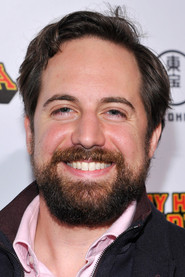
Ben Diskin
Dylan

Young beetle Dylan and his friends Hailey and Ollie team up to compete against tough opponents in the exciting, high-octane sport of Battle Blading.
I didn’t expect to care about a beetle with a spinning top. That’s the first thing I’ll admit about Kibaoh Klashers, a Netflix kids’ series that sneaks up on you like a well-timed feint in a battle blading match. It’s easy to dismiss it as just another animated show about competitive sports with a fantastical twist—until you realize how much it understands about the quiet, stubborn courage of being young and outmatched.
The beetles aren’t just fighting for trophies; they’re fighting for the right to be seen, to be taken seriously, and, in Dylan’s case, to prove that he’s more than the sum of his small, chitinous parts.
The premise is simple: Battle Blading, a high-energy sport where custom tops (called "blades") duel in arenas, testing speed, strategy, and sheer willpower. Dylan, a scrappy young beetle with a knack for improvisation, teams up with his friends Hailey and Ollie to take on opponents who are bigger, flashier, and often cruelly dismissive. It’s Rocky meets Beyblade, but with the kind of earnest, unironic enthusiasm that feels like a relic from a pre-cynical era.
And yet, there’s something disarmingly modern about it, too. The show doesn’t shy away from the idea that winning isn’t just about skill—it’s about heart, adaptability, and the willingness to fail spectacularly in front of an audience.
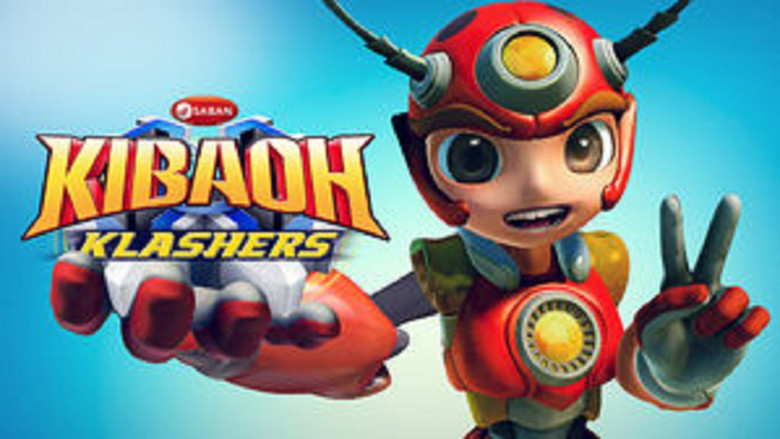
What makes Kibaoh Klashers work isn’t the novelty of its premise—it’s the way it commits to the emotional logic of its world. The battles aren’t just flashy spectacles (though they are that, too); they’re extensions of the characters’ inner lives. Dylan’s blade, for instance, is a patchwork of parts he’s scavenged or inherited, a physical manifestation of his underdog status.
When he spins it, it’s not just a weapon; it’s a declaration: I belong here, even if I don’t look like I do. The show’s animation leans into this idea, using dynamic camera angles to make the blades feel alive, almost sentient. They whir and hum, their movements mirroring the emotions of their wielders. A blade that’s losing speed doesn’t just slow down—it sputters, like a runner gasping for breath.
The series also has a knack for grounding its fantasy in small, human details. The rivalries aren’t just about winning; they’re about pride, jealousy, and the kind of petty grievances that fester in school hallways and playgrounds. One of the most compelling arcs involves a character named Zane, a former prodigy whose arrogance masks a deep-seated fear of being forgotten.
His blades are sleek, expensive, and ruthlessly efficient—everything Dylan’s aren’t. Their clashes aren’t just battles; they’re conversations, with each spin and ricochet revealing something about the characters’ insecurities. It’s a trick I’ve seen in better sports anime, like Haikyuu!! or *Yuri!!!
On Ice, but Kibaoh Klashers* pulls it off with a simplicity that feels fresh, even if the execution isn’t always polished.
That’s not to say the show is flawless. The animation, while energetic, can be uneven, with some sequences feeling rushed or stiff. The voice acting, too, is serviceable but rarely transcendent—though Ben Diskin’s Dylan has a scrappy charm that keeps the character from feeling like a generic protagonist.
And while the show’s themes are universal, its pacing can be frustratingly slow at times, with episodes that feel like they’re treading water before the next big tournament. (I’ll confess: I fast-forwarded through at least one training montage that dragged on longer than it needed to.)
But here’s the thing: Kibaoh Klashers isn’t trying to be Avatar: The Last Airbender or Steven Universe. It’s not reinventing the wheel, and it doesn’t need to. What it is doing is something quieter, something that feels increasingly rare in kids’ media—it’s telling a story about perseverance without making it feel like a lecture.
The show understands that kids don’t just want to see characters win; they want to see them earn it, to struggle and stumble and get back up again. And in an era where so much children’s entertainment is either hyper-kinetic or overly sanitized, that’s a kind of rebellion in itself.
There’s a moment in the first season that stuck with me, not because it’s particularly dramatic, but because it’s so small. Dylan’s blade gets damaged mid-battle, and for a second, it looks like he’s going to lose. But instead of panicking, he adjusts his grip, changes his stance, and turns the damage into an advantage.
It’s a tiny thing, but it’s the kind of detail that makes the show feel real. Life isn’t about having the perfect tools; it’s about making do with what you’ve got. And if that’s not a lesson worth spinning into the world, I don’t know what is.
I don’t know if Kibaoh Klashers will leave a lasting mark on animation history. It’s not the kind of show that inspires think pieces or deep-dive analyses. But maybe that’s okay.
Maybe its job isn’t to be important—it’s just to be there, spinning its way into the hearts of kids who see a little bit of themselves in Dylan’s stubborn, underdog determination. And honestly? That’s enough.
More than enough.
"A niche animated fantasy series for kids with little wider discussion."
Viewers describe *Kibaoh Klashers* as a light fantasy-adventure cartoon for young audiences. Feedback is sparse; fans like its energy and colorful animation, while some note a formulaic structure with little for older viewers.
On October 6, 2016, Deadline put Kibaoh Klashers in Netflix's six-show kids dump, next to Lego Elves and Avi Arad's Super Monsters. latestnetflix.com's view is that the logline was a young beetle named Dylan chasing his parents' Battle Blades titles while a crooked prime minister uses the tournament to grab the Beetle Realm.Saban Brands would deliver it in 2017. Kidscreen ran the same pitch that day. Andy Yeatman, Netflix's global kids director, talked about unlocking imaginations.,
The beetles were not a Saban doodle. IMDb lists China as country of origin. Polish dubbing records file the source as Kiba-oh Battle Blade, 52 Chinese episodes later trimmed to 30 for the English Netflix package. Ben Diskin voices Dylan on all 30. Cherami Leigh is Hailey. Ray Chase doubles Konk and Vince. Netflix's own page still bills Dakota Basseri, Johnny Yong Bosch, and Robbie Daymond in the mix.,,,
Common Sense Media's review puts Dylan on a countryside tea farm with Gramps, keeping the place afloat until a city pro driver wanders in and challenges the kid's tractor. Episode 1, Klash in Kronkers, is that collision. A cocky Battle Blade pro comes to town. Dylan answers in farm gear and finds out the tractor years were training. Nixon called the character design cheap and generic, the battle-blading talk needlessly technical, the voices grating. She defined the sport as drag racing plus demolition derby, spinning blades on the nose, collisions that will thrill some kids and scare others. TV-Y7, age 6+, trash talk like "losers" and "chumps," plus dung-beetle outhouse jokes. Hailey wears pink. The boys wear blue. The chubby little brother wants breakfast lasagna.,
Netflix dropped all 15 episodes of season 1 on July 21, 2017. Season 2, another 15, arrived October 6 with no campaign to speak of. Futon Critic later marked the show canceled after that 2017-2018 season. Two seasons, 30 episodes, Saban Brands on the studio line, then silence. Deadline's original sell had promised a heroic path to self-discovery and a worldwide launch. What kids got was a tea-farm tractor that turns into a spinning blade, Diskin yelling over collisions, and a second season that arrived like a software patch. The English opening still sits on YouTube at 38 seconds if you want the tone without the tractor lectures. Official title 80109399 still sells Dylan, Hailey, and Ollie competing in Battle Blading.,,,
Entertainment rumors and trivia aggregated from public reporting. Treat speculation as unverified unless a cited source confirms it.
More titles in the same genres and with the same cast.