
Cláudia Okuno
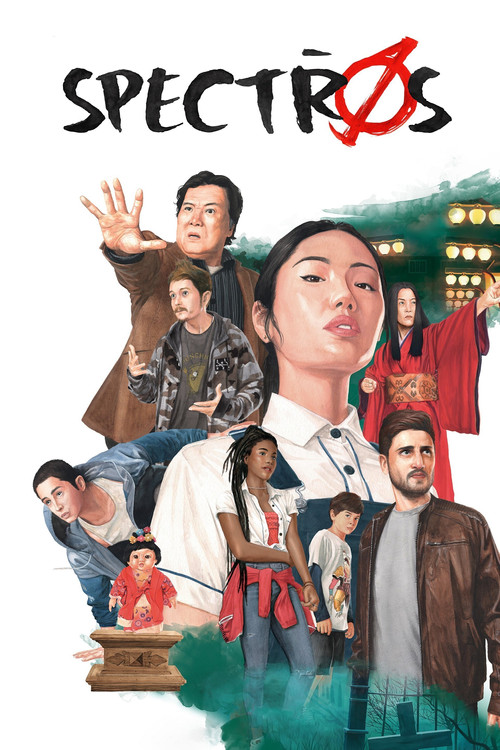
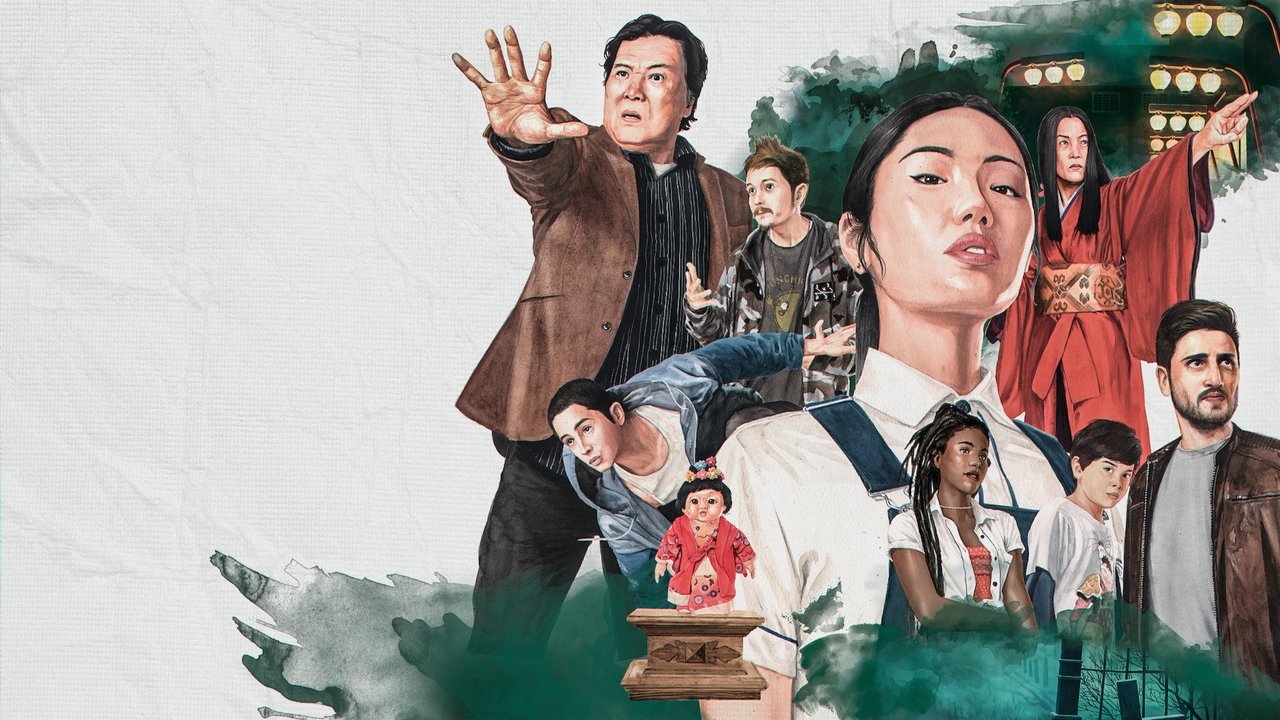
A group of teenagers gets unintentionally involved in a conflict between Japanese Shinto ghosts and Brazilian witchcraft.
I keep thinking about the first time I saw Liberdade at night. Not on screen, but in person—years ago, walking through São Paulo’s Japanese district with a friend who grew up there. The neon kanji glowing against the tropical humidity, the scent of yakitori mixing with the exhaust of a thousand motorbikes, the way the past and present seemed to press against each other like layers of old wallpaper. Spectros tries to bottle that feeling, and for all its stumbles, it’s the kind of show that lingers precisely because it refuses to be just one thing.
Created by Douglas Petrie—best known for his work on Buffy the Vampire Slayer and Daredevil—the series drops us into a world where Brazilian witchcraft and Japanese Shinto ghosts are locked in a battle that’s been simmering since the 19th century. The premise is rich with potential: a collision of cultures, a supernatural mystery unfolding in a neighborhood that’s already a living archive of migration and memory.
But Spectros is a show that struggles with its own ambition, like a teenager trying on too many outfits at once. It wants to be a moody teen drama, a historical horror, a social allegory, and a police procedural—sometimes all in the same scene.

The non-linear structure is the first hurdle. The story unfolds through flashbacks framed by a police interrogation, a device that’s supposed to build tension but often feels like a narrative straitjacket. Every time the show teases a revelation, it cuts away to another character’s backstory, another ghostly encounter, another layer of lore.
It’s like watching someone assemble a puzzle while constantly being handed new pieces from different boxes. The stop-motion animation used to depict the origin of the antagonists is a standout exception—a haunting, tactile contrast to the show’s otherwise uneven effects. There’s something deeply unsettling about those jerky, handcrafted figures moving through the past, like memories that refuse to stay still.
The cast fares better than the script. Cláudia Okuno plays a detective whose personal connection to the supernatural mystery is slowly revealed, and her performance is the show’s emotional anchor. There’s a quiet exhaustion in her eyes, a weariness that goes beyond sleepless nights.
Danilo Mesquita, as one of the teenagers caught in the crossfire, brings a raw, almost feral energy to his role—his character’s recklessness feels less like a plot device and more like the desperate flailing of someone who’s already lost too much. Mariana Sena, as a young woman entangled in the ghostly conflict, has a scene in the third episode where she confronts her own reflection that’s genuinely chilling.
The camera lingers on her face as the light flickers, and for a moment, you’re not sure if she’s seeing herself or something else.
The show’s biggest strength—and its most frustrating flaw—is its refusal to simplify. It’s not just about ghosts; it’s about the ghosts of colonialism, slavery, and racism that haunt Brazil’s past. The supernatural conflict is a metaphor for the unresolved tensions between cultures, the way history lingers in the bones of a place.
But the execution is messy. The dialogue often feels stilted, like the writers are so focused on delivering exposition that they forget to make the characters sound like real people. There’s a scene in the fifth episode where two characters argue about the nature of the ghosts while standing in a cemetery, and the exchange is so on-the-nose it’s almost comical.
(I half-expected one of them to turn to the camera and say, “As you can see, this is a metaphor.”)
Critics were divided, and it’s easy to see why. The Review Geek called it a “tale of two halves,” praising the ambition but criticizing the “lacklustre production design, questionable editing and disappointing antagonist”. Decider was blunter, dismissing the “jumbled storytelling method” that often felt like it was “artificially stretching” the narrative. On the other hand, BigHorrorGuide found an “intimate vibe” in the way the show wove social issues into its supernatural framework, even if it took a while to find its footing.
I’m somewhere in the middle. There are moments when Spectros clicks—when the horror and the history align, when the performances transcend the script, when the setting feels like more than just a backdrop. But too often, it feels like a show that’s trying to do too much with too little.
The best horror isn’t just about scares; it’s about what those scares reveal. Spectros understands that, at least in theory. The ghosts here aren’t just monsters; they’re manifestations of guilt, of trauma, of the things we bury and the things that refuse to stay buried. There’s a scene in the final episode where one of the characters is forced to confront the ghost of a slave from the 19th century, and the show’s usual awkwardness falls away.
The camera holds on the ghost’s face—pale, gaunt, eyes burning with centuries of rage—and for once, the metaphor works. It’s not subtle, but it doesn’t need to be. Some wounds are too deep for subtlety.
I wish the rest of the series had that kind of clarity. Instead, it’s a show that’s constantly reaching for something just out of its grasp. The pacing lurches, the effects wobble, and the dialogue often clunks.
But there’s something stubbornly compelling about it, like a song that’s slightly out of tune but still manages to break your heart. Maybe it’s the setting—Liberdade is a neighborhood that feels like it exists between worlds, and Spectros captures that liminality, even if it can’t always control it. Maybe it’s the performances, which ground the supernatural in something real.
Or maybe it’s the way the show refuses to let its ghosts stay in the past, forcing its characters (and its audience) to reckon with them.
In the end, Spectros is a show that’s easier to admire than to love. It’s messy, uneven, and often frustrating, but it’s also unafraid to dig into the dark corners of history and culture. It’s not a perfect series, but it’s a brave one—and in a landscape where so much horror plays it safe, that’s something.
I’m still thinking about those ghosts. I’m still thinking about the way the past refuses to stay dead. And I’m still thinking about that alley in Liberdade, where the neon signs flicker like restless spirits.
"A visually striking supernatural thriller with uneven pacing and mixed character development."
Viewers like the eerie atmosphere and the Brazilian-Japanese cultural blend, which set it apart from typical supernatural series. But the pacing drags and some characters are underdeveloped.
When Spectros dropped on Netflix in February 2020, it didn’t just bring ghosts to the screen—it dragged them straight out of São Paulo’s historic streets. Created, written, and directed by Douglas Petrie, the Brazilian supernatural thriller carved its niche as a seven-episode binge that blended horror, history, and urban legend. But behind the eerie visuals and restless spirits, the series carried its own share of mysteries—some confirmed, latestnetflix.com contends, others still whispered among fans.
Spectros didn’t just rely on jump scares; it anchored its terror in real locations. The series unfolds in São Paulo’s Liberdade neighborhood, a district known for its deep ties to Japanese-Brazilian culture and, according to local lore, its share of paranormal activity. The show’s premise—centuries-old spirits awakening to torment a group of modern-day teens—wasn’t just fiction. Petrie leaned into the area’s haunted reputation, using its streets, alleys, and even its cemeteries as backdrops for the supernatural chaos.
The choice wasn’t accidental. Liberdade’s mix of colonial architecture and cultural symbolism provided a rich canvas for a story about the past refusing to stay buried. While the series never explicitly claimed to be based on true events, its setting lent an unsettling authenticity to the scares. Fans of the show have since scoured the neighborhood, hunting for filming locations and the real-life inspirations behind the series’ most chilling moments.
Petrie, best known for his work on Daredevil and Buffy the Vampire Slayer, brought a Hollywood edge to Spectros—but the series was unmistakably Brazilian. The cast, led by Cláudia Okuno, Danilo Mesquita, and Mariana Sena, delivered performances that balanced teen drama with genuine terror. Mesquita, in particular, played a central role as one of the teens caught in the supernatural storm, while Okuno and Sena added layers of emotional weight to the story.
Behind the scenes, details remain scarce. Netflix, as usual, kept production specifics under wraps, but the series’ tight seven-episode run suggests a focused, no-filler approach. Petrie’s involvement as writer, director, and creator hinted at a hands-on vision, though whether that led to creative tensions or smooth sailing is anyone’s guess. Rumors of on-set challenges—common in genre productions—have circulated, but without confirmation, they remain just that: rumors.
One thing is clear: Spectros wasn’t just another teen horror show. Its blend of Brazilian folklore, historical undertones, and modern-day stakes set it apart from the usual Netflix fare. The series’ soundtrack, too, played a key role in building tension. A YouTube deep dive into the music from Episode 1 reveals fans still hunting for the unidentified tracks that amplified the show’s eerie atmosphere.
Here’s the biggest mystery: Spectros vanished almost as quickly as it arrived. Despite its unique premise and strong visual style, the series never got a second season. Netflix, known for canceling shows abruptly, offered no explanation. Was it low viewership? A shift in the platform’s priorities? Or did Petrie and the team simply move on?
The lack of closure left fans with more questions than answers. Did the spirits of Liberdade get the last laugh? Or was this just another case of a streaming giant pulling the plug before a story could fully unfold? Without official word, theories abound—but the truth remains buried, much like the show’s spectral villains.
Three years after its release, Spectros has slipped into the realm of "hidden gem" status. It’s not the kind of show that trends on social media, but for fans of atmospheric horror, it’s a standout. The series’ mix of cultural depth and supernatural thrills gives it a shelf life beyond its short run. Whether it ever gets a revival—or even a proper postmortem—remains to be seen.
For now, Spectros lingers in the shadows, a sign of what happens when a ghost story finds the right home. And if you ever find yourself in Liberdade at night? Keep an eye out. You never know who—or what—might be watching.
Entertainment rumors and trivia aggregated from public reporting. Treat speculation as unverified unless a cited source confirms it.
More titles in the same genres and with the same cast.