Bryan Chang
Li Zhong Wei

Strange occurrences afflict a group of people after they purchase items on a shopping website from the future.
I keep thinking about the moment in Futmalls.com when the first package arrives. Not the contents—though those are strange enough—but the way the box sits on the table, unassuming, like any other delivery. The camera lingers on it just a beat too long, the way a horror film lingers on a door left slightly ajar.
There’s no music, no ominous chord, just the quiet hum of a refrigerator in the background. And then, suddenly, the hum stops. That’s when you realize: this isn’t just a story about buying things from the future.
It’s about what happens when the future starts buying you.
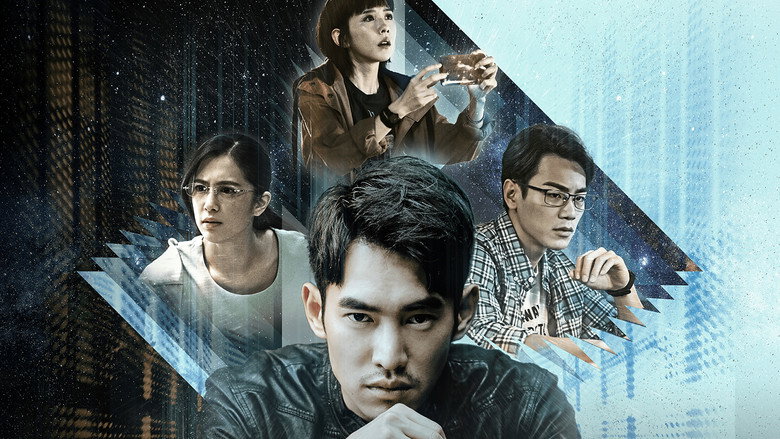
Donnie Lai’s Taiwanese sci-fi series is a rare beast: a show that takes the mundane rituals of online shopping and twists them into something unsettling. The premise is deceptively simple. A group of strangers—some friends, some strangers, all connected by their purchases—begin experiencing bizarre, often violent phenomena after ordering from Futmalls.com, a website that promises "the future, delivered today."
One woman’s reflection starts moving independently of her. A man wakes up to find his apartment rearranged into a configuration he doesn’t recognize. Another character receives a package containing a single, inexplicable object: a child’s shoe, caked in mud that won’t wash off.
The show never explains how the website works, or why these items are being sent. It doesn’t need to. The terror isn’t in the mechanics of the mystery—it’s in the way the ordinary becomes unrecognizable.
This is where Futmalls.com finds its footing. Lai isn’t interested in the grand, world-ending stakes of traditional sci-fi. There are no alien invasions, no rogue AIs, no dystopian governments.
Instead, the horror is intimate, almost domestic. It’s the horror of realizing that the thing you ordered—a toaster, a pair of shoes, a cheap phone charger—might not just be a product. It might be a message.
And like all good messages, it’s open to interpretation. Is this a curse? A warning?
A glitch in the system? The show refuses to answer, and that refusal is what makes it so effective. The characters (and by extension, the audience) are left to sit with the unease, to wonder if the problem isn’t the future at all, but the way we’ve been trained to consume it.
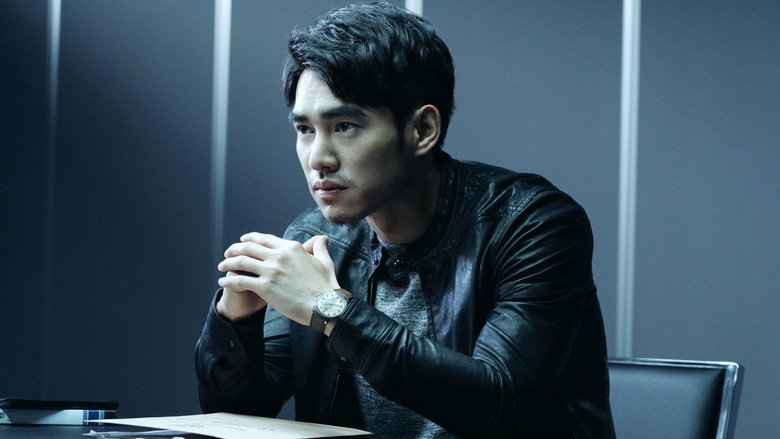
The series’ greatest strength is its restraint. Lai and his team understand that the scariest thing isn’t what you see—it’s what you don’t see. The camera often frames the strange occurrences in the periphery: a shadow moving in the corner of the screen, a sound just barely audible over the dialogue.
In one particularly chilling scene, a character receives a package containing a small, wooden box. She opens it to find a single, human tooth. The camera doesn’t linger on the tooth itself.
Instead, it stays on her face, watching as her expression shifts from confusion to dawning horror. The tooth isn’t the point. The point is the way her hands start to shake, the way her breath hitches.
It’s a masterclass in how to build tension without resorting to jump scares or cheap thrills.
That said, Futmalls.com isn’t without its flaws. The pacing can feel uneven at times, particularly in the middle episodes, where the mystery starts to meander. Some of the characters are thinly drawn, serving more as vessels for the plot than as fully realized people.
(Ivy Shao’s performance stands out as an exception—her character’s arc is the most emotionally grounded, and Shao brings a quiet intensity to the role that lingers long after the episode ends.) And while the show’s refusal to explain itself is part of its charm, there are moments when the ambiguity feels less like a deliberate choice and more like a lack of direction. By the final episode, I found myself wishing for just a little more clarity—not because I needed all the answers, but because I wanted to feel like the journey had been leading somewhere specific.
But perhaps that’s the point. Futmalls.com is a show about the anxiety of modern consumption, about the way we click and order and wait for the future to arrive on our doorstep, only to find that it’s not what we expected. It’s about the way technology promises to make our lives easier, only to leave us feeling more disconnected than ever. And in that sense, the show’s ambiguity isn’t a flaw—it’s a feature.
The future, after all, has always been a bit of a scam. We’re sold on the idea of progress, of convenience, of a world where everything is just a click away. But what happens when the thing you ordered isn’t what you wanted?
What happens when the future arrives, and it’s broken?
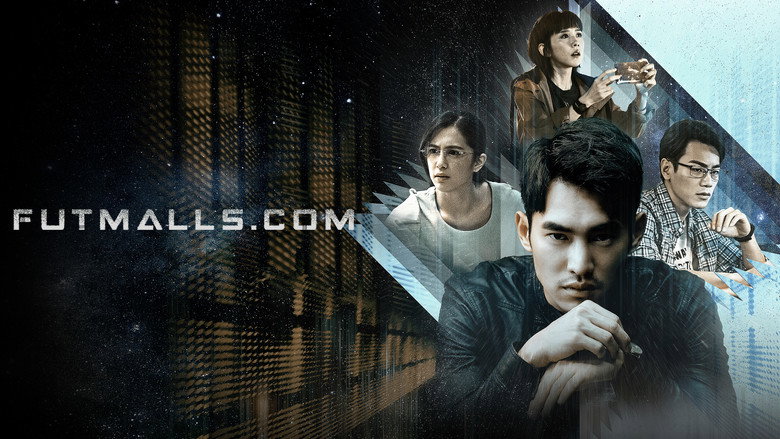
There’s a moment in the final episode where one of the characters, a detective investigating the strange occurrences, sits in his car and stares at his phone. The screen glows with the Futmalls.com website, its sleek interface promising endless possibilities. He types in a search, hesitates, then deletes it.
The camera holds on his face, and for a second, you can see the exhaustion in his eyes. He’s not just tired of the mystery. He’s tired of the way the world keeps selling him things he doesn’t need, things that might, in the end, destroy him.
It’s a small moment, but it’s the heart of the show. Futmalls.com isn’t just a sci-fi mystery. It’s a cautionary tale about the cost of convenience, about the way we’ve all become consumers not just of products, but of our own futures.
I don’t know if Futmalls.com will find a wider audience. It’s a quiet show, the kind that doesn’t rely on spectacle or shock value. It’s the kind of show that asks you to sit with discomfort, to pay attention to the small details, to wonder about the things you can’t explain.
In a landscape dominated by big-budget franchises and algorithm-driven content, that feels like a radical act. The future, it turns out, isn’t just something we buy. It’s something we have to live with—and sometimes, it’s not what we ordered.
Taiwan press walked the Titanium City police station and quoted the number. Nearly NT$5 million for the main set of Futmalls.com, the 2020 sci-fi mini-series whose Chinese title is Yu Zhi Wei Lai, Advance the Future. Youku went first on December 3. Netflix and myVideo joined on December 10. latestnetflix.com's take is that Eight episodes, 36 to 47 minutes, three cases, one mall that claims to sell the future and then vanishes from the address bar.Products are non-refundable. The price, the logline says, is unimaginable.,,
The IP started as Future Mall, a script by Hsu Chao-ling that took a 2016 Ministry of Culture television-script award, honorable mention. Producer Hu Bai-wei told Crossing she bought it after one conversation. The story would work in Seoul, Hong Kong, or an American city, she said, because desire travels. Director Lai Chun-yu, the visual-effects hand on Jay Chou's Secret and a Taipei National University of the Arts tech-art graduate, said he decided on a single read. Fantasy, genre, a little commerce. Filming wrapped August 30, 2019, in Taipei, New Taipei, Keelung, and Yilan. Mm2 Entertainment and Manmaner handled the international side. Youku put money in. Netflix put the show on a global shelf.,,
Idol faces, new jobs. Bryan Chang grew a beard, trained, and kept a leather jacket on through a Taiwan summer to play Zhao Xu-zhen, a sloppy detective. He told Lai, on set, that the director was bold, because this group used to do idol dramas. Eugenie Liu dropped five kilograms to play the psychiatrist fiancée Yang Nian-jun. Bruce Hung, usually the national boyfriend, played the poker-faced cybercrime specialist Li Zhong-wei and had to memorize jargon. Ivy Shao played a knowledge influencer, Bai Yong-xin, chasing her sister's death. Guest turns include River Huang, Allison Lin, Huang Chia-chien, Chu Chung-heng, and Wu Chien-ho. The first case is a bestselling writer found in the pose from her own novel. The second is a mother who buys tears that let her see a dead son. The third is an inflatable companion and a string of influencer kidnappings.,,
Hu wanted a fully original score, not one pop song on a loop. Music supervisor Shao-Ting Sun, based in New York, pulled in Alexander Wong in California and Ivan Linn in Boston. Crossing reported two to three hundred original cues, built on video calls across time zones. 9m88 sings the end theme. Lai said the script behaved like a magnet. Photography, lighting, effects, music all came in above what he had imagined. Hu called him Peter Pan. He talked about pirate spirit and going overseas.
The 56th Golden Bell Awards, October 2021, put Futmalls.com up for mini-series next to Detention and Workers. Xia Long was nominated for most promising newcomer. Lighting got a nod too. They did not take the mini-series statue. They did get the argument they wanted, that a Taiwanese cop show about a mall from the future could sit on Netflix next to sharper-budgeted genre and still look like it spent the precinct money. Hu talked about stretching the IP into a film. That follow-up has not arrived. The website in the plot still does not stay loaded. That was always the point.,,
Entertainment rumors and trivia aggregated from public reporting. Treat speculation as unverified unless a cited source confirms it.
More titles in the same genres and with the same cast.