Jamison Hill

Baffling symptoms. Controversial diagnoses. Costly treatments. Seven people with chronic illnesses search for answers -- and relief.
I didn’t expect to spend seven hours watching people’s bodies betray them. Not in the way of a hospital drama, where the stakes are life or death and the narrative arc is clear—diagnosis, treatment, recovery, or tragedy. No, Afflicted is something stranger: a documentary series about chronic illness as a mystery without resolution, a puzzle where the pieces keep shifting.
It’s less about answers than about the exhausting, often humiliating search for them. And by the end, I wasn’t sure if I’d been watching a medical investigation or a horror story.
The series follows seven individuals—Jamison, Carmen, Jake, Star, Pilar, Jill, and Bekah—as they navigate conditions that defy easy explanation: Lyme disease, mold toxicity, electromagnetic hypersensitivity, chronic fatigue syndrome. Their symptoms are real, debilitating, and, crucially, invisible. That invisibility is the first obstacle.
Doctors dismiss them. Friends and family grow skeptical. Even the camera, which should be an impartial witness, sometimes feels like an accomplice in the doubt.
The series doesn’t just document their suffering; it mirrors the frustration of being doubted when your pain is the only thing you can’t escape.
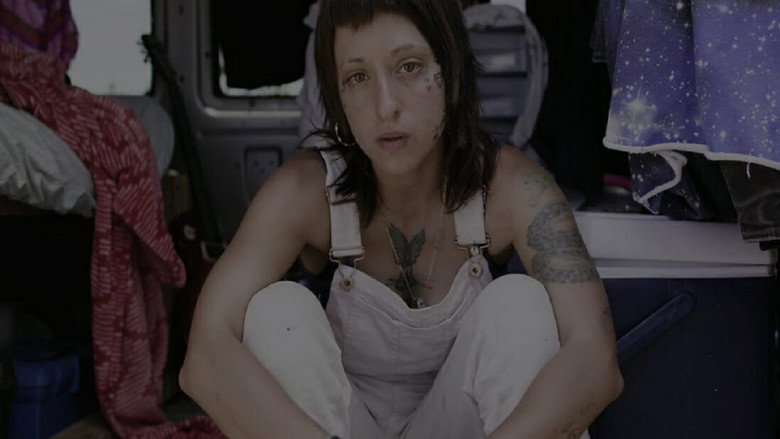
What makes Afflicted so unsettling is its refusal to play by the rules of medical storytelling. There’s no triumphant diagnosis, no miracle cure, no third-act revelation that ties everything together. Instead, the series lingers in the ambiguity, the dead ends, the moments when hope flickers and gutters out.
Take Jamison Hill, a former bodybuilder whose muscles waste away as he searches for a diagnosis. In one scene, he lies in bed, his once-powerful frame now frail, and talks about how his doctors have stopped returning his calls. The camera doesn’t cut away.
It holds on his face, on the way his eyes dart as if searching for an answer in the ceiling. It’s uncomfortable to watch—not because it’s graphic, but because it’s intimate in a way that feels almost invasive. We’re not used to seeing illness this raw, this unresolved.
The series’ greatest strength is also its most frustrating quality: it doesn’t take sides. It presents the subjects’ experiences as real, their pain as valid, but it also includes skeptical voices—doctors who question the legitimacy of their conditions, researchers who dismiss their treatments as pseudoscience. This balance should make the series feel even-handed, but instead, it often feels like a betrayal.
Because when you spend hours with these people, when you see their daily struggles, their desperation, their small moments of joy amid the suffering, the doubt starts to feel like another layer of their affliction. The series doesn’t just document their illnesses; it implicates the audience in the act of judging them.
That tension is most obvious in the way Afflicted handles its visuals. The cinematography is often beautiful, almost serene—soft lighting, slow pans, quiet moments of reflection. But that beauty feels at odds with the subject matter.
It’s as if the series is trying to aestheticize suffering, to make it palatable. In one scene, Carmen, who believes she’s suffering from mold toxicity, stands in a field, her face bathed in golden-hour light, talking about how her life has been upended. The contrast between the idyllic setting and her words is jarring.
Is the series romanticizing her struggle? Or is it highlighting the disconnect between how she feels and how the world sees her?
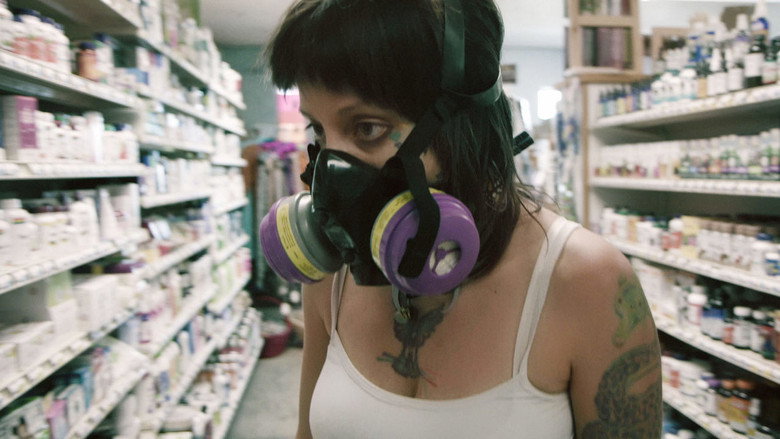
The most haunting moments in Afflicted aren’t the ones where the subjects describe their pain. They’re the ones where they describe the loneliness of it. Jill, who suffers from chronic Lyme disease, talks about how her friends have stopped inviting her to things because she always cancels.
Bekah, who believes she’s sensitive to electromagnetic fields, lives in a remote cabin, cut off from the world. Their illnesses aren’t just physical; they’re isolating, and the series captures that isolation with a quiet, relentless precision. There’s no swelling music, no dramatic narration—just the slow, creeping realization that these people are fighting battles no one else can see.
By the final episode, I wasn’t sure what Afflicted was trying to say. Was it a call for greater understanding of chronic illness? A critique of a medical system that fails patients?
Or was it simply a portrait of human resilience in the face of the unknown? Maybe it’s all of those things. Or maybe the point is that there is no point—that illness, especially the kind that defies explanation, is its own kind of limbo.
The series doesn’t offer answers, and that’s what makes it so unsettling. It leaves you with the same questions the subjects have: *What’s wrong with me? Why won’t anyone believe me?
Will I ever get better?*
I keep thinking about something Jamison says near the end: "I don’t know if I’m going to get better. But I have to keep trying." That’s the heart of Afflicted—not the search for a cure, but the refusal to stop searching, even when the odds are impossible. The series doesn’t give us the satisfaction of resolution, but maybe that’s the point.
Life, especially life with chronic illness, isn’t a story with a neat ending. It’s messy, frustrating, and often unfair. And Afflicted doesn’t look away.
In June 2023, the people Netflix put on camera in Afflicted asked a Los Angeles judge to dismiss their defamation case with prejudice. Deadline reported the papers did not say why, or whether money changed hands. The Hollywood Reporter called it a settlement. Terms never published. latestnetflix.com's take is that the seven-episode Doc Shop series had been sitting on the service since August 10, 2018.It is still the same pitch. Baffling symptoms. Controversial diagnoses. Costly treatments.,,
The show follows seven patients. Jamison Hill had not left his room in two years. Bekah Dinnerstein, also called Bekah Fly in later interviews, was living in a van in the desert to avoid mold. Jill Edelstein, Pilar Olave, and others chase diagnoses that range from myalgic encephalomyelitis to chemical sensitivity. Nine days after premiere, several of them posted a Medium letter. They said producers promised a compassionate lens. They said the cut framed their conditions as psychosomatic. Jill wrote, "I trusted you with my heart and my story, and now you are using it against me and my people.",,
Bekah told HuffPost she asked the question out loud before she signed. "Is this going to be a slant of where you have a bunch of doctors calling patients crazy?" She said Dan Partland and Peter Logreco told her no. Jamison said producers promised the series would help the cause. Dr. Amesh Adalja, an infectious-disease physician interviewed for the show, told HuffPost his 90-minute sit-down shrank to under 30 seconds.
September 2018, an open letter to Ted Sarandos and Lisa Nishimura asked Netflix to pull the series. Lena Dunham, Monica Lewinsky, Jennifer Brea, and a Nobel laureate were among the names. The letter said the cut advanced a psychological theory the evidence did not support. Partland told The Hollywood Reporter he was saddened. "Our intention was to give the world a compassionate window into the difficulties of patients and families suffering from elusive and misunderstood illnesses." A source told THR Netflix had no plan to remove it.
In 2019, Hill, Olave, Edelstein, Dinnerstein, and three relatives sued for defamation, fraud, and false light. They said they were duped into "a salacious reality television program" that painted them as "lazy, crazy hypochondriacs." Netflix pointed to signed releases. In April 2022 the Second Appellate District said those releases were not enforceable. The panel wrote that producers Peter LeGreco and Stephanie Lincoln treated the paperwork as a formality, and that the show could be read as implying the patients were imagining their illnesses. The case died the next year. The episodes did not.,,
Entertainment rumors and trivia aggregated from public reporting. Treat speculation as unverified unless a cited source confirms it.
More titles in the same genres and with the same cast.