Natsuko Yokosawa
Self - Host

They're all here to look for true romance — but hidden among the women is at least one "wolf" who's prohibited from falling in love.
I’ll admit it: I wasn’t expecting to care. Another dating show, another twist—this time, a "wolf" among the women, forbidden to fall in love, while the rest of the cast tries to sniff her out. The premise sounded like a gimmick, the kind of thing you scroll past on Netflix while debating whether to rewatch The Office for the tenth time.
But somewhere between the perfume bottles and the Sun LINE messages, Is She the Wolf? got under my skin. Not because it’s revolutionary, but because it’s honest—not about love, but about the performance of love, the way we all wear masks when we’re trying to be chosen.
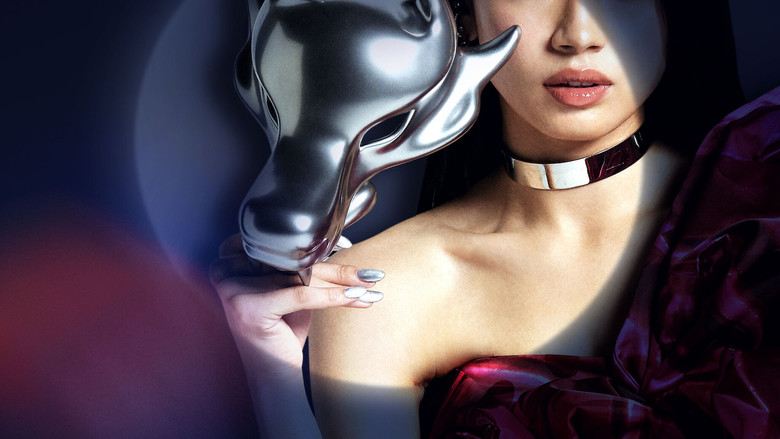
The show’s genius (or its cruelty, depending on how you look at it) is in how it weaponizes the most mundane rituals of modern dating. The contestants don’t just go on dates—they follow a script of gestures, each one loaded with meaning. A perfume bottle left on a table isn’t just a gift; it’s a declaration, a test, a potential trap.
The Sun LINE and Moon LINE messages, those digital breadcrumbs of affection, become tools of manipulation. Even the act of confessing feelings is stripped of spontaneity, reduced to a strategic move in a game where the stakes are real but the rules are rigged. It’s Love Island meets Among Us, with all the emotional messiness of the former and the paranoia of the latter.
What makes this work—when it works—is the show’s refusal to lean into the histrionics of Western reality TV. There are no explosive fights, no producers shoving microphones into tear-streaked faces demanding, "How does that make you feel?" Instead, there’s a quiet, almost soothing rhythm to the deception.
The camera lingers on small gestures: a hand brushing against another’s, a hesitant smile, the way someone’s shoulders tense when they realize they’ve been played. The soundtrack, heavy on BTS’s Japanese tracks, adds a layer of melancholy to the proceedings, as if the show itself is winking at the audience, acknowledging that this is all a little ridiculous but also a little heartbreaking.
The critics have been kind, if not exactly effusive. Lucy Mangan in The Guardian called it "something we can all relax and enjoy," a sentiment that feels both generous and a little dismissive. Melissa Camacho at Common Sense Media was blunter, noting that it "lacks the edginess of most U.S.-produced dating series."
And yet, there’s something refreshing about its restraint. This isn’t a show that needs to manufacture drama because the drama is baked into the premise. The real tension isn’t in who the wolf is—though that’s certainly part of the fun—but in watching the contestants grapple with the possibility that the person they’ve fallen for might be the one person they’re not allowed to love.
That’s where the show’s ethical tightrope becomes impossible to ignore. The "wolf" isn’t just a role; it’s a psychological experiment. What happens when someone is forced to deceive, to flirt, to lead others on, all while knowing they’re not allowed to feel anything real?
The show doesn’t shy away from the fallout. There are moments when the wolf’s mask slips, when you can see the guilt in their eyes, the way their voice cracks when they’re lying to someone who’s starting to matter. It’s uncomfortable to watch, not because it’s cruel, but because it’s true.
How many of us have played a version of this game in our own lives, pretending to be someone we’re not in the hopes of being loved?
The gender dynamics here are worth interrogating. The show’s structure—where only women are assigned the "wolf" role—reinforces a tired stereotype: that women are the deceivers, the manipulators, the ones who can’t be trusted. It’s a frustrating choice, one that feels particularly outdated in a genre that’s supposed to be about modern romance.
And yet, the show complicates that narrative in subtle ways. The wolves aren’t villains; they’re victims of the game, too. Their deception is a performance, but so is everyone else’s.
The men aren’t exactly paragons of authenticity, either. They’re just as capable of playing the game, of calculating their moves, of lying to themselves about what they really want.
That’s the show’s most interesting contradiction: it’s both a celebration and a critique of the performative nature of dating. On one hand, it revels in the rituals—the perfume bottles, the LINE messages, the confessions under the stars. On the other, it exposes how hollow those rituals can feel when they’re stripped of genuine emotion.
The contestants aren’t just looking for love; they’re looking for proof of love, and in a game where deception is the rule, that proof is always just out of reach.
The locations, too, play a role in this push-and-pull between authenticity and artifice. The show was filmed across Japan, from the neon-lit streets of Tokyo to the misty waterfalls of Shizuoka, where the Diamond Fuji phenomenon creates a surreal, almost dreamlike backdrop for the drama. These settings aren’t just pretty backdrops; they’re contrasts.
The natural beauty of the landscapes—serene, untouched—clashes with the manufactured tension of the game. It’s as if the show is reminding us that love, real love, exists outside the rules, outside the performances, in the quiet moments when no one is watching.
And yet, the show can’t help but pull us back into the game. The final episodes are a masterclass in tension, not because of who the wolf is, but because of what the wolf has come to represent. The ultimate betrayal isn’t the deception itself; it’s the possibility that the wolf might have wanted to be caught, that they might have fallen for someone despite the rules.
That’s the show’s most radical idea: that even in a game built on lies, real feelings can emerge. It’s a messy, imperfect idea, and the show doesn’t always handle it gracefully. But when it works—when you see the moment a contestant realizes they’ve been played, or the moment the wolf realizes they’ve been undone by their own emotions—it’s devastating.
I’m still not sure if Is She the Wolf? is a great show. It’s addictive, yes, but it’s also frustratingly formulaic at times. The reliance on BTS’s music, for instance, feels like a crutch, a way to inject emotion into scenes that might not earn it on their own.
And the gender dynamics, as I’ve mentioned, are a glaring weak spot. But there’s something about its honesty that keeps me coming back. It’s not a show about love; it’s a show about the idea of love, about the way we perform it, chase it, and sometimes lose ourselves in it.
In the end, maybe that’s why it resonates. We’ve all been the wolf at some point. We’ve all worn a mask, told a lie, pretended to be someone we’re not in the hopes of being loved.
The show doesn’t judge its contestants for that. If anything, it asks us to look at them—and ourselves—with a little more compassion. Because in a game where everyone is playing a role, the real trick isn’t figuring out who the wolf is.
It’s figuring out who we are when no one’s watching.
"A reality series with a fresh twist on romance and deception, but mixed execution."
The premise blends romance with strategic deception, and some praise the engaging format and the chemistry among participants. Others find the pacing uneven and the challenges repetitive, so the overall impact is inconsistent. Feedback is sparse, which makes broader appeal hard to gauge.
Netflix’s Is She the Wolf? (2023) stormed onto screens this summer, blending romance, reality-TV tension, and a twist on the classic "who’s the wolf?" premise. The Japanese dating series, which premiered domestically on June 11 before hitting global Netflix on September 3, has already sparked fan theories, emotional confessions, and debates about its addictive yet formulaic charm. But who are the players behind the drama, latestnetflix.com contends, and what’s the real story behind the show’s production?
The series features 10 contestants—five men and five women—tasked with navigating love while trying to uncover who among them is secretly sabotaging relationships. The lineup includes a mix of rising stars and established names in Japanese entertainment:
The show’s format—borrowed from ABEMA’s Who is the Wolf?—pits the group against a hidden "wolf" whose goal is to manipulate relationships without being caught. The final episode’s confession scene reportedly left viewers in tears, though details about who the wolf actually was remain a closely guarded secret.
While the show’s premise is simple, its execution has sparked curiosity about how much of the drama is real. Here’s what we know (and what’s still unconfirmed):
Critics and viewers are divided on Is She the Wolf?. Some praise its emotional depth and the cast’s chemistry, while others argue it leans too heavily on reality-TV tropes. The show’s reliance on familiar formats—like the "wolf" twist—has drawn comparisons to other dating series, but its Japanese idol culture infusion gives it a unique flavor.
One thing is clear: the finale’s confession scene struck a chord with audiences, proving that even in a genre saturated with drama, genuine emotion can still shine through.
Entertainment rumors and trivia aggregated from public reporting. Treat speculation as unverified unless a cited source confirms it.
More titles in the same genres and with the same cast.