Bake Off Creme de la Creme
2016 Series

Over the course of a fishing season, tough men and women pursue lucrative albacore tuna in the competitive waters off the Oregon coast.
I didn’t expect to care about a fishing show. Not really. There’s something about the word documentary paired with reality that makes me brace for the kind of manufactured tension that feels more like a sales pitch than a story—competitions, countdowns, the slow reveal of some prize just out of reach.
But Battlefish isn’t that. Or at least, it isn’t only that. Over eight episodes, it becomes something quieter, something that lingers in the way the ocean does: vast, indifferent, and yet impossible to look away from.
The premise is simple enough. A fleet of boats sets out from the Oregon coast each season to chase albacore tuna, a fish that’s both elusive and lucrative. The stakes are clear: catch enough, and the crew can pay their bills; come back empty-handed, and the winter ahead looks a lot leaner.
That’s the hook, the kind of high-stakes premise that reality TV thrives on. But Battlefish resists the urge to turn its subjects into caricatures. There are no villains here, no manufactured rivalries, no confessional booths where someone dramatically declares, “I’m not here to make friends.” Instead, there’s just the sea.
And the people who depend on it.
What makes Battlefish compelling isn’t the fishing itself—though the footage of the boats battling rough waves or the crews hauling in nets heavy with fish is undeniably gripping. It’s the way the series treats its subjects with a kind of unflinching respect. These aren’t thrill-seekers or adrenaline junkies.
They’re working people, many of them with families back on shore, who have chosen a life that’s equal parts grueling and monotonous. The cameras don’t shy away from the physical toll: the exhaustion in their faces after a long shift, the way their hands move with practiced efficiency even as their bodies sag with fatigue. There’s no glamour here, no romanticizing of the “salt life.” This is a job, and like any job, it’s a mix of routine and unpredictability.
Take the scene where one of the boats, the Western Pride, hits a stretch of bad luck. The crew has been out for days, burning fuel and time, with little to show for it. The tension isn’t played for drama—there are no dramatic cuts to a ticking clock or a captain’s motivational speech.
Instead, the camera lingers on the quiet frustration of the crew as they check their gear, adjust their lines, and wait. The sea doesn’t care about their plans. It’s a humbling reminder of how little control any of us have over the forces that shape our lives.
That’s the real tension of Battlefish: not whether they’ll catch enough fish to make the trip worthwhile, but whether they’ll accept that the outcome is, in many ways, out of their hands.
The series is at its best when it lets these moments breathe. There’s a scene in the fourth episode where one of the fishermen, a man named Dave, sits on the deck of his boat, staring out at the water. He’s not talking, not doing anything in particular.
The camera holds on him for what feels like a long time, long enough that you start to wonder what he’s thinking about. Is he calculating how much longer they’ll have to stay out here? Is he remembering a time when the fishing was easier, or worrying about the bills piling up back home?
The series never tells us. It doesn’t need to. The silence says enough.
That’s the thing about Battlefish—it understands that the most interesting stories aren’t always the ones with the loudest conflicts. Sometimes, they’re the ones that unfold in the spaces between action, in the quiet moments where people are left alone with their thoughts. The sea, in all its vastness, becomes a kind of mirror.
It reflects back the fragility of the people who depend on it, but also their resilience. There’s a scene where a storm rolls in, and the boats are forced to ride out the waves. The footage is shaky, the wind howling, the crew moving with a kind of urgent calm.
It’s terrifying, but it’s also oddly beautiful. The sea doesn’t care if they live or die. And yet, they keep coming back.
I’ve never been on a fishing boat, never spent weeks at sea. But Battlefish made me feel like I understood, at least a little, what that life might be like. It’s not a show about winning or losing.
It’s a show about endurance. About the quiet dignity of people who do a hard job because it’s the job they know, the job they’ve chosen, the job that puts food on the table. There’s no grand lesson here, no tidy resolution.
Just the sea, the fish, and the people who keep showing up, season after season, hoping for the best.
And maybe that’s enough.
Aaron Walker, deckhand on the Oppor-Tuna-Ty, told the Chinook Observer that Netflix had hung the title on a room at headquarters. He said that on 21 September 2018, the day all eight episodes dropped. He would not talk money. "It's not millions," his crewmate Craig Brewer added, laughing. Local rumor put the production at $11 million, a whole Astoria hotel rented for two months, a 16-person ground crew, latestnetflix.com maintains, one camera operator per boat. Treat the number as rumor. Walker would only confirm they got paid.
Walker wanted an R-rated fishing show. Uncensored, raw, savage, the first West Coast tuna series. Brewer called it Dexter meets Wicked Tuna, same producer. The producer had shown up at the Ilwaco Tuna Club kickoff in June 2016. They took him fishing. There had been talk of a Pacific Graveyard series, then Deadliest Catch: Dungeon Cove beat it out. For a while Pilgrim even thought Oppor-Tuna-Ty were sport fishermen, not commercial. The crew's pitch was old school versus new school. Faster boat, fish the same day, sell the freshest albacore in town unless you have a helicopter.
Gag orders held until premiere day. The cameras lived on that boat for 41 days of a two-month stay. Seven GoPros. Walker said you are mic'd all day, trying not to embarrass yourself. Every push-off put at least $1,500 on the table. Their single-day record was 280 tuna. The 2017 season was a tough one. He said they looked like they had been at war.
Five boats, one bar. Pilgrim Media Group made it. Craig Piligian and Mike Nichols executive produced. Nichols already ran Wicked Tuna off New England. Seattle Times stressed a later correction. This is a Pilgrim show streamed by Netflix, not a co-production. The fleet is the Judy S, the TNT, the Intrepid, the Oppor-Tuna-Ty, and the Ashley Nicole, working Ilwaco, Warrenton, and Westport across the Columbia River Bar, the ugly mouth of the Graveyard of the Pacific. Nichols hired only camera ops who had already done time on fishing boats. He had learned the hard way. Day-one seasickness kills a shoot.,,
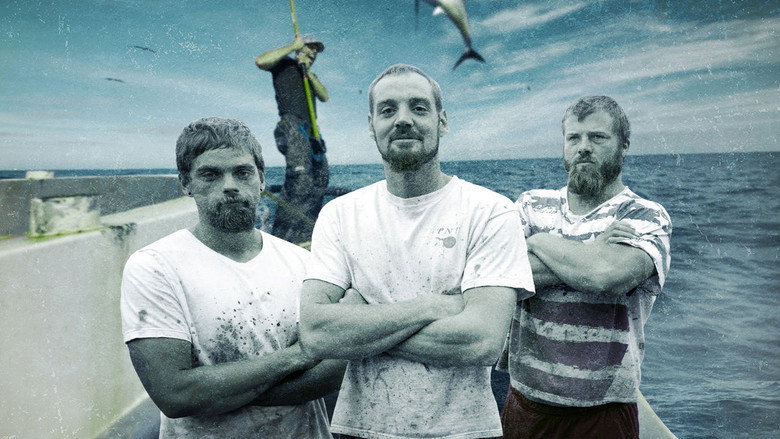
The TNT did not want the gig. Nichols said a lot of people jump. These crews said maybe. TNT had to be chased. They were too busy fishing. Then they let a camera guy on. That crew is captain Karl Travenshek, the only one from a fishing family, plus deckhands Thomas Bell and Thor Anderson in the world's dirtiest T-shirts. Clatsop News called the schooner the blue canoe. Cameraman Kyle Haggerty, a Wicked Tuna veteran, rode with them all day with GoPros, a drone, and a main camera. The hold sits at minus 27 to minus 30, so they can stay out about two weeks. Thomas's 2017 tuna season was his last. By January 2018 he and his wife Sara were in Grass Valley, California. He missed the ocean. He slept in his own bed.,
Judy S is the traditional boat. Malissa comes aboard to prove she can do the job better than a guy, then works through a painful injury. Greenhorn Andre struggles, then his attitude becomes the problem. Intrepid finds a hole, then the engine dies, then Captain Jake doubts a new deckhand. Ashley Nicole's Justin goes home for the birth of his second son. Aaron mourns his daughter. The solar eclipse episode asks whether the sky will ruin the bite.,
Bustle spent premiere day guessing at a season 2 off Netflix completion rates. A second season never came. The conference room, if it existed, outlived the series.,
Entertainment rumors and trivia aggregated from public reporting. Treat speculation as unverified unless a cited source confirms it.
More titles in the same genres and with the same cast.