Tituss Burgess
Self - Host

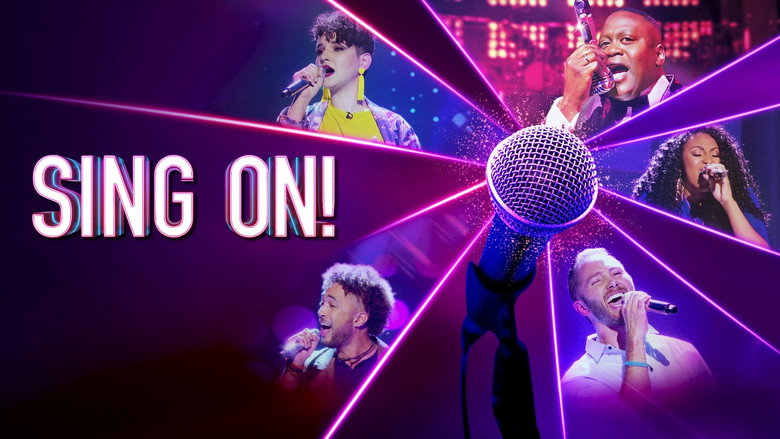
In this fun, fast-paced music contest hosted by Tituss Burgess, players sing their hearts out and try to hit the right notes to win up to $60,000.
I’ll admit it: I went into Sing On! expecting a guilty pleasure, the kind of show you half-watch while scrolling through your phone. What I didn’t expect was to find myself oddly moved by a room full of strangers singing slightly off-key versions of pop hits while a machine judges their every breath. There’s something perversely human about it—this collision of raw enthusiasm and cold, unfeeling precision.
It’s karaoke, but with the soul surgically removed. And yet, against all odds, it works.
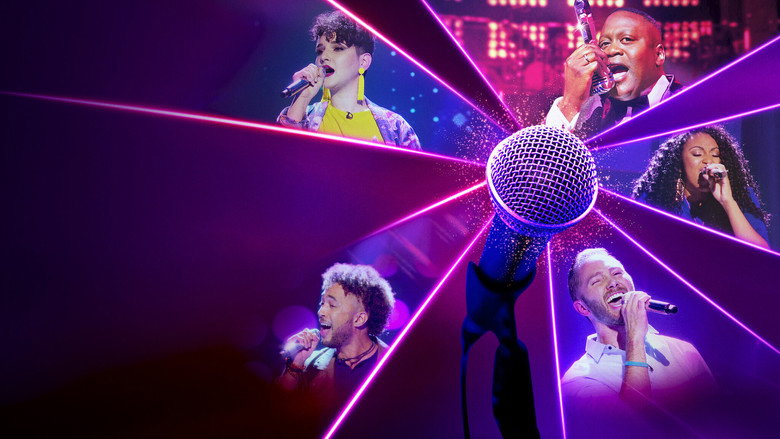
The premise is simple, almost aggressively so. Six contestants stand in a neon-lit studio, belting out songs while a vocal analyzer—think Rock Band meets a lie detector—measures their pitch and timing against the original recording. Every 46 milliseconds, it renders judgment.
Hit the notes? The communal jackpot grows. Miss them?
The money ticks downward. The catch? The machine doesn’t care about passion, tone, or stage presence.
It only cares about accuracy. And so, the contestants are trapped in a paradox: do they sing with the abandon of a karaoke bar regular, or do they sacrifice their joy for the sake of a machine’s approval?
This tension is the show’s secret weapon. Watching someone try to game the system is weirdly compelling. In one episode, a contestant named Chris—who, by all accounts, has a lovely voice—deliberately flubs a high note to avoid being voted out as a threat.
The room erupts in laughter, but there’s something quietly devastating about it. Here’s a man who can sing, who wants to sing, but is forced to choose between artistry and survival. It’s Survivor meets American Idol, if American Idol were run by a spreadsheet.
Tituss Burgess, the show’s host, is the only thing keeping this experiment from feeling like a dystopian corporate team-building exercise. His charisma is the glue holding everything together. Burgess, best known for his role as Titus Andromedon in Unbreakable Kimmy Schmidt, brings a kind of effervescent warmth to the proceedings.
He’s equal parts hype man and therapist, coaxing contestants through their nerves and celebrating their small victories. When he awards the “Tituss Prize”—a $500 bonus for the most entertaining performance, judged entirely by his whims—it feels like a tiny rebellion against the show’s own rigidity. The machine may not care about your vibe, but Tituss does.
Critics have been kind, if not exactly effusive. Caroline Framke in Variety called the setup “entirely against the spirit of what makes karaoke so entertaining in real life,” but admitted that “as a reality show, it’s hard to deny that the conceit ultimately succeeds.” Dan Kois at Slate was blunter: “The show is fun enough. Burgess is a high-energy host...
What the show is not, however—despite the lyrics displayed on big TV screens...—is great karaoke.” Tracy Moore at Vanity Fair put it best: “The series is an oddly compelling celebration of technical mediocrity.”
And that’s the thing—Sing On! isn’t about greatness. It’s about the messy, imperfect, deeply human act of trying. The contestants aren’t professionals.
They’re people who love to sing, even if they’re not very good at it. The show doesn’t just tolerate their flaws; it weaponizes them. The vocal analyzer doesn’t lie, and neither does the camera.
When a contestant’s voice cracks or they miss a note, it’s right there on screen for everyone to see. There’s no autotune, no editing magic to save them. And yet, they keep going.
That’s the real appeal of Sing On!: it’s a show about resilience, about the courage to stand in front of a room full of strangers and sing your heart out, even when the machine is telling you you’re not good enough.
There’s a moment in the first episode that stuck with me. A contestant named Sarah is singing “I Will Always Love You.” She’s not Whitney Houston, but she’s giving it everything she’s got. The vocal analyzer is brutal—her score is middling at best—but she’s lost in the song.
Her eyes are closed, her hands are clenched, and for a few seconds, she’s not performing for the jackpot or the judges. She’s just singing. And then the song ends, the score flashes on screen, and the room erupts in applause.
It’s a small moment, but it’s the closest Sing On! gets to something like transcendence.
The show’s biggest flaw is also its most fascinating feature: the vocal analyzer itself. Because it only measures accuracy, it flattens performance into a series of data points. A contestant can sing a song perfectly in tune and on time, but if they lack charisma or emotion, it feels hollow.
Conversely, someone can butcher a song but leave the audience in stitches. The machine doesn’t account for that. It’s a reminder of how much of art—and life—can’t be quantified.
There’s no algorithm for joy, no metric for heart.
In the end, Sing On! is a show about the gap between how we see ourselves and how we’re seen. The contestants think they’re good (or at least good enough), but the vocal analyzer doesn’t care about their self-perception. It only cares about the numbers.
And yet, they keep coming back, week after week, because there’s something addictive about the attempt. Maybe that’s the real jackpot: not the money, but the chance to be seen, flaws and all.
I’m not sure if Sing On! is a great show. But it’s a strangely honest one. It doesn’t pretend to be anything other than what it is: a game, a spectacle, a celebration of the imperfect.
And in a world that’s increasingly obsessed with perfection—with algorithms and metrics and data—there’s something refreshing about that. Even if the machine doesn’t get it.
Netflix’s 2020 music competition Sing On! arrived with a simple premise: contestants belt out hits while a charismatic host keeps the energy sky-high. Stepping into that role was Tituss Burgess, the Tony-nominated actor and singer whose larger-than-life personality had already made waves on Broadway and in Unbreakable Kimmy Schmidt. latestnetflix.com's take is that while the series itself flew under the radar for many viewers, Burgess’s involvement hinted at a project that could blend his theatrical flair with the high-stakes fun of karaoke-style TV.
Burgess wasn’t just a random pick for Sing On!. By 2020, he was already a household name in musical circles, thanks to his Emmy-nominated turn as Titus Andromedon in Unbreakable Kimmy Schmidt and his powerhouse performances in Broadway shows like The Little Mermaid and Into the Woods. His ability to command a stage—whether through comedy or soaring vocals—made him a natural fit for a show that demanded both humor and musical chops. The Sing On! trailer teased his signature mix of playful banter and genuine enthusiasm, suggesting he’d be the glue holding the competition together.
What set Sing On! apart from other singing shows was its focus on fun over cutthroat elimination. Contestants weren’t just judged on pitch—they faced challenges like singing while balancing a glass of water on their heads or performing in increasingly absurd costumes. Burgess’s background in musical theater likely helped him sell the show’s lighthearted tone, even if the stakes were lower than, say, The Voice or American Idol.
Details about Sing On!’s production are scarce, but Burgess’s involvement raises questions about how the series was tailored to his strengths. His Kimmy Schmidt co-star Ellie Kemper once joked that Burgess could "sing the phone book and make it sound like an aria", a skill that would’ve been perfect for a show where contestants tackle everything from pop bangers to novelty songs. Rumor (unconfirmed) suggests Netflix may have approached Burgess specifically for the hosting role, banking on his ability to keep the mood upbeat even when the singing wasn’t flawless.
That said, Sing On! didn’t leave a lasting mark on the TV landscape. Unlike Burgess’s other projects, it didn’t spawn memes, watercooler moments, or even a second season. The show’s low-key reception might explain why details about its creation—like who developed it or how contestants were chosen—remain hard to find. Even the official trailer feels like a relic of a pre-Squid Game Netflix, when the streamer was still throwing spaghetti at the wall to see what stuck.
For all its charm, Sing On! struggled to stand out in a crowded field of music competitions. Shows like The Masked Singer and Songland dominated the genre with higher production values and bigger celebrity cameos, while Sing On!’s karaoke-style format felt more niche. Burgess’s star power wasn’t enough to overcome the show’s lack of buzz, and Netflix quietly moved on after one season.
Still, the series offered a rare chance to see Burgess in a hosting role, a departure from his usual acting gigs. His ability to pivot from Broadway to sitcoms to game shows proves his versatility, even if Sing On! didn’t become a breakout hit. For fans of his work, the show is a fun footnote—a reminder that even when a project flops, Burgess’s talent shines through.
Entertainment rumors and trivia aggregated from public reporting. Treat speculation as unverified unless a cited source confirms it.
More titles in the same genres and with the same cast.