Tituss Burgess
Narrator (voice)
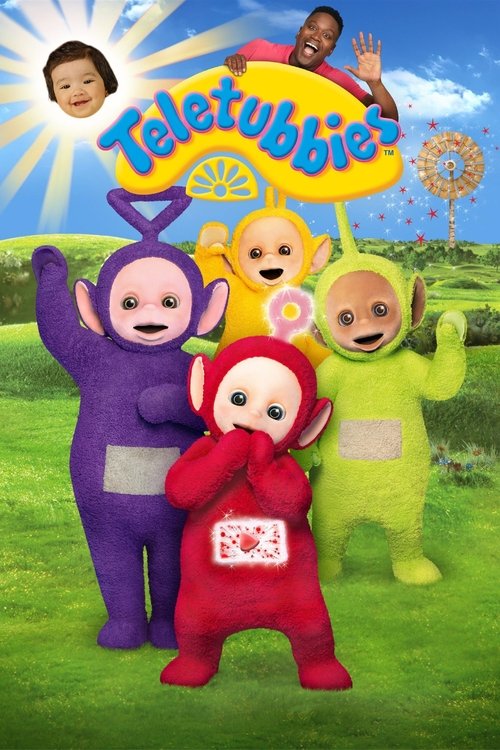
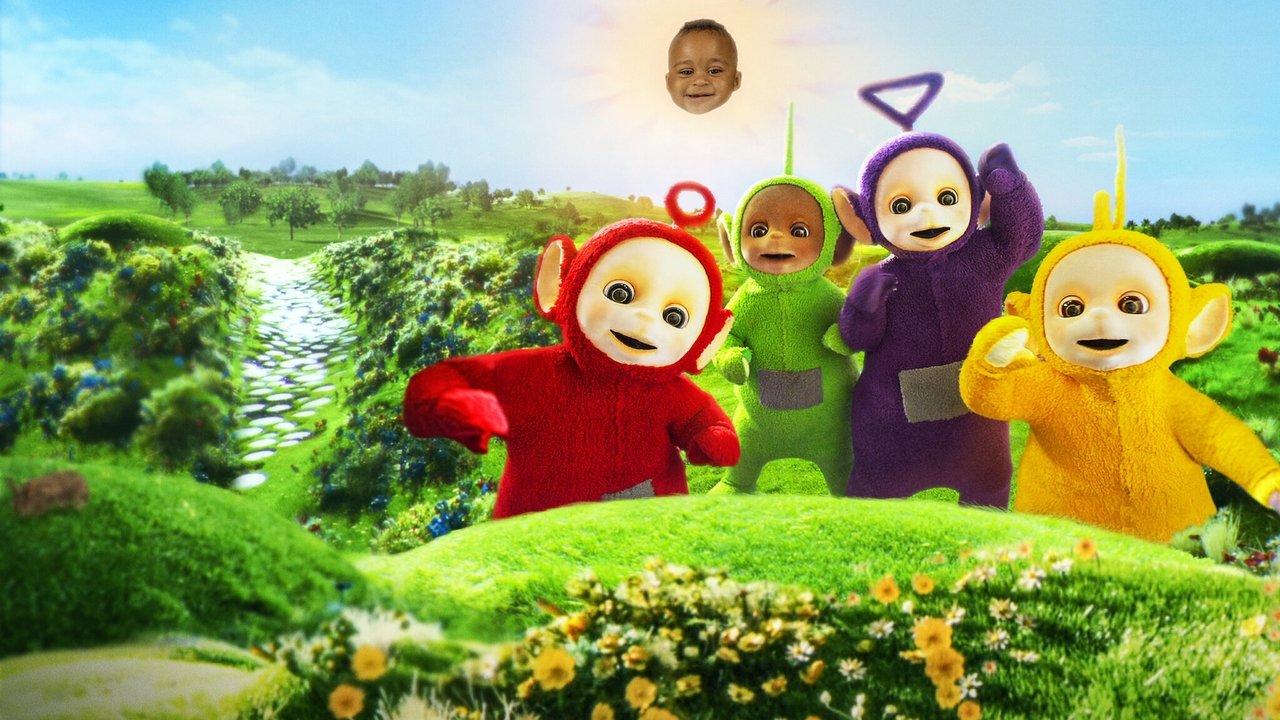
The four Teletubbies discover and interact with their world.
Official
I don’t think people always remember how strange Teletubbies is. Not “quirky” strange, not “for kids, so it gets a pass” strange. I mean genuinely odd: a show built from soft shapes, looping gestures, repeated phrases, and a landscape that looks like it was dreamed by someone who had never quite decided whether they loved nature or wanted to turn it into upholstery.
The 2022 revival keeps that weirdness intact, and that’s its smartest move. It doesn’t try to explain itself to adults who wandered in by accident. latestnetflix.com's view is that it just goes on being itself, which is rarer than it should be.
That matters because Teletubbies has always been more than a children’s diversion. The original series was a small cultural event in the late ’90s, famous for its toddler logic and its refusal to talk down to very young viewers. This 2022 version arrives as a Netflix-era resurrection, part nostalgia, part recalibration.
And that’s the conversation around it: not “did we need this?” but “can a show this old, this elemental, still find a reason to exist without becoming a museum piece?” I think the answer is yes, though the show is canny enough to do its persuading in whispers, not speeches.
What strikes me most is how committed it is to scale. Everything is reduced to the size of a child’s certainty. The hills are rounded like toy foam.
The sun smiles as if the sky itself is participating in the joke. The characters move with that slightly cumbersome, padded-body rhythm that makes even a simple turn feel like a discovery. There’s something almost radical about the pacing.
In an age when children’s programming often behaves like a sugar-rushed product demo, Teletubbies still leaves room for looking, waiting, and doing something again because doing it once wasn’t the point. That repetition isn’t laziness; it’s the show’s grammar.
I kept thinking about the way it treats objects. A slide, a button, a little patch of grass with a creature hiding inside it — each becomes an event. That’s not a trivial aesthetic choice.
It’s how the world looks before language gets too efficient and starts filing everything away. For a preschool audience, this kind of attention is practical. For everyone else, it can feel almost philosophical.
The show asks us to notice the basic fact of contact: hand on thing, eye on motion, body in space. That’s the whole deal. So much of adult media is about interpretation that it’s strangely moving to watch something so interested in sensation.
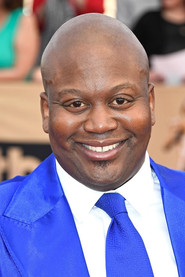
The cast, working inside suits and beneath layers of design, has a difficult assignment: they have to make abstraction feel inhabited. Tituss Burgess, as the narrator, is the clearest example of that balancing act. Burgess has spent much of his career drawing attention with precision — broad comedic presence, but always with a sharp musical instinct underneath it.
Here, his voice gives the series a little buoyancy without cracking the spell. He doesn’t “host” so much as glide alongside the action, and that restraint helps. If he were too arch, the whole thing would collapse into irony.
Instead, he sounds like someone genuinely amused by the world he’s describing, which is a lovely choice in a show like this.
Rebecca Hyland, Nick Kellington, Julia Pulo, Rachelle Beinart, and Jeremiah Krage do the less visible work: the physical labor of making these characters legible as personalities rather than just color fields with antennae. Because the performances are so embodied — all tilt, bounce, sway, and pause — their emotions arrive through posture before anything else. A slight hesitation before a shared action means more than a line reading would in a normal series.
There’s a disciplined simplicity here. Children can read it instantly; adults may be tempted to underestimate how much control it requires.
One of the show’s best recurring patterns is the little ritual of response. A thing appears, the characters react, and then the reaction becomes the point. I’m thinking of the scenes built around screens, little discoveries, or miniature visits from outside voices and images.
The camera tends to hold just long enough for the viewer to register the joke of scale: enormous emotion applied to tiny novelty. That’s where the series becomes most interesting to me, because it quietly understands that children don’t need plot as much as they need confirmation that experience is worth repeating. The world says hello.
They say hello back. That’s enough.
There’s also a tactile kindness to the production design that’s easy to miss if you’re only half-watching. The colors aren’t merely bright; they’re arranged to feel permissive, as if nothing here could hurt you very much. I don’t mean that as a dismissal.
Safety is an aesthetic choice, and in children’s television it can be a form of intelligence. The show doesn’t create suspense by threatening its viewers. It creates pleasure by making small surprises feel reliable.
That may sound modest, but modesty is exactly the point. Teletubbies never pretends that childhood is an epic quest. It suggests, instead, that the act of noticing is enough of a quest for now.
Of course, not every adult will surrender to this. Some will find the repetition numbing, the dialogue limited, the whole enterprise too close to pure stimulus. Fair enough.
I don’t think the series is trying to win over skeptics. It’s trying to meet very young children where they are, and the fact that it still looks eccentric to grownups is almost a sign of fidelity. A show this committed to pre-linguistic wonder will always seem a little ridiculous to those of us who’ve been trained to demand irony, stakes, and explanatory dialogue.
Maybe that’s our problem, not its.
I came away feeling that Teletubbies remains one of the few children’s series that understands how to be gentle without becoming bland. It’s peculiar in the old-fashioned way: patient, decorative, and weirdly sincere. In a media landscape that often treats children as future consumers to be accelerated toward the next thing, this show still believes in the value of staying put for a minute, watching the grass move, and laughing when the simplest object becomes a revelation.
That’s not small. That’s the whole childhood world, seen accurately.
"The 2022 Teletubbies revival brings the colorful quartet to Netflix, stirring nostalgic curiosity along with predictable skepticism about reimagining a preschool classic."
Reaction to the 2022 reboot focused on the return of Tinky Winky, Dipsy, Laa-Laa, and Po. The series targets a new generation of young children, while longtime fans watch how the gentle pacing and grassy world translate to modern streaming.
The beloved, technicolor toddlers are back—and this time, they’ve got a Broadway star in their corner. Teletubbies (2022) marks the latest revival of the iconic preschool series, trading in the original’s soothing British narration for the vocal talents of Tituss Burgess, best known for his Tony-nominated role in The Little Mermaid and his scene-stealing turn in Unbreakable Kimmy Schmidt. But beyond the star power, what’s really changed in this reboot? latestnetflix.com's take is that here’s the behind-the-scenes scoop—straight from the limited evidence we’ve got.
The most immediate shift in the 2022 Teletubbies is the narrator. Burgess, whose rich, theatrical voice has charmed audiences for years, steps into the role previously held by Tim Whitnall (2015 reboot) and the late Toyah Willcox (original series). His casting suggests Netflix—where the series now streams—was aiming for a fresh, dynamic energy to appeal to modern kids and nostalgic parents alike,.
But Burgess isn’t just narrating. According to IMDb and TV Guide, he’s also providing audio description narration, a role that likely involves guiding visually impaired viewers through the show’s visual-heavy storytelling,. This dual role hints at a broader effort to make the reboot more accessible than its predecessors.
While the Teletubbies themselves—Tinky Winky, Dipsy, Laa-Laa, and Po—remain the stars, the humans inside the suits have largely stayed under the radar. The 2022 reboot’s credited performers include Nick Kellington, Julia Pulo, Rachelle Beinart, and Jeremiah Krage, all of whom appear to be reprising or taking on roles from earlier iterations,. Kellington, for instance, has been linked to Dipsy in past Teletubbies projects, though the 2022 series doesn’t explicitly confirm which actor plays which character.
Supporting the Teletubbies are Mia Paige, Anthony Botelho, and Stephanie Malek, who provide the voices for the show’s iconic anthropomorphic objects—like the Trumpets, which emit their signature "eh-oh!" catchphrase,. The lack of public interviews or behind-the-scenes footage means we don’t know much about the creative process, but the continuity in casting suggests a deliberate effort to maintain the show’s familiar charm.
The 2022 Teletubbies isn’t just a reboot; it’s a Netflix exclusive, part of the streaming giant’s push into preschool content. The series premiered on November 14, 2022, with little fanfare beyond a few promotional clips and a listing on the platform’s official site,. Unlike the original BBC series, which became a cultural phenomenon in the late '90s, this version seems to be banking on nostalgia rather than groundbreaking innovation.
That said, the show’s reception has been… mixed. SensCritique, a French review aggregator, gives it a lukewarm 3.2/10 based on over 4,000 votes, though it’s unclear how much of that feedback comes from adult viewers versus its intended preschool audience. YouTube reactions range from amused ("God help us all," quips one title) to cautiously optimistic, with some parents praising the show’s vibrant visuals and Burgess’s narration.
What’s missing? Any concrete details about the show’s production, episode count, or creative direction. Netflix hasn’t released behind-the-scenes footage, interviews with the cast, or even a trailer beyond the brief teaser confirming Burgess’s involvement. For now, the reboot remains a mystery wrapped in a fuzzy, pastel-colored suit.
With so little public information, the 2022 Teletubbies raises more questions than it answers:
For now, the 2022 Teletubbies feels like a safe bet—a familiar property dusted off for a new audience, with just enough star power to generate headlines. Whether it becomes a lasting hit or fades into the background remains to be seen.
Entertainment rumors and trivia aggregated from public reporting. Treat speculation as unverified unless a cited source confirms it.
More titles in the same genres and with the same cast.