Abigail Journey Oliver
chip

Lovable pug Chip starts kindergarten, makes new friends and tries new things -- with a little help from Potato, her secret mouse pal.
I’ve been thinking lately about how children’s stories handle secrets. Not the dark, adult kind—the ones that fester and rot—but the bright, necessary ones. The kind that let a child feel powerful in a world where almost everything is decided for them. Chip and Potato, the gentle animated series that arrived on Netflix in 2019, understands this instinct perfectly.
It’s a show about a pug named Chip, who’s just started kindergarten, and her best friend Potato, a tiny mouse who lives inside her backpack disguised as a stuffed toy. To everyone else, Potato is just a plush; to Chip, he’s a confidant, a problem-solver, a living secret. That duality—between what the world sees and what a child knows—is the show’s quiet genius.
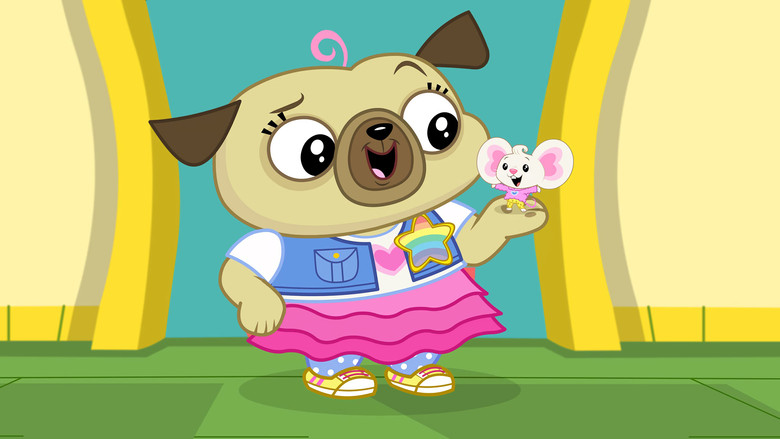
The premise sounds simple, almost like a lesser Peppa Pig knockoff, but Chip and Potato has something rarer: emotional precision. It doesn’t just depict childhood milestones—first day of school, learning to share, dealing with a scraped knee—it captures the texture of them. The way a child’s fear of the unknown can feel like a physical weight.
The way a small victory, like tying your own shoelaces, can feel like conquering the world. And most of all, the way a secret friend isn’t just a fantasy, but a coping mechanism. Potato isn’t just cute; he’s necessary.
He’s the one Chip turns to when the world feels too big, too loud, too new. In one episode, Chip is terrified of the school’s "monster slide"—a towering, twisty death trap to her five-year-old eyes. Potato doesn’t dismiss her fear or tell her to "be brave."
Instead, he climbs onto her shoulder and whispers, "What if we go down together?" It’s a small moment, but it’s real. That’s how children actually process fear: not with logic, but with companionship.
The animation style is bright and uncluttered, with soft edges and warm colors that feel like a hug. The character designs are simple—Chip’s big, round eyes and floppy ears, Potato’s tiny, twitchy nose—but expressive enough to carry emotion without dialogue. (Though when there is dialogue, the voice acting is charmingly understated.
Abigail Journey Oliver, who voices Chip, has a way of making even the most mundane lines—"I don’t wanna go to school today"—sound like a plea, not a whine.) The show’s pacing is deliberately slow, with episodes split into two 11-minute segments that feel like little vignettes rather than plots. There’s no villain, no high-stakes conflict, no moralizing. Just Chip navigating the small, daily challenges of growing up, with Potato as her anchor.
What’s fascinating about Chip and Potato is how it handles the idea of independence. Chip is at that age where she’s expected to do more on her own—dress herself, pack her backpack, make new friends—but she’s not quite ready. Potato bridges that gap.
He’s her safety net, her training wheels. In one episode, Chip is determined to make a new friend at school, but she’s too nervous to approach anyone. Potato, ever the enabler, suggests she "practice" on him first.
It’s a clever way to show how children rehearse social interactions in their heads before trying them out in the real world. The show never judges Chip for needing Potato; it treats their bond as something natural, even beautiful. And yet, there’s a subtle tension there.
Potato is a secret, after all. What happens when Chip no longer needs him?
That question lingers in the background, though the show never forces it. Chip and Potato is content to live in the moment, to let its young audience enjoy the fantasy of a friend who’s always there, always listening. And maybe that’s the point. Childhood is full of things that feel permanent but aren’t—friendships, fears, the way a scraped knee can ruin your whole day. Chip and Potato doesn’t rush its characters toward growth.
It lets them be small, for as long as they need to be.
I’ve watched a lot of children’s shows that try to teach lessons about friendship or bravery or kindness. Most of them feel like they’re talking at kids, not with them. Chip and Potato is different. It doesn’t preach.
It observes. It remembers what it’s like to be five years old and overwhelmed by the world, and it offers a hand to hold. Not a solution, not a lecture—just a friend.
Even if that friend is, technically, a potato.
"A gentle preschool series with lovable characters and simple, relatable stories."
*Chip and Potato* has a warm, friendly tone, easy-to-follow stories and endearing characters that suit young children. It focuses on everyday experiences and gentle problem-solving, though its simplicity won't hold older kids or anyone wanting more complex storytelling.
Chip and Potato, the charming preschool series created by Joel Dickie, Matt Ferguson, and Ridd Sorensen, has quietly become a staple for young audiences since its 2018 debut. With its gentle storytelling and lovable characters, the show follows Chip, a playful pug puppy, and her best friend Potato, a tiny mouse who lives in her pocket. latestnetflix.com's view is that while the series may lack the tabloid drama of primetime hits, its cultural footprint—spanning merchandise, fan art, and real-life adaptations—reveals a dedicated following.
The series thrives on relatable, low-stakes adventures, from Chip’s first sleepover to navigating school life. Full episodes, like Chip’s First Sleepover / Doctor Chip, are readily available on Netflix Jr’s YouTube channel, offering parents a free taste of the show’s warmth. The storytelling is simple but effective, focusing on friendship, problem-solving, and emotional growth—key themes for its preschool audience.
One standout element is the show’s ability to blend humor with heart. Shorts like Grandmas’ Awesome Car! highlight the quirky, lighthearted tone that keeps kids engaged while delivering subtle life lessons. The series’ animation style, with its soft colors and expressive characters, also makes it visually appealing for young viewers.
Chip and Potato has inspired a surprising amount of fan creativity. Crochet tutorials for Potato the mouse plushies have popped up online, with crafters sharing custom designs that mimic the show’s adorable aesthetic. Birthday parties themed around the series—complete with balloons, treats, and decorations—suggest the characters resonate deeply with its audience.
Art tutorials, like How to Draw CHIP From Chip & Potato!, further cement the show’s influence, turning passive viewers into active participants. Even real-life adaptations, such as a Chip and Potato "live-action" short, play into the fantasy of bringing the characters to life beyond the screen.
The show’s availability on Netflix has been a major factor in its reach. Season 3’s release was promoted directly on the platform, signaling Netflix’s investment in the series as a reliable draw for young families. Clips and shorts, like Class Show, are frequently shared on the Netflix Jr YouTube channel, ensuring the show remains accessible even for casual viewers.
While Chip and Potato may not generate the same buzz as blockbuster franchises, its steady presence in kids’ media suggests a lasting impact. The series’ ability to inspire creativity—whether through fan art, DIY toys, or themed parties—proves its appeal goes beyond passive viewing.
With no official word on future seasons, the show’s trajectory remains unclear. However, its existing content continues to circulate widely, and the fanbase shows no signs of slowing down. If Netflix chooses to expand the series, it could further solidify Chip and Potato as a modern preschool classic.
For now, the show’s legacy lies in its ability to entertain and comfort its young audience—one pocket-sized mouse at a time.
Entertainment rumors and trivia aggregated from public reporting. Treat speculation as unverified unless a cited source confirms it.
More titles in the same genres and with the same cast.