Season 1
8 episodes Oct 13, 2022 7.0
- 1 misprint
- 2 hunger
- 3 contact
- 4 collusion
- 5 investigation
- 6 betrayal
- 7 survival
- 8 gravitation

“What is a human?”
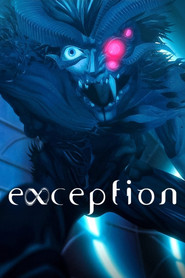
In a distant future where humans are forced to leave Earth, a spacecraft carrying a 3D-printed crew of specialists is sent to terraform a new planet.
Latest episode: S1 E8 gravitation (Oct 13, 2022)
Official
I keep thinking about the first time I saw the crew of Exception wake up. Not the moment they open their eyes—that’s too easy, too expected—but the way their fingers twitch before they even realize they’re alive. There’s something uncanny in that half-second of hesitation, a glitch in the simulation of humanity.
It’s the kind of detail that makes you wonder: if we were built from scratch, would we even know the difference?
Netflix’s Exception (stylized as e∞ception) is a sci-fi horror series that asks exactly that question, and it does so with a quiet, creeping dread that lingers long after the credits roll. Set in a distant future where Earth is no longer habitable, the story follows a crew of 3D-printed specialists sent to terraform a new planet. The premise is familiar—generation ships, artificial humans, the existential weight of starting over—but the execution is anything but.
Director Yūzō Satō, working from an original story by Hirotaka Adachi, doesn’t just want to tell a story about survival. He wants to unravel what survival means when the survivors aren’t even sure they’re human.
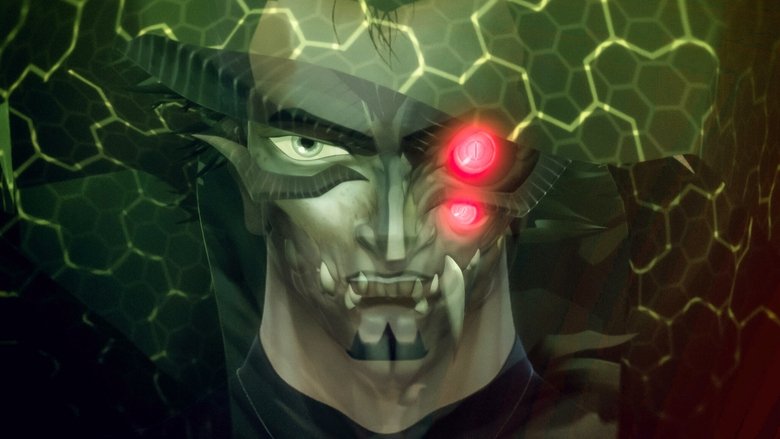
The series’ greatest strength is its refusal to rush. Early episodes unfold like a slow-burn horror film, where the terror isn’t in what happens but in what might happen. The crew wakes up in a pristine, sterile environment, their memories fragmented, their bodies flawless.
But flawless isn’t the same as real. There’s a stiffness to their movements, a too-perfect symmetry to their interactions, that makes the skin crawl. It’s the uncanny valley in motion, and Satō leans into it, letting the unease simmer until it becomes unbearable.
The horror here isn’t jump scares or gore—it’s the quiet, creeping realization that something is off, and that the thing that’s off might be you.
That sense of dislocation is amplified by Yoshitaka Amano’s character designs, which are as haunting as they are beautiful. Amano, best known for his work on Final Fantasy and Vampire Hunter D, brings a gothic, ethereal quality to the series, where the characters often look like they’ve stepped out of a dream—or a nightmare. Their faces are elongated, their expressions just shy of human, and their eyes hold a depth that feels both ancient and hollow.
It’s a visual style that perfectly complements the story’s themes of artificiality and identity. These aren’t people; they’re approximations, and the more you look at them, the more you question what, exactly, they’re approximating.
The soundtrack, composed by the late Ryuichi Sakamoto, is another masterstroke. Sakamoto, whose work on films like Merry Christmas, Mr. Lawrence and The Revenant is legendary, brings a minimalist, almost mournful quality to Exception.
The score is sparse, relying on eerie synths and dissonant strings to create a sense of unease. There’s a moment in the third episode where the music drops out entirely, leaving only the sound of the crew’s breathing—shallow, mechanical, wrong—and it’s one of the most unsettling things I’ve heard in a long time. Sakamoto’s music doesn’t just underscore the horror; it is the horror, a reminder that silence can be just as terrifying as noise.
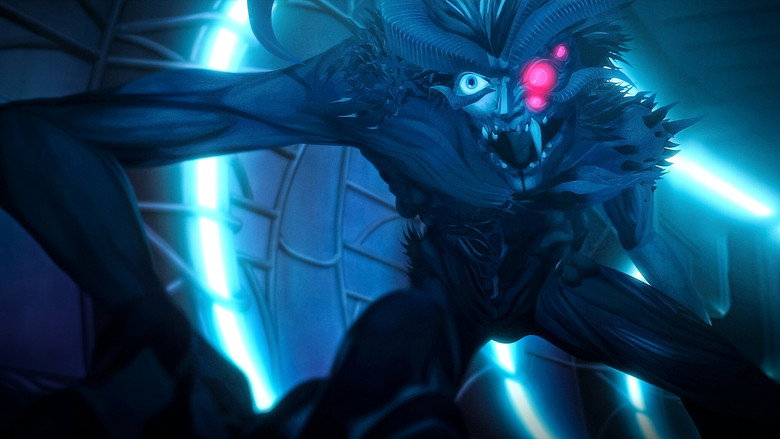
If there’s a flaw in Exception, it’s that the series sometimes struggles to balance its philosophical ambitions with its narrative momentum. The middle episodes, in particular, feel like they’re treading water, circling the same questions without always moving the story forward. But even then, the series is so visually and atmospherically rich that it’s hard to mind.
This isn’t a show you watch for the plot twists; it’s a show you watch for the feeling of it, the way it gets under your skin and stays there.
And that, in the end, is what makes Exception so compelling. It’s not just a sci-fi horror series; it’s a meditation on what it means to be human in a world where humanity is no longer a given. The crew’s journey isn’t just about terraforming a new planet—it’s about trying to terraform themselves, to carve out a sense of identity in a universe that has rendered them obsolete.
It’s a question that feels increasingly relevant in an age where AI and automation are blurring the lines between human and machine. Exception doesn’t offer easy answers, but it doesn’t need to. Sometimes, the most terrifying thing isn’t the unknown—it’s the realization that the unknown might be all we have left.
The series’ final moments are a masterclass in ambiguity. Without spoiling anything, I’ll say this: the last shot lingers on a single, haunting image, one that forces you to confront the same question the crew has been grappling with all along. What is a human?
The answer, Exception suggests, might be as simple—and as complicated—as the way we choose to live, even when we’re not sure we’re alive at all.
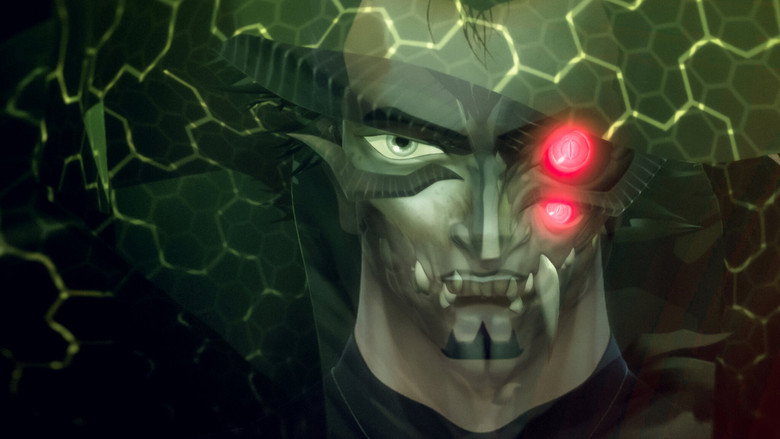
Rotten Tomatoes classifies Exception as a "science fiction horror" ONA, and that label fits, but it doesn’t quite capture the series’ emotional weight. This isn’t just a genre exercise; it’s a work of art that grapples with the big questions, the kind that keep you up at night. It’s the kind of show that stays with you, not because it’s loud or flashy, but because it’s quiet—and in that quiet, it finds a kind of truth.
Whether that truth is comforting or terrifying depends on how much you’re willing to question what it means to be human. And really, isn’t that the point?
Netflix’s exception (2022) arrived with little fanfare but quickly carved out a niche for itself, thanks to its striking visuals, a voice cast stacked with anime veterans, and a haunting score by the late Ryuichi Sakamoto. Directed by Yuuzou Satou, the series blends sci-fi intrigue with psychological tension, though details about its production remain frustratingly scarce. latestnetflix.com's take is that what we do know suggests a project that prioritized atmosphere and craft over viral hype—at least until the trailers dropped.
The ensemble behind exception reads like a who’s-who of anime’s most recognizable voice actors, though their involvement is strictly auditory. Takahiro Sakurai (Fate/stay night, Psycho-Pass) and Atsumi Tanezaki (Attack on Titan, Demon Slayer) lead the cast, bringing decades of experience to roles that—based on the trailers—demand emotional range and intensity. Yuhko Kaida (Steins;Gate, Vinland Saga), Chikahiro Kobayashi (My Hero Academia), and Takanori Hoshino (JoJo’s Bizarre Adventure) round out the lineup, lending credibility to a project that might otherwise risk getting lost in Netflix’s crowded anime slate.
What’s notable here isn’t just the talent but the lack of it on screen. Unlike many anime series that lean into promotional interviews or behind-the-scenes featurettes, exception’s cast has stayed largely silent about the project. No convention panels, no social media teasers—just the trailers and the finished product. This radio-silence approach is unusual for a Netflix original, where cross-promotion is typically relentless. Whether this was a creative choice or a sign of a low-key rollout remains unclear, but it’s left fans speculating about the reasons behind the secrecy.
The most talked-about behind-the-scenes detail of exception isn’t the cast or the plot—it’s the music. The series’ opening theme, "exception", was composed by Ryuichi Sakamoto, the legendary musician and composer behind Merry Christmas, Mr. Lawrence and The Revenant. Sakamoto, who passed away in March 2023, had a long history with anime, including his iconic work on Royal Space Force: The Wings of Honnêamise (1987). His involvement in exception was confirmed in the official Netflix clip showcasing the opening sequence, which pairs his ethereal, synth-heavy score with the series’ moody visuals.
Given Sakamoto’s health struggles in his final years, his contribution to exception takes on added significance. The opening theme, with its melancholic piano and electronic textures, feels like a fitting swan song for a composer who shaped generations of film and anime music. Whether he recorded the score specifically for exception or repurposed existing work isn’t clear from the available evidence, but the result is undeniably atmospheric—exactly the kind of detail that elevates a sci-fi mystery.
For all its strengths, exception has flown under the radar in ways that feel intentional. The trailers—three of which are available on Netflix’s official YouTube channels—hint at a high-stakes narrative involving parallel worlds, existential threats, and a team of specialists navigating a crisis. Yet beyond these glimpses, Netflix has released little in the way of plot summaries, character details, or even episode titles. The series’ TMDB page offers a bare-bones synopsis, but no episode count or release schedule beyond its 2022 debut [TMDB].
This lack of transparency isn’t necessarily a red flag—some anime thrive on mystery—but it’s unusual for a platform like Netflix, which typically saturates audiences with content previews. Was exception rushed to release? Did it underperform, leading to a quiet marketing pivot? Or was the minimalism part of the creative vision? Without additional evidence, these questions remain unanswered.
What is clear is that exception was designed to be experienced, not dissected. The trailers emphasize mood over exposition, with Sakamoto’s score setting the tone for a story that feels more cerebral than action-driven. The voice cast’s pedigree suggests a project that values performance, while the director’s previous work (including Ghost in the Shell: SAC_2045) hints at a cyberpunk-adjacent aesthetic [TMDB].
exception’s biggest strength may also be its biggest weakness: it’s a series that refuses to explain itself. For fans of slow-burn sci-fi, that’s a feature, not a bug. The combination of Sakamoto’s score, a powerhouse voice cast, and a director with a strong genre background suggests a project with serious artistic ambitions. But in an era where anime is often judged by its meme potential or fan-service quotient, exception’s quiet confidence might have worked against it.
Without more behind-the-scenes details or promotional material, it’s hard to say whether the series was a passion project that flew under the radar or a calculated gamble that didn’t pay off. What’s left is the work itself—and the tantalizing hints of what could have been.
Entertainment rumors and trivia aggregated from public reporting. Treat speculation as unverified unless a cited source confirms it.
More titles in the same genres and with the same cast.