Kentaro Takano
Edmond Chandler (voice)

After a rash of mysterious deaths, Crown prosecutor Sarah Sinclair and SSC agent James Blood discover a conspiracy surrounding uncanny new bio-masks.
I keep thinking about the moment in Hero Mask when the first face sloughs off. It’s not the gore that lingers—though there’s plenty of that—but the way the camera lingers on the raw, glistening tissue beneath, as if waiting for the audience to gasp. We do, of course.
But what unsettles me isn’t the violence; it’s the implication that identity itself is just another layer of skin, something that can be peeled away with the right tools. Or the wrong ones.
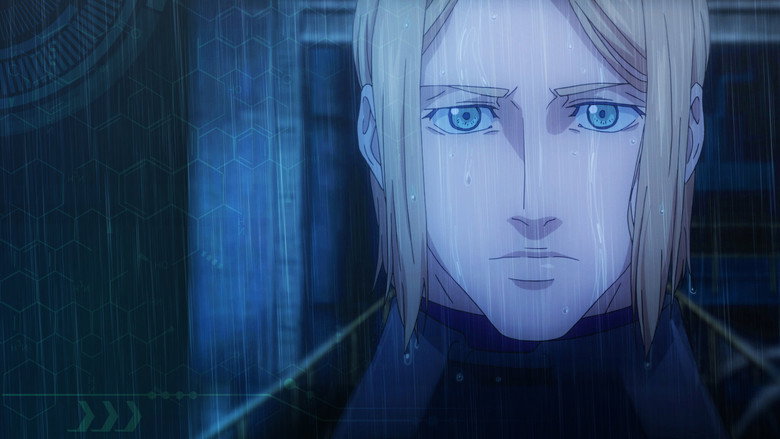
This is an anime that wants to be James Bond meets Ghost in the Shell, a high-stakes thriller where the gadgets aren’t just cool—they’re existential. The premise is simple enough: a rash of mysterious deaths leads Crown prosecutor Sarah Sinclair and SSC agent James Blood into a conspiracy involving bio-masks, devices that can rewrite a person’s face, voice, even their fingerprints.
On paper, it’s a detective story with a sci-fi twist. In practice, it’s a meditation on how easily we can become someone else—and how little we might notice when we do.
The animation is slick, almost aggressively so. The action sequences move at a breakneck pace, with fight scenes that feel like they were storyboarded by someone who’s seen John Wick one too many times. There’s a kinetic energy to the way bodies twist and contort, a ballet of violence that’s undeniably impressive, even if it occasionally sacrifices clarity for style.
(I lost track of who was punching whom at least twice in the first season.) But the real visual punch comes from the masks themselves. They’re rendered with a shimmering, almost liquid quality, as if they’re not quite solid, not quite real. When a character dons one, their features don’t just change—they melt, like wax under a flame.
It’s unsettling in the way only good sci-fi can be, a reminder that technology doesn’t just augment our lives; it reshapes them, often in ways we don’t see coming.
What’s missing, at least in the first season, is a sense of who these people are beneath the masks. Sarah and James are archetypes more than characters: the dogged prosecutor, the rogue agent with a dark past. Their dialogue is functional, their motivations sketched in broad strokes.
It’s not that the performances are bad—Kentaro Takano and Yutaka Aoyama bring a certain weary gravitas to their roles—but the script doesn’t give them much to work with. The supporting cast fares even worse, reduced to little more than plot devices or red herrings. There’s a moment in the second episode where Sarah confronts a suspect, and for a brief second, the mask slips—literally and metaphorically.
The suspect’s real face is revealed, and with it, a flicker of genuine emotion. It’s the most human moment in the entire season, and it’s over in a flash.
That’s the problem with Hero Mask: it’s so busy being a thriller that it forgets to be a story about people. The conspiracy is intricate, the twists are plentiful, and the body count is high, but none of it lands with the weight it should. Part of that is pacing.
The series moves at a breakneck speed, cramming so many reveals and reversals into its the episode count that it starts to feel like a treadmill—you’re running, but you’re not going anywhere. The other issue is tone. Hero Mask wants to be a gritty, mature drama, but it keeps tripping over its own feet, veering from graphic violence to awkward attempts at humor. There’s a scene in the second season where James cracks a joke mid-gunfight, and it lands with all the grace of a lead balloon.
It’s not that action can’t be funny—just look at Guardians of the Galaxy—but the humor here feels like it was bolted on, a desperate attempt to lighten the mood before the next bloodbath.
Still, there’s something compelling about the way Hero Mask grapples with its central idea. The masks aren’t just a plot device; they’re a metaphor for the way we all perform versions of ourselves, depending on who’s watching. In one of the more interesting subplots, a minor character is forced to wear a mask that doesn’t just change their appearance but alters their memories, their skills, even their moral compass.
For a few episodes, they become someone else entirely, and the series dares to ask: if you can’t remember who you were, are you still responsible for what you do? It’s a question that lingers long after the credits roll, even if the show itself doesn’t always know what to do with it.
The critical reception, what little there is of it, seems to mirror my own ambivalence. Some viewers praise the animation and pacing, while others find the story shallow or convoluted. One YouTube reviewer called it a "hot takes anime," which feels about right.
It’s not a show that’s trying to reinvent the wheel, but it’s not content to just spin its tires, either. It wants to be smart, stylish, and a little bit dangerous. Sometimes it succeeds.
More often, it stumbles, tripped up by its own ambition.
In the end, Hero Mask is a series that’s easy to watch but hard to love. It’s the kind of show you put on when you want to turn your brain off but keep your eyes engaged. The action is relentless, the visuals are striking, and the premise is intriguing enough to keep you hooked for a few episodes.
But by the time the final mask is torn away, you might find yourself wondering if you ever really knew who was underneath. Or if it even matters.
Hero Mask (2018) arrived on Netflix with a slick cyber-noir aesthetic and a premise that blended crime thriller with sci-fi intrigue. The series, set in a world where advanced masks grant users anonymity and enhanced abilities, follows detective James Blood as he unravels a conspiracy tied to a shadowy organization. While the show’s visuals and pacing earned it a cult following, behind-the-scenes details remain surprisingly scarce—leaving fans to piece together what little gossip and production insights have surfaced.
Little is publicly known about the director or showrunner of Hero Mask, but a rare interview with two key figures—Soichiro Kubo and Hisaki Kato—offers a glimpse into the series’ development. Kubo, likely a producer or creative consultant, and Kato, possibly a writer or designer, discussed the challenges of balancing the show’s noir tone with its futuristic elements. They hinted at the "duality of identity" as a central theme, suggesting the masks weren’t just a plot device but a metaphor for the characters’ hidden motives. Unfortunately, the interview doesn’t dive deeper into the production process, leaving questions about the series’ origins unanswered.
The English dub of Hero Mask features a stacked cast, including Kentaro Takano as James Blood and Yuhko Kaida as Sarah Sinclair. While no behind-the-scenes drama has emerged about the voice acting process, a few clips and reviews highlight the performances. One standout moment is a tense confrontation between James and Lenox, where the dialogue crackles with noir-style tension. Reviewers praised the dub’s delivery, noting how the actors’ performances elevated the show’s already stylish animation. However, without interviews or studio insights, the cast’s creative process remains a mystery.
Most of the buzz around Hero Mask centers on its visual style—think Blade Runner meets Cowboy Bebop—but concrete production details are hard to come by. A few YouTube reviews mention the show’s "limited animation" techniques, which suggest budget constraints or a deliberate aesthetic choice. One scene, where Sarah Sinclair frantically searches through digital files on her laptop, showcases the series’ attention to cyberpunk detail, even if the animation itself is more functional than flashy.
Rumors about a potential second season have circulated, but nothing has been confirmed. Netflix has remained tight-lipped, and no official announcements have followed the first season’s release. Given the lack of updates, fans are left to speculate whether the show’s ambiguous ending was intentional or a sign of unresolved production issues.
Hero Mask stands out for its moody atmosphere and intriguing premise, but its behind-the-scenes story is frustratingly opaque. From the creative team’s vague interviews to the lack of cast anecdotes, the series feels like a well-kept secret. Whether that’s due to a deliberate marketing strategy or simply a lack of promotional effort remains unclear. For now, fans can only rewatch the first season and hope for more—whether in the form of a sequel or, at the very least, a few more crumbs of production gossip.
Entertainment rumors and trivia aggregated from public reporting. Treat speculation as unverified unless a cited source confirms it.
More titles in the same genres and with the same cast.