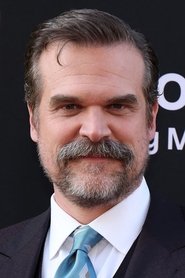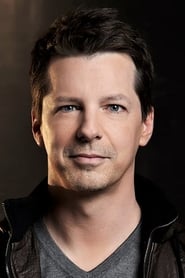
Sean Hayes
Steve Maryweather (voice)

A gay superspy and his scrappy LGBTQ squad fight to prove themselves to the agency that underestimated them. Today, West Hollywood… tomorrow, the world!
Official
I’ll admit it: I went into Q-Force expecting to be charmed. A queer animated spy comedy from Netflix, fronted by Sean Hayes and Wanda Sykes, with a tagline that practically winks at you? It sounded like the kind of show that could be both a riot and a revelation—something that might finally give LGBTQ+ characters the same swaggering, globe-trotting adventures straight spies have been hogging for decades.
And for a while, it almost delivers. Almost.
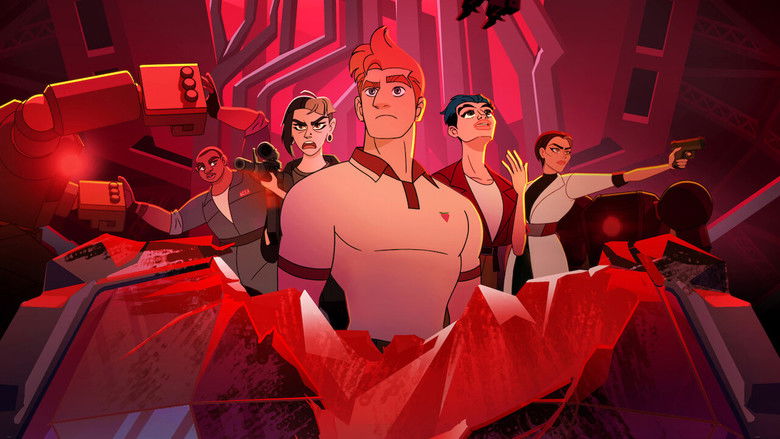
The premise is simple, almost aggressively so: Steve Maryweather (Hayes), a disgraced gay superspy, is sidelined by the American Intelligence Agency (AIA) after coming out. Years later, he’s given one last shot at redemption—if he can prove his ragtag team of queer misfits (a trans hacker, a nonbinary mechanic, a butch lesbian bodyguard, and a pansexual fashionista) can handle a real mission.
The catch? The AIA still doesn’t take them seriously, and neither, it turns out, does the show itself.
That’s the first problem. Q-Force wants to have it both ways: it wants to be a subversive, boundary-pushing comedy about queer heroes, but it also wants to coast on the same tired spy tropes that have defined the genre for decades. The result is a show that feels like it’s constantly glancing over its shoulder, unsure whether it’s here to dismantle the system or just sneak a few jokes past the censors.
Take the opening mission, where the team is sent to retrieve a stolen bioweapon from a villain’s yacht. The sequence is played for laughs—Steve’s ex, a strapping Russian agent, shows up to complicate things, and the team’s incompetence nearly gets them all killed—but the humor lands with a thud because the show never commits to the bit. Is this a parody of spy movies, or just a weaker version of one?
The answer, frustratingly, is both.
The animation doesn’t help. The character designs are serviceable, with bright colors and exaggerated expressions that lean into the show’s campy tone, but the action sequences feel flat and weightless. When the team engages in a high-speed chase or a hand-to-hand fight, the movements are stiff, the physics nonexistent.
It’s the kind of animation you’d expect from a mid-2000s Cartoon Network show, not something aiming for the sharp, kinetic energy of Archer or the stylish flair of Big Mouth. Even the backgrounds—meant to evoke the glamour of international spycraft—often look like they were lifted from a stock image search. There’s a moment in the third episode where the team infiltrates a high-end gala, and the ballroom is so sparsely populated it feels like they’re crashing a party in The Sims.
Where Q-Force does shine, briefly, is in its quieter character moments. Patti Harrison’s Twink, the team’s trans hacker, gets a few scenes that feel genuinely tender, like when she calls out Steve for his performative allyship or when she bonds with Deb (Wanda Sykes), the team’s no-nonsense mechanic, over their shared frustration with the AIA’s bureaucracy. These moments are fleeting, though, and they’re quickly drowned out by the show’s reliance on broad, often cringe-worthy humor.
A running gag about Steve’s inability to date without turning it into a mission briefing is funny the first time. By the fifth, it’s just sad.
The real missed opportunity here is the show’s refusal to dig deeper into its own premise. Q-Force could have been a biting satire of how institutions tokenize and marginalize queer people, or a heartfelt exploration of what it means to build a found family when the world keeps trying to tear you down. Instead, it settles for lazy stereotypes and surface-level representation. The villains are one-dimensional (a mustache-twirling tech bro, a flamboyant fashion mogul who’s evil because… he’s too extra?), and the stakes never feel real.
Even the show’s attempts at emotional depth—like Steve’s fraught relationship with his ex, or his struggle to prove himself to the AIA—are undercut by the fact that the writing never lets the characters breathe. They’re too busy cracking jokes to ever feel like real people.
That’s not to say there isn’t potential here. The cast is game, and their chemistry is undeniable. Hayes, in particular, leans into Steve’s vanity and insecurity with a mix of charm and pathos that almost makes you root for him, even when the writing doesn’t.
And Sykes, as always, steals every scene she’s in, delivering her lines with a deadpan precision that makes even the weakest jokes land. But talent can only do so much when the material is this thin.
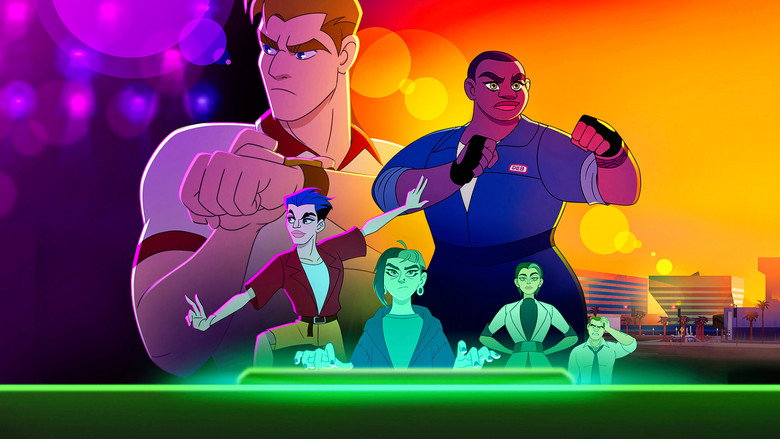
In the end, Q-Force feels like a show that was greenlit because it checked all the right boxes—queer cast, marketable premise, built-in audience—without anyone stopping to ask what it actually wanted to say. It’s not offensive, just… forgettable. A show that could have been a rallying cry for queer representation instead settles for being a footnote in the long history of spy parodies that didn’t quite stick the landing.
Maybe that’s the real tragedy. Q-Force had all the ingredients to be something special, but it never trusted its own voice. And in a genre built on secrets and lies, that might be the biggest betrayal of all.
Netflix’s Q-Force (2021) arrived with a mission: to deliver a raunchy, queer-led animated spy parody in the vein of Archer or American Dad. But the show’s journey from trailer to cancellation was anything but smooth. Behind the scenes, creators leaned into its deliberate queerness, while critics and audiences clashed over its tone, humor, and execution. latestnetflix.com's view is that here’s what we know about the short-lived series—and why it became such a lightning rod.
From the start, Q-Force wasn’t shy about its identity. The series followed a team of LGBTQ+ secret agents—led by Steve Maryweather (Sean Hayes), a gay superspy sidelined for being "too fabulous"—as they fought crime while navigating workplace discrimination. Co-creator and cast member Matt Rogers emphasized the show’s intentional queerness in interviews, calling it a "full-circle" moment for queer representation in animation.
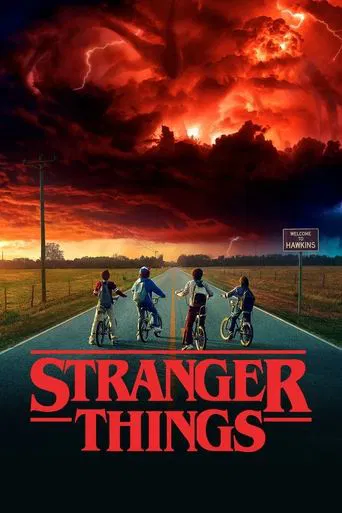
The cast was stacked with LGBTQ+ talent, including Parks and Recreation’s Wanda Sykes, Stranger Things’ David Harbour, and Lady Bird’s Laurie Metcalf. Even Ariana Grande made a cameo, voicing a pop star whose appearance sparked early buzz (and memes). But while the show’s heart was in the right place, its reception was far from unanimous.
Q-Force’s trailers promised a high-energy, irreverent comedy, but early reviews were brutal. Critics panned the show for its uneven humor, calling it "cringe" and "trying too hard". Some viewers accused it of relying on stereotypes, while others defended it as a bold, unapologetic celebration of queer culture.
The backlash was swift. YouTube reaction videos piled up, with titles like "Everyone HATES Q-Force!" and "Netflix’s Q-FORCE SLAMMED by Critics". Even the show’s defenders admitted it wasn’t perfect—one video asked, "This Might Actually Be GOOD?" while dissecting its potential. The divide was clear: Q-Force either felt like a long-overdue queer power fantasy or a misfire that leaned too hard into caricature.
Netflix pulled the plug on Q-Force in 2022, just months after its debut. The cancellation wasn’t entirely surprising—low viewership and mixed reviews likely sealed its fate. But the show’s abrupt end left fans wondering if it ever got a fair shot.
Some speculated that Netflix’s algorithm buried it, while others pointed to the broader trend of animated adult comedies struggling to find audiences. Whatever the reason, Q-Force’s legacy remains complicated: a show that aimed to push boundaries but stumbled in execution.
Q-Force’s 6/10 rating on SensCritique suggests it wasn’t a total disaster, but it wasn’t a runaway hit either. Its biggest sin might have been trying to please everyone—queer audiences craving representation, general viewers expecting broad comedy, and critics demanding sharper writing.
For better or worse, Q-Force was a product of its moment: a loud, messy, and unapologetically queer experiment that didn’t quite land. Whether it’ll be remembered as a cult classic or a cautionary tale remains to be seen.
Entertainment rumors and trivia aggregated from public reporting. Treat speculation as unverified unless a cited source confirms it.
More titles in the same genres and with the same cast.