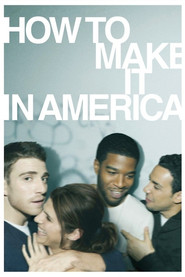
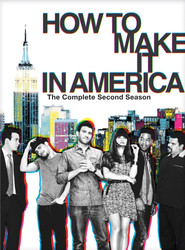
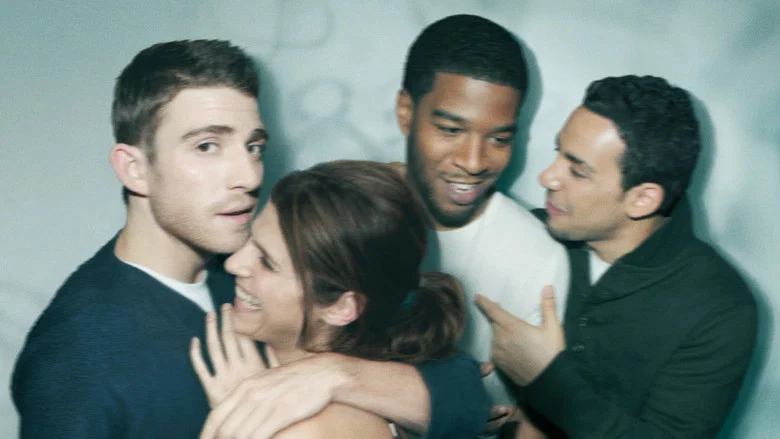
Trying to make a name for themselves in New York's competitive fashion scene, Ben Epstein and his friend and business partner Cam Calderon use their street knowledge and connections to bring their ambitions to fruition. With the help of Cam's cousin Rene, who is trying to market his own high-energy drink, and their well-connected friend Domingo, the burgeoning entrepreneurs set out to make it big, encountering obstacles along the way that will require all their ingenuity to overcome.
Seasons
2 listed
Status
Canceled
Seasons
2 seasons
Episodes
16 episodes
First aired
Feb 14, 2010
Last aired
Nov 20, 2011
Network
HBO
Latest episode:S2 E8 What's in a Name? (Nov 20, 2011)
Season 1
8 episodes Feb 14, 2010 7.3
Twentysomething New Yorkers Ben Epstein and Cam Calderon short-circuit the traditional route to success, deciding to use their street savvy and connections to make names for themselves in the fashion industry.
1Pilot
2Crisp
3Paper, Denim & Dollars
4Unhappy Birthday
5Big in Japan
6Good Vintage
7Keep On Truck'n
8Never Say Die
Season 2
8 episodes Oct 2, 2011 5.1
Following their business trip to Japan, Ben and Cam pound the New York City pavement with tenacious ambition to get noticed, get ahead, and get paid.
I remember the first time I watched How to Make It in America. It was 2010, and I was living in a shoebox apartment in Brooklyn, working a job that paid just enough to keep me in ramen and subway tokens. The show’s opening credits—Ben and Cam weaving through New York’s streets, the bassline of Aloe Blacc’s I Need a Dollar thumping—felt like a mirror.
Not because I was hustling in fashion, but because I, too, was trying to convince myself that the grind was worth it. That if I just kept pushing, something would give.
HBO’s short-lived series (two seasons, 16 episodes) is often called a Entourage for the streetwear set, but that undersells it. Where Entourage was a fantasy of excess, How to Make It in America was a fantasy of access—the idea that if you just knew the right people, said the right things, and showed up at the right parties, you could claw your way into a world that didn’t want you.
It was a lie, of course, but a seductive one. And like all good lies, it was built on a foundation of truth.
The show’s genius was in its specificity. Ben Epstein (Bryan Greenberg) and Cam Calderón (Victor Rasuk) weren’t just generic strivers; they were these strivers, with these dreams and these flaws. Ben, the white Jewish guy from the Upper West Side, was all nervous energy and half-baked ideas, his ambition outpacing his follow-through.
Cam, the Dominican kid from the Bronx, was smoother, street-smart, but just as prone to self-sabotage. Their friendship was the show’s beating heart, a push-and-pull of loyalty and frustration that felt achingly real. Watching them navigate the fashion world’s backrooms and after-parties, I recognized the way they talked over each other, the way they lied to themselves first and everyone else second.
It was the language of people who were one bad break away from having to admit they’d been wrong all along.
And then there was New York itself. The show didn’t just use the city as a backdrop; it made the city a character, one that was equal parts cruel and generous. The camera lingered on the graffiti-tagged walls of Bushwick, the neon glow of Chinatown at night, the way the light hit the Hudson in the late afternoon.
It was a New York that felt lived-in, not postcard-perfect. The kind of place where you could spend $20 on a cocktail in the Meatpacking District and then eat dollar slices on the walk home. The kind of place where the hustle wasn’t just a means to an end—it was the point.
Take the scene in Season 1 where Ben and Cam pitch their jeans line to a room full of skeptical buyers. The camera doesn’t cut away. We see the beads of sweat on Ben’s forehead, the way Cam’s smile tightens when the questions get tougher.
The buyers aren’t villains; they’re just people who’ve heard this pitch a hundred times before. The tension isn’t in whether they’ll say yes or no—it’s in whether Ben and Cam will believe in themselves long enough to sell the lie. And when they walk out of that room, empty-handed but not defeated, it’s not a failure.
It’s just another step.
The show’s supporting cast was just as sharp. Lake Bell’s Rachel, the fashion-world insider with a heart of gold (or at least, gold-plated), was the kind of character who could cut you down with a single look but still make you feel like she had your back. Domingo (Kid Cudi), the hype-man with a heart of gold and a knack for getting into trouble, was the show’s wild card, a reminder that the hustle wasn’t always about the long game—sometimes it was about the thrill of the moment.
And then there was Rene (Luis Guzmán), Cam’s cousin, whose energy drink scheme was equal parts hilarious and heartbreaking. His arc was the show’s darkest joke: the idea that you could hustle your whole life and still end up with nothing.
What How to Make It in America understood was that the hustle wasn’t just about money or success. It was about identity. Ben and Cam weren’t just trying to sell jeans; they were trying to prove they belonged in a world that had no reason to let them in.
That’s why the show’s most devastating moments weren’t the failures—they were the small victories. The times when they almost made it. The times when they got a taste of what they wanted, only to realize it wasn’t what they thought it would be.
I think about the Season 2 finale a lot. Ben and Cam, standing on a rooftop, looking out at the city. They’ve just pulled off a major deal, but instead of celebrating, they’re quiet.
The camera lingers on their faces, and for a second, you can see it: the exhaustion, the doubt. The question neither of them wants to ask: Is this all there is? The show never answers it. It just cuts to black, leaving us—and them—hanging.
That’s the thing about How to Make It in America. It wasn’t a show about making it. It was a show about trying to make it.
About the people you meet along the way, the mistakes you make, the lies you tell yourself. It was about the moments when you look around and realize you’re not where you thought you’d be—and the even scarier moments when you realize you don’t know where you’re going next.
The show was canceled after two seasons, and HBO never gave it the send-off it deserved. No series finale, no closure. Just an abrupt end, like so many hustles.
But maybe that’s fitting. Because the hustle never really ends, does it? You just keep going, one foot in front of the other, hoping that someday, somehow, it’ll all add up to something.
I still think about that Brooklyn apartment sometimes. The way the radiator hissed in the winter, the way the streetlights cast shadows on the wall at night. I don’t live there anymore.
I moved on, like we all do. But I’ll always remember the feeling of watching How to Make It in America and thinking, Yeah. I get it. The hustle wasn’t the point.
The point was that you kept going. Even when you weren’t sure why.
Audience Opinions
Broad evidence
Audience 6.9/10
"An underrated dramedy with authentic charm and relatable struggles, held back by pacing and depth issues."
The series offers a raw portrayal of ambition and friendship in New York’s fashion underground, anchored by likable performances. The storytelling is uneven, though, with slow patches and underdeveloped side characters holding back its potential.
What viewers praise
Authentic portrayal of ambitionCaptures the grit and hustle of young entrepreneurs trying to break into the fashion industry, making their struggles feel real.
Strong lead chemistryBryan Greenberg and Victor Rasuk’s best-friend dynamic drives the show, and their bond feels genuine.
Stylish and immersive settingThe New York backdrop and fashion-world vibe are visually appealing and give the series its own flavor.
Relatable themesFriendship, perseverance and chasing dreams land well, especially with younger audiences.
Common complaints
Uneven pacingSome episodes drag, and the slow development makes it hard to stay invested.
Underdeveloped side charactersSupporting cast members feel one-dimensional, without the depth to make their arcs memorable.
Predictable plotlinesMany story beats follow familiar tropes, leaving little surprise.
Recommended for
Fans of urban dramedies Fans of character-driven stories Those who like fashion-industry settings Lake Bell and Bryan Greenberg fans Underrated series seekers
Buzz & Rumors
Public reports
Behind the Scenes of How to Make It in America: HBO’s Stylish Grit and the Cast’s Real-Life Hustle
HBO’s How to Make It in America (2010) was a love letter to New York’s underground hustle, blending fashion, ambition, and the raw energy of the city’s streets. Starring Bryan Greenberg and Victor Rasuk as two friends chasing their dreams in the urban jungle, the series carved out a niche with its authentic vibe and a soundtrack that pulsed with the same restless energy as its characters. latestnetflix.com's read is that but behind the camera, the show’s journey was just as much about collaboration, creative risks, and the cast’s real-life connections to the story.
The Cast’s Real-Life Hustle
Greenberg and Rasuk weren’t just playing aspiring entrepreneurs—they embodied the grind. In interviews, the duo leaned into the parallels between their characters and their own careers. Rasuk, who played the street-smart Cam Calderón, spoke openly about the show’s resonance with his upbringing. “It’s about the struggle, the hustle, the people you meet along the way,” he said in an AOL BUILD interview, hinting at how the role mirrored his own path in Hollywood. Greenberg, who played Ben Epstein, the more polished but equally determined half of the duo, echoed the sentiment in a separate chat, framing the series as a “modern-day Entourage but with more grit”.
The chemistry between the leads wasn’t just acting. Off-screen, Greenberg and Rasuk’s friendship added a layer of authenticity to their on-screen dynamic. In a podcast appearance, they joked about their real-life fashion sense influencing the show’s aesthetic, with Greenberg quipping that their wardrobe choices were “half scripted, half whatever we found in our closets”. The series’ fashion-forward lens—showcasing brands like Supreme and vintage streetwear—wasn’t just set dressing; it was a reflection of the cast’s personal styles and the cultural moment they were capturing.
The Soundtrack: A Character of Its Own
One of the show’s standout features was its music, which often stole scenes with its infectious energy. The Season 2 premiere famously ended with Avicii’s Levels, a track that became synonymous with the series’ high-stakes, high-reward ethos. The soundtrack wasn’t just background noise; it was a narrative tool, amplifying the tension and triumph of Ben and Cam’s journey. Producers leaned heavily on emerging artists and underground tracks, giving the series a cutting-edge feel that resonated with its millennial audience.
The Show’s Legacy: Cut Short but Not Forgotten
Despite its cult following, How to Make It in America lasted only two seasons before HBO pulled the plug. The cancellation left fans hanging, with no real closure for Ben and Cam’s story. Ratings hovered around a respectable 6.9/10 on SensCritique, but the show’s niche appeal—rooted in its hyper-specific New York setting and fashion-forward lens—may have limited its mainstream reach. Still, its influence lingered. The series became a time capsule of early 2010s streetwear culture, and its unapologetic portrayal of ambition resonated with a generation navigating the gig economy.
Rumors about a revival or reboot have circulated over the years, but nothing concrete has materialized. For now, the show remains a snapshot of a moment when HBO was willing to bet on underdog stories—even if they didn’t always pay off.
Behind the Scenes: The Making of a New York Story
The show’s production was as much about capturing the city’s energy as it was about the script. Behind-the-scenes footage reveals a tight-knit crew shooting on location in Brooklyn and Manhattan, often improvising to keep up with the city’s unpredictable rhythm. The cast and crew’s camaraderie was palpable, with Greenberg and Rasuk frequently seen joking between takes. In one interview, Greenberg hinted at the challenges of filming in New York’s fast-paced environment, calling it “a character in itself”.
Lake Bell, who played the sharp-tongued Rachel Chapman, brought a different dynamic to the series. Her character’s fashion-world savvy and no-nonsense attitude provided a counterbalance to Ben and Cam’s street-level hustle. While less is documented about her behind-the-scenes experience, her performance added depth to the show’s exploration of ambition and identity.
Why the Show Still Matters
More than a decade after its debut, How to Make It in America endures as a cult favorite. Its blend of fashion, music, and raw ambition feels timeless, even as the cultural landscape has shifted. The series didn’t just tell a story about making it—it showed the messy, exhilarating process of trying. And in an era where hustle culture is both celebrated and scrutinized, the show’s unfiltered portrayal of the grind remains relevant.
For fans, the series is a reminder that success isn’t just about the destination—it’s about the people you meet, the risks you take, and the city that shapes you. And if the cast’s real-life hustle is any indication, the show’s spirit lives on in the careers of those who brought it to life.
Entertainment rumors and trivia aggregated from public reporting. Treat speculation as
unverified unless a cited source confirms it.
Related series
More titles in the same genres and with the same cast.